

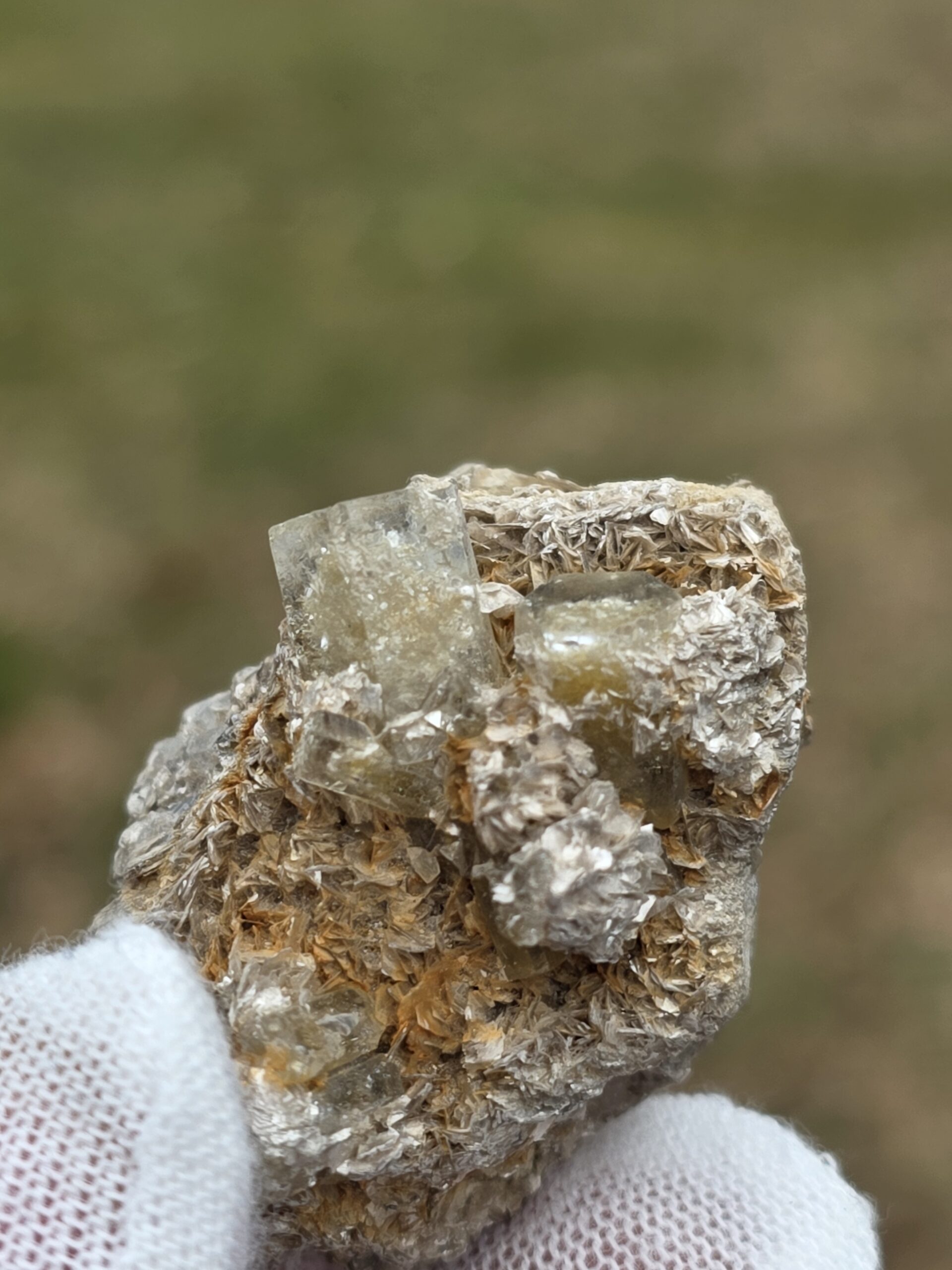
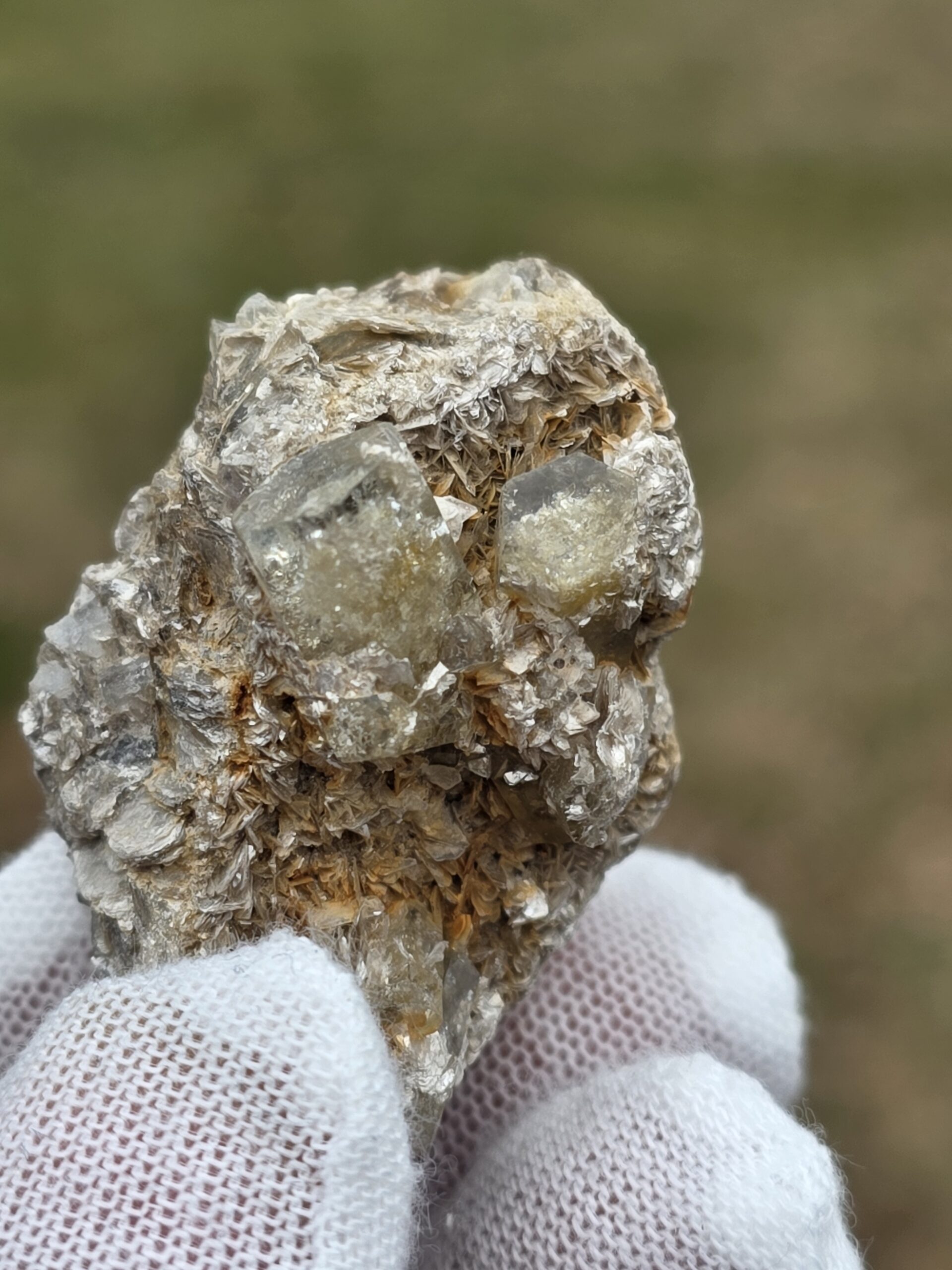
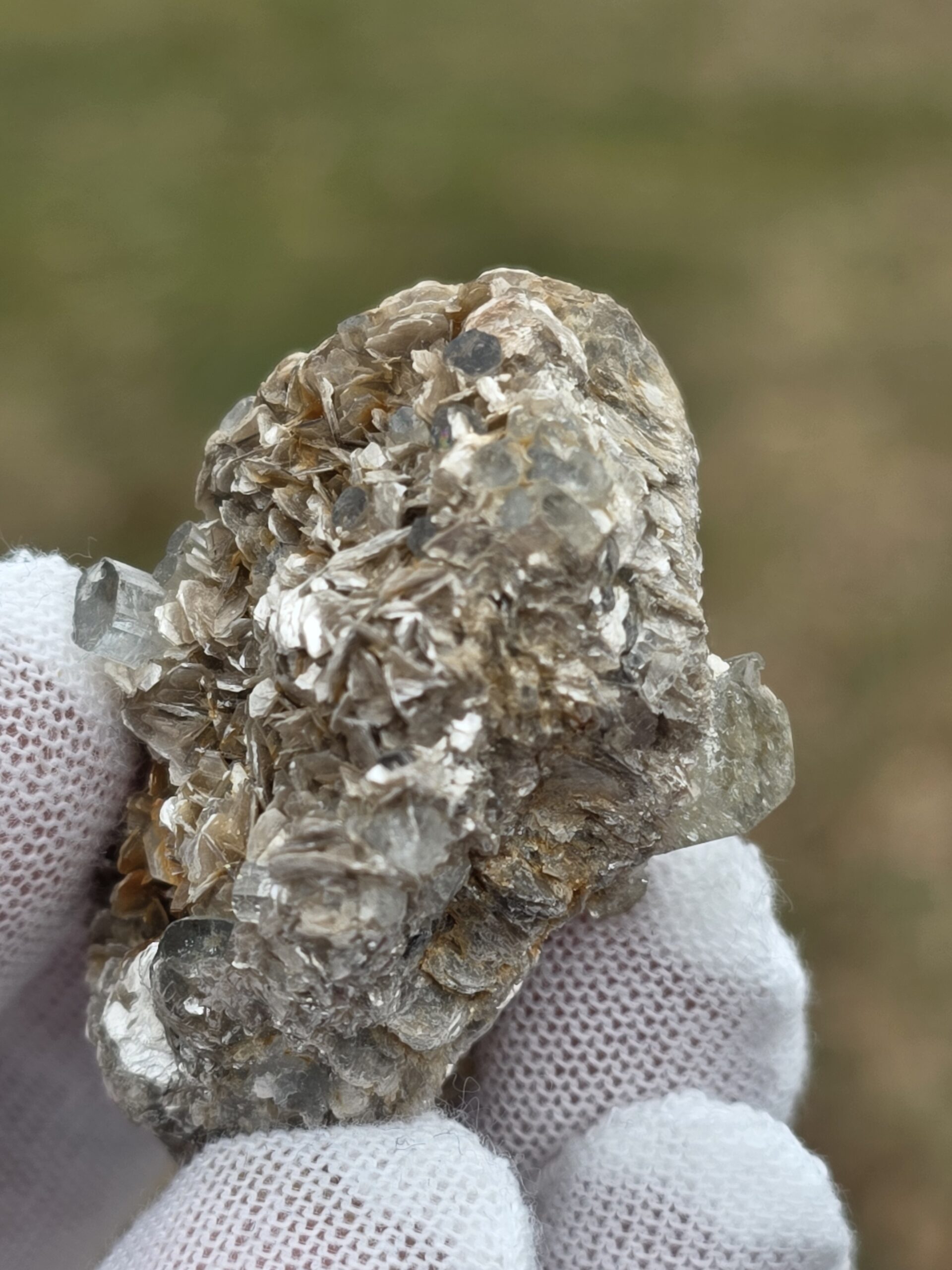
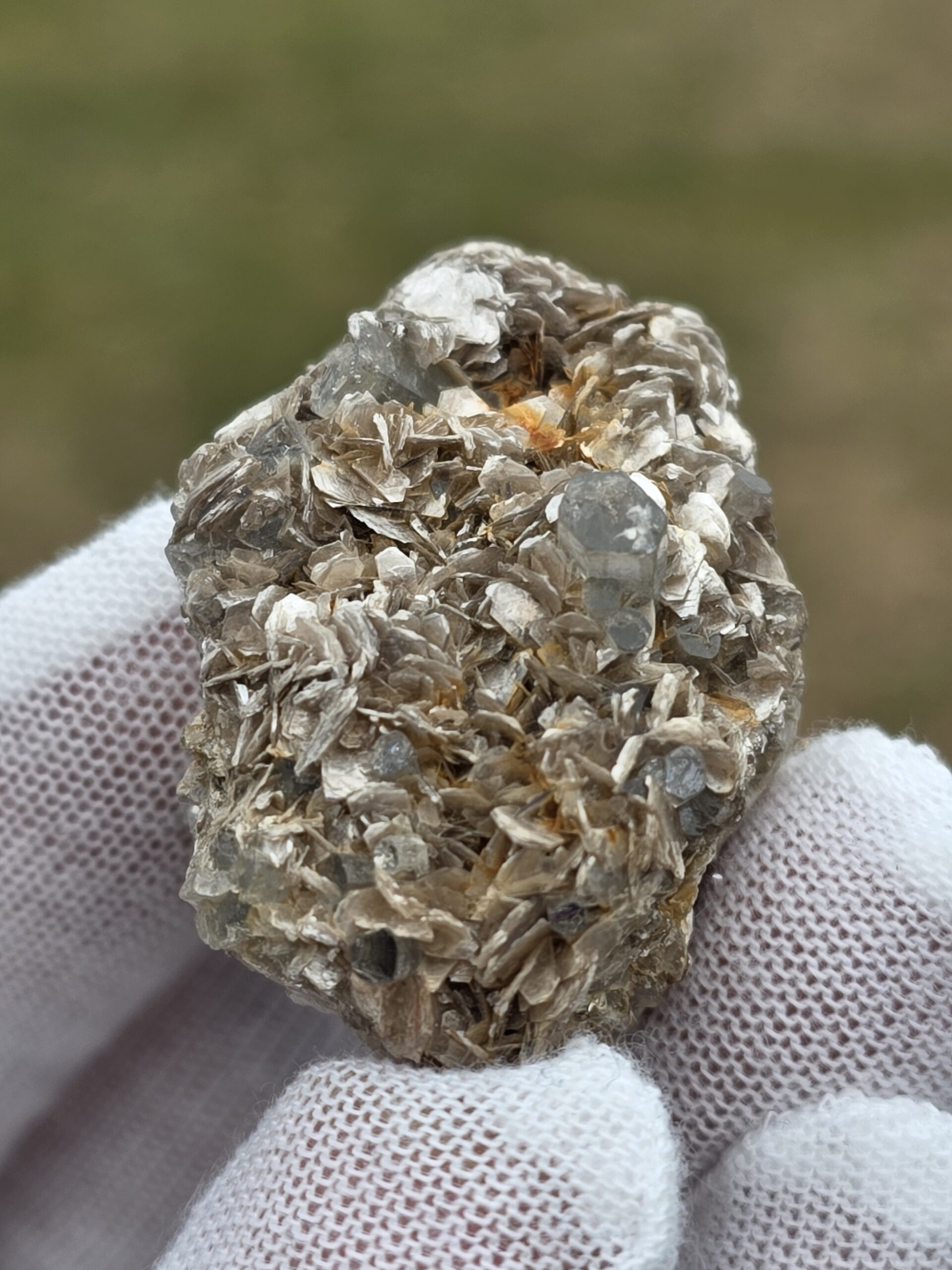
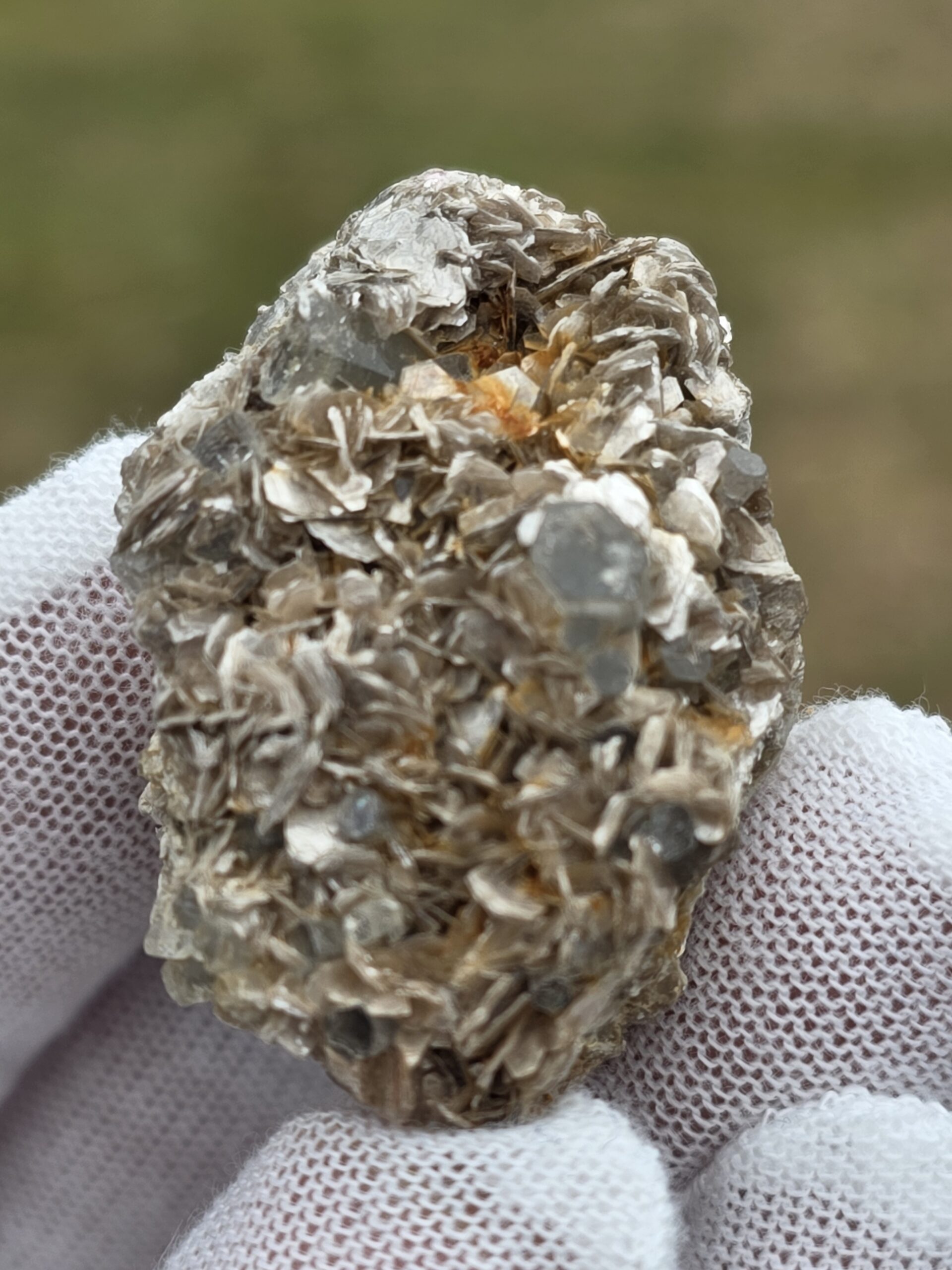
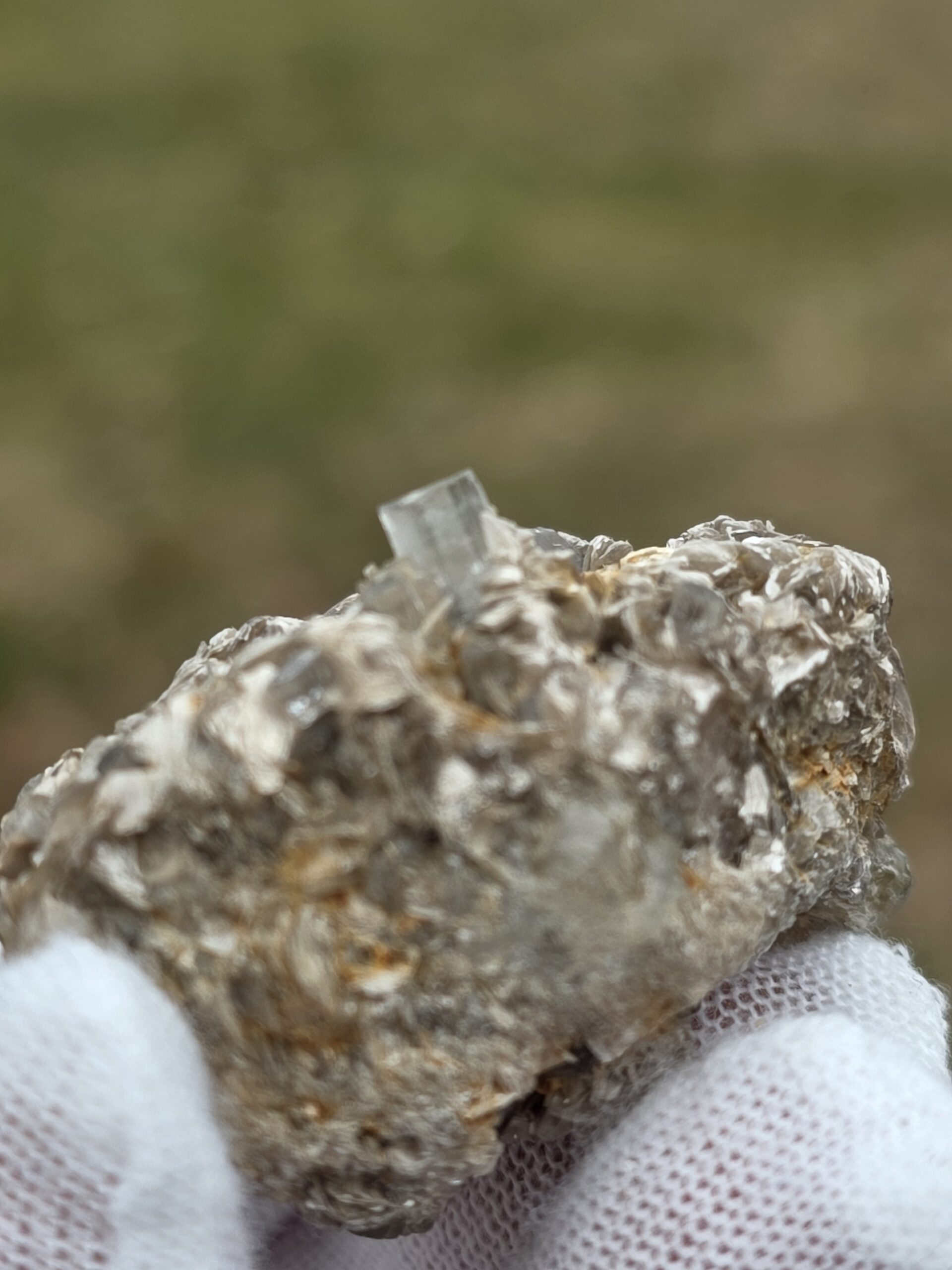
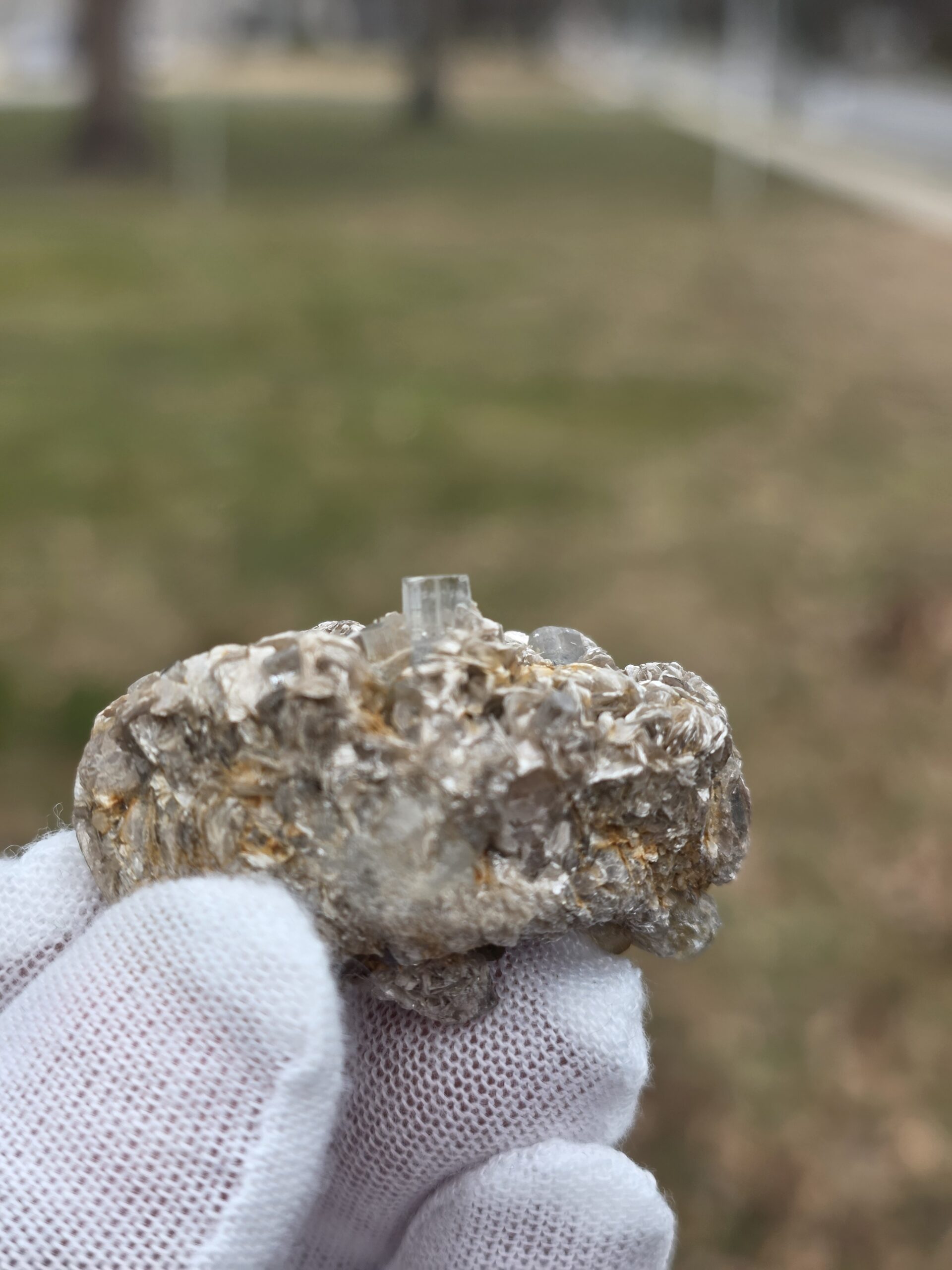
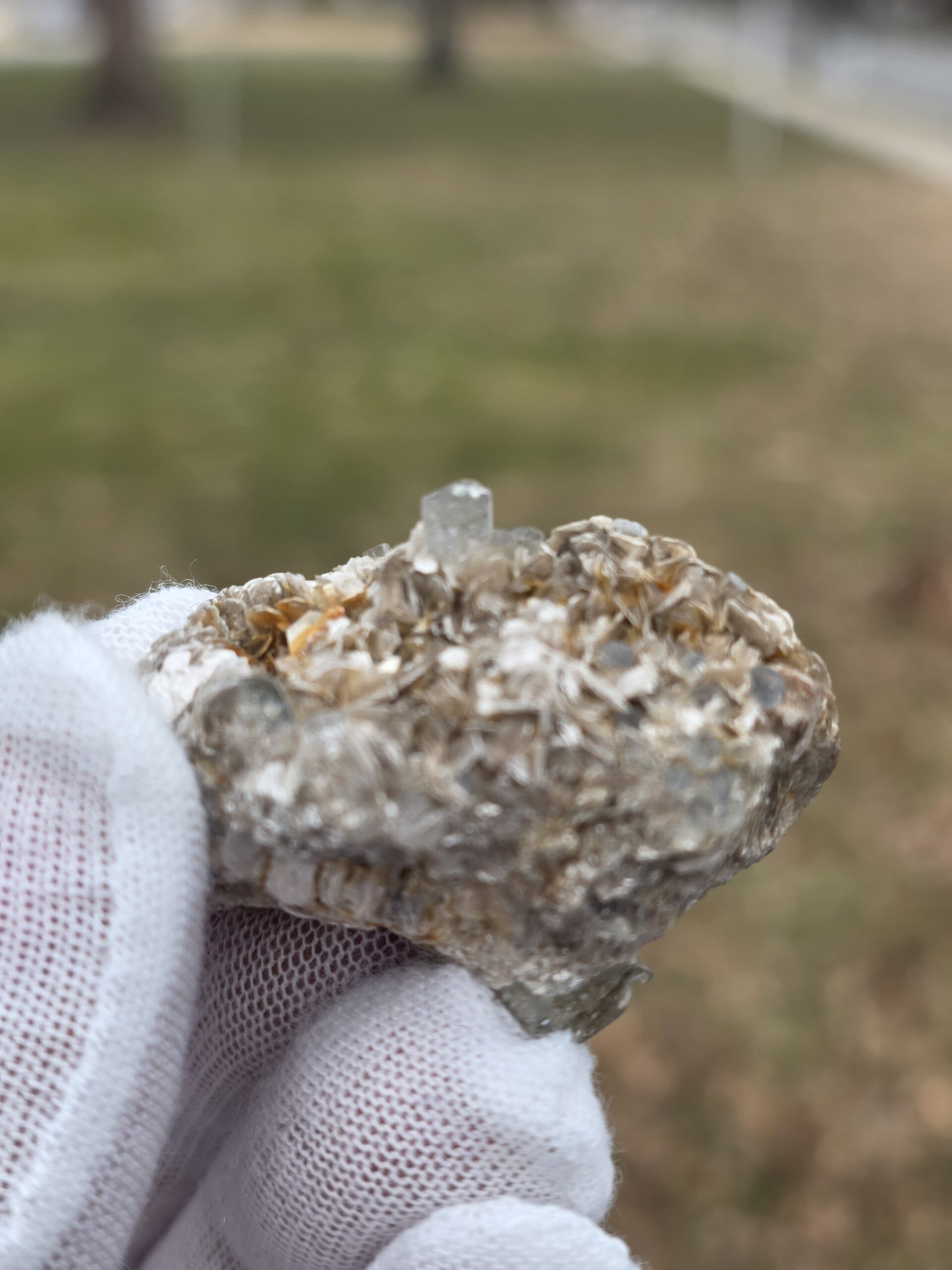
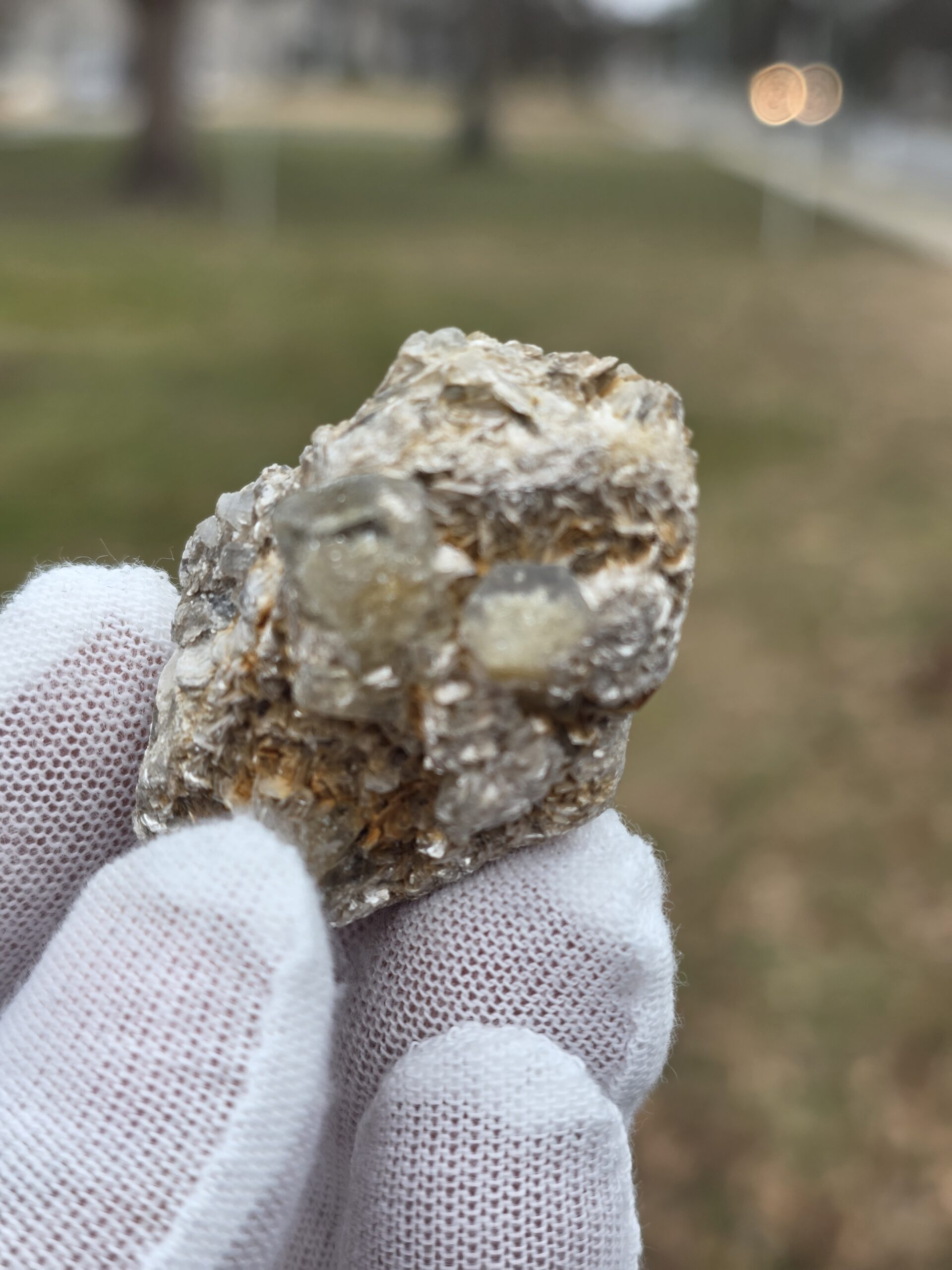
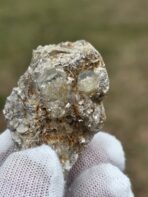
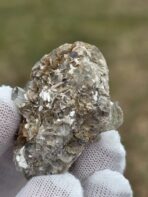
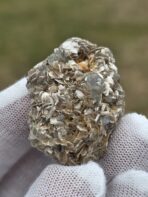
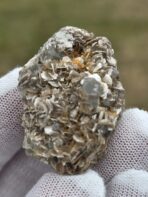
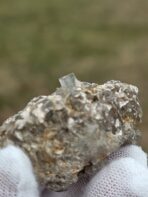
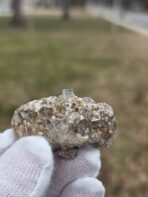
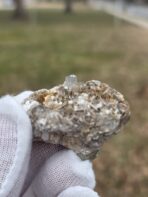
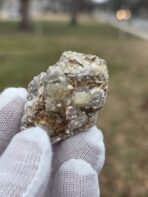

Certified Rare 152ct Aquamarine Crystal on Golden Muscovite Matrix – Natural Pakistan Pegmatite Specimen
GLverify.com Certificate No: 901055794061
Certified Value: US $165.00
SUMMARY:
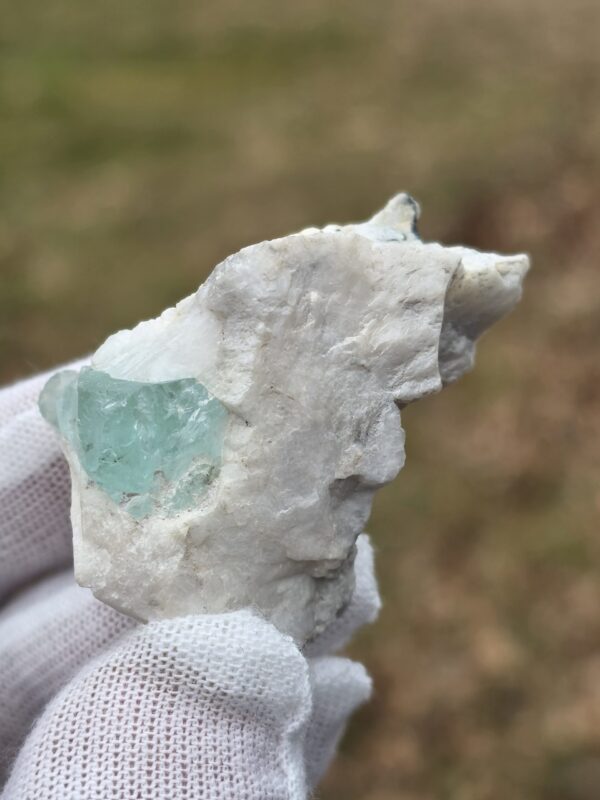
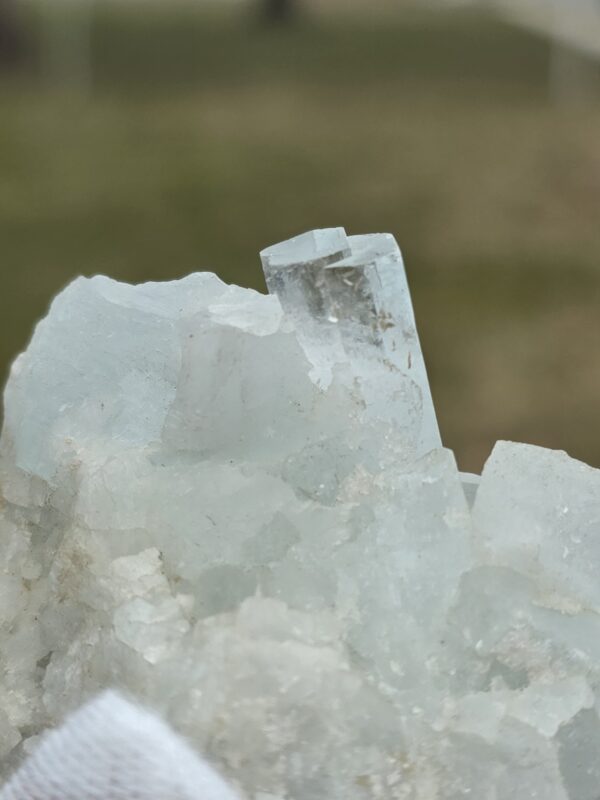
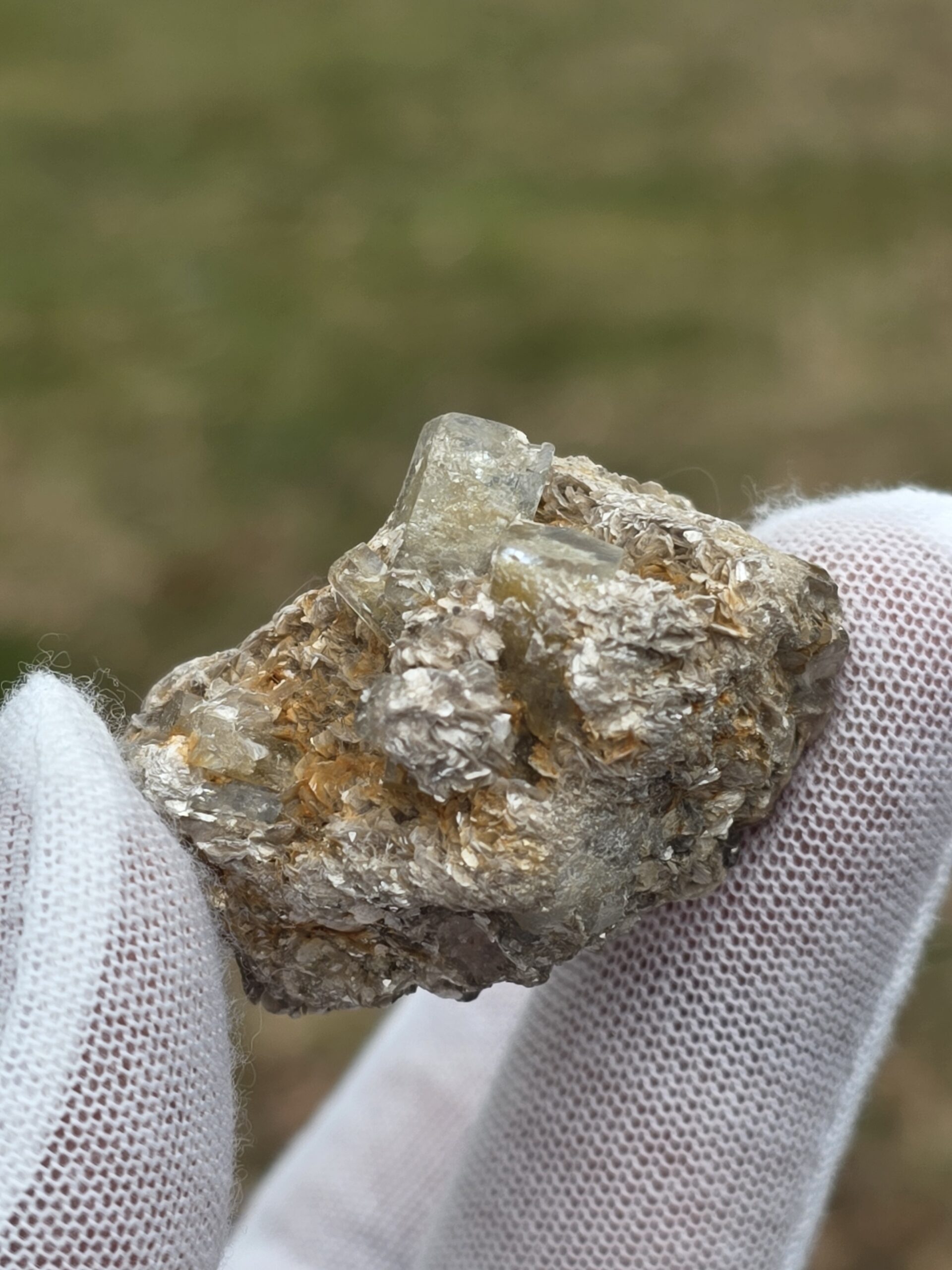
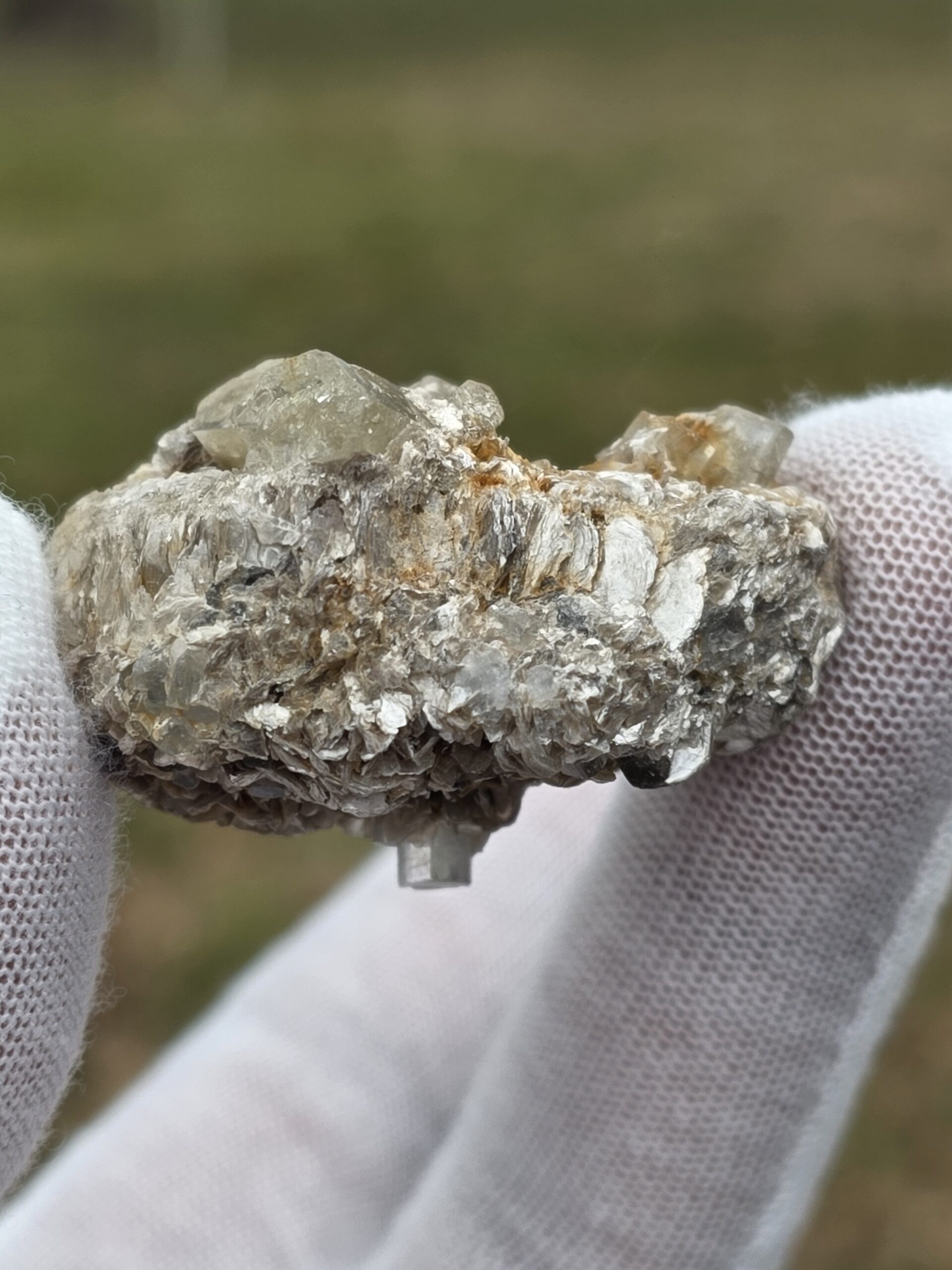
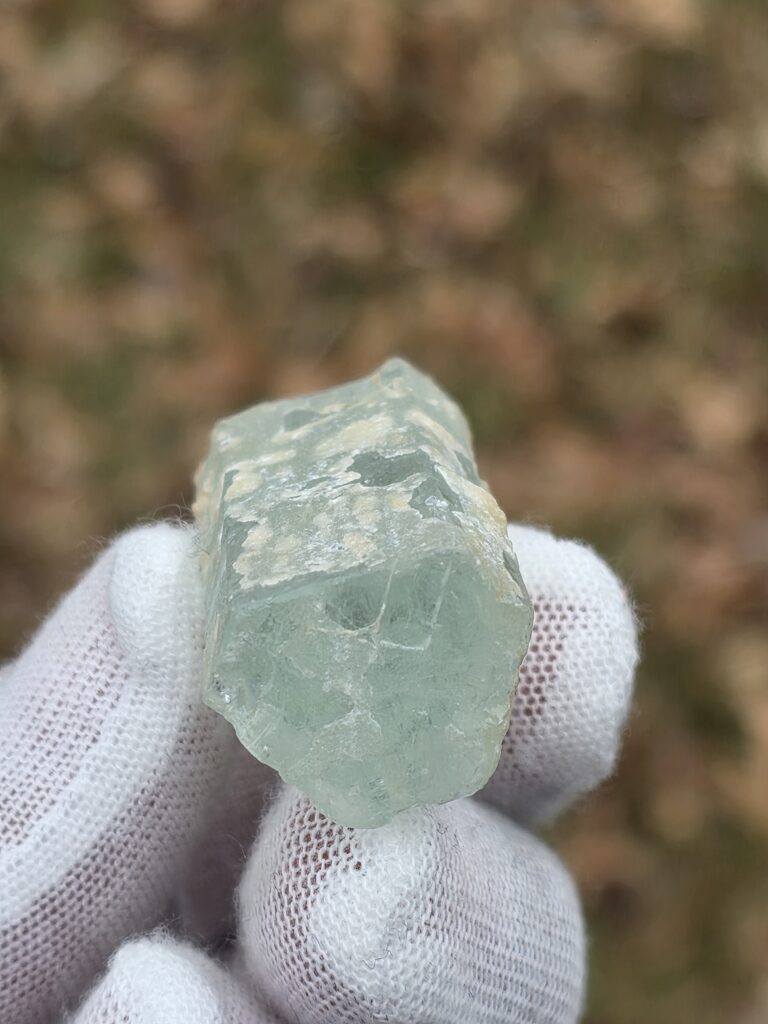
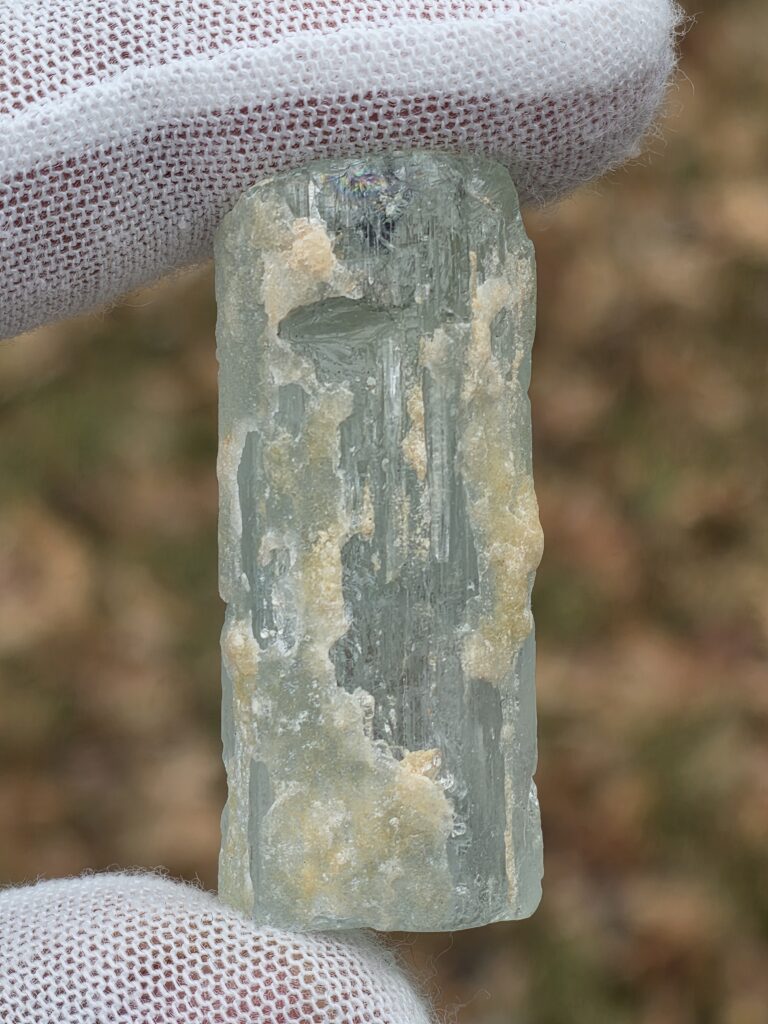
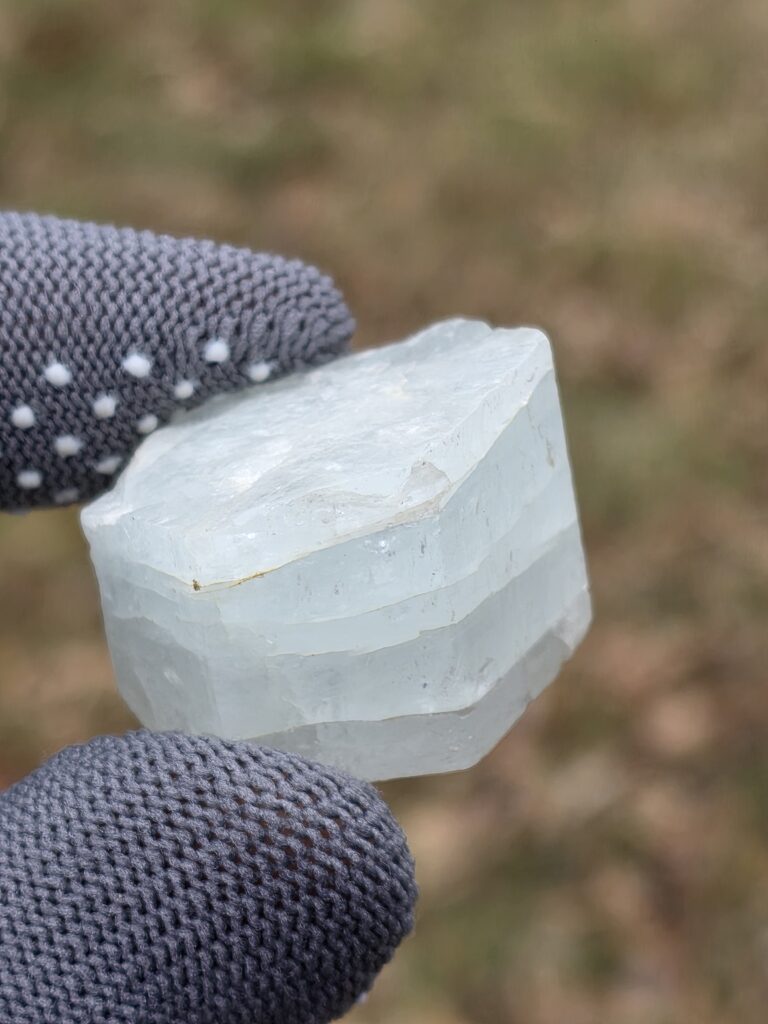
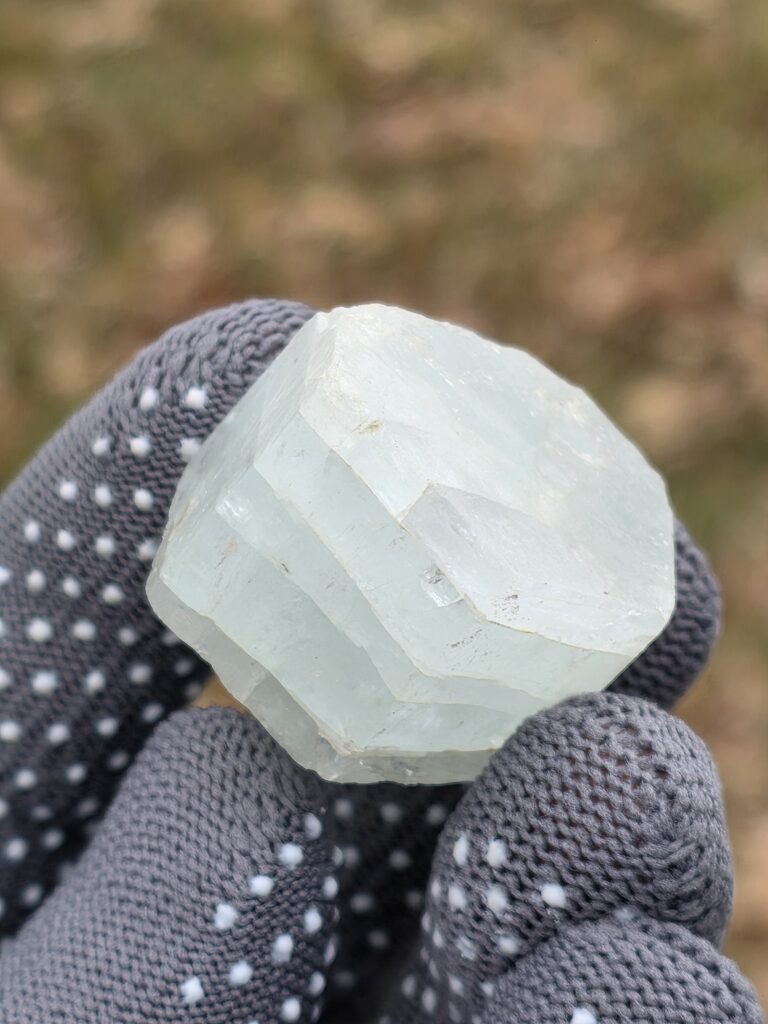
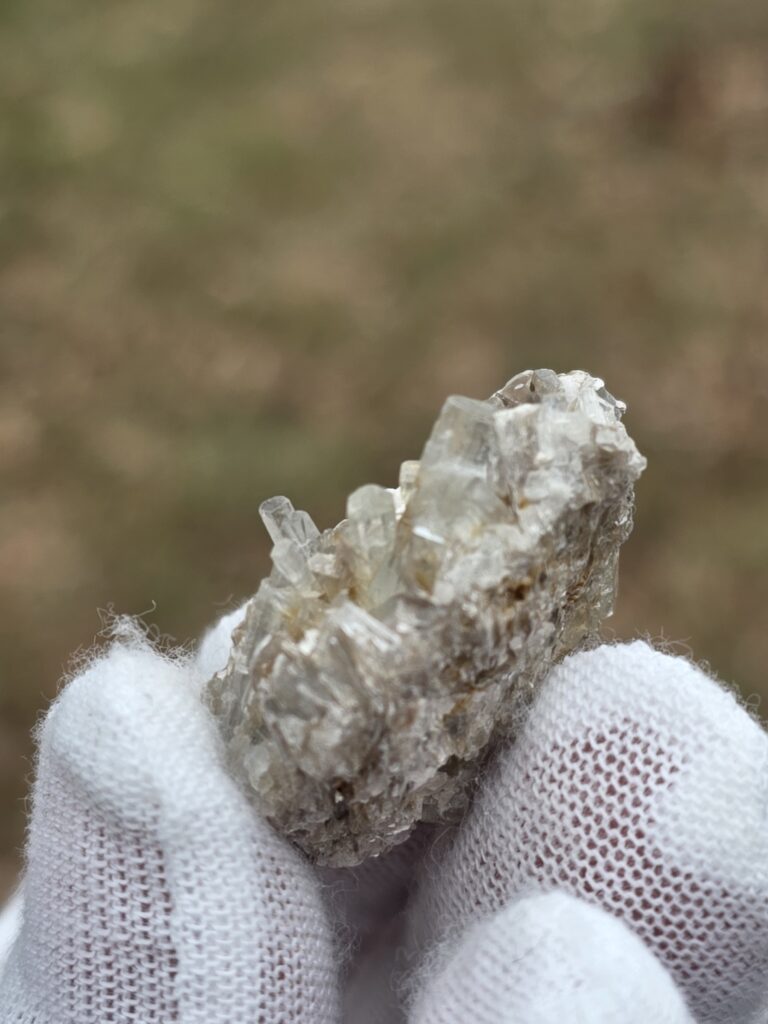
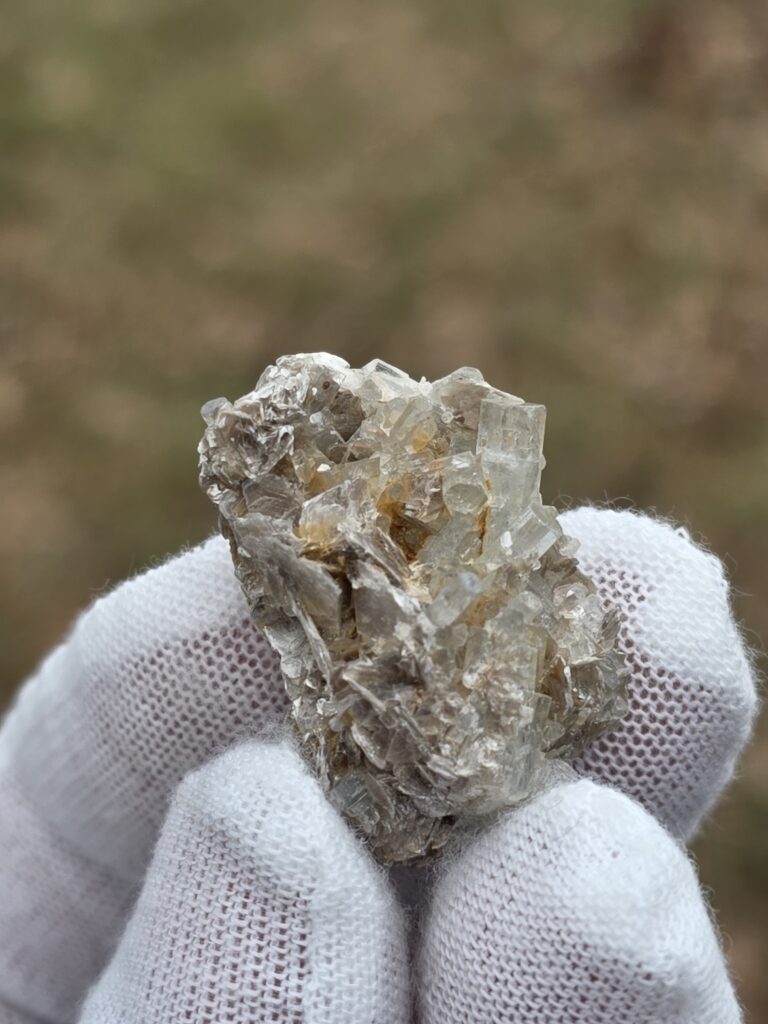
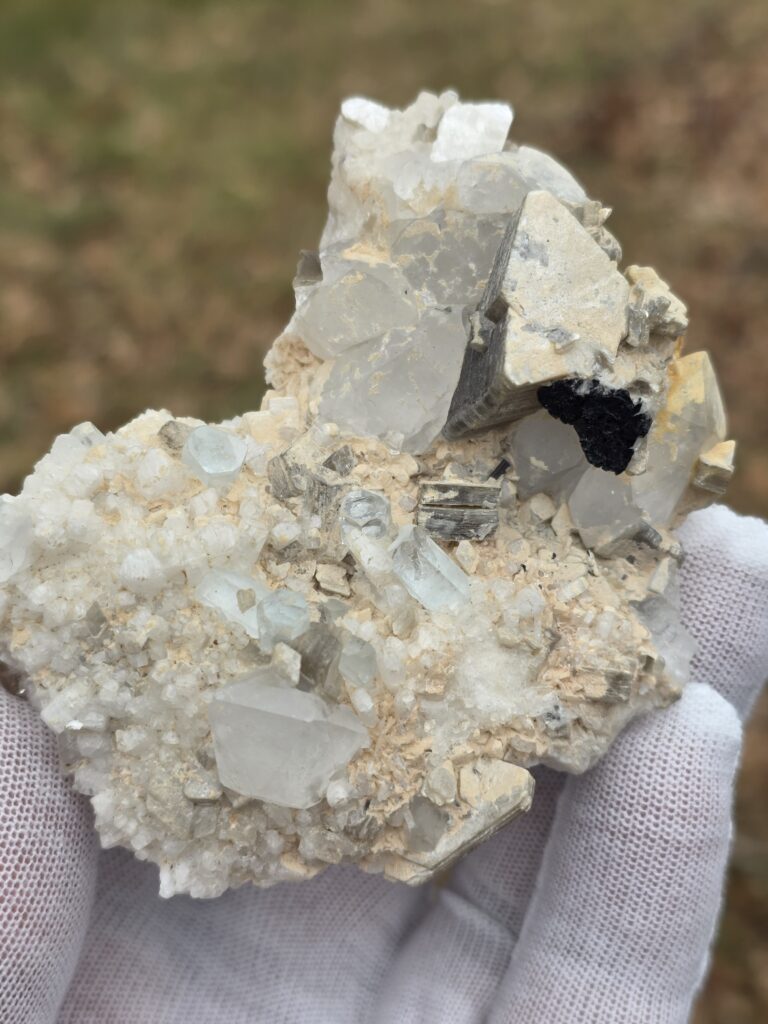
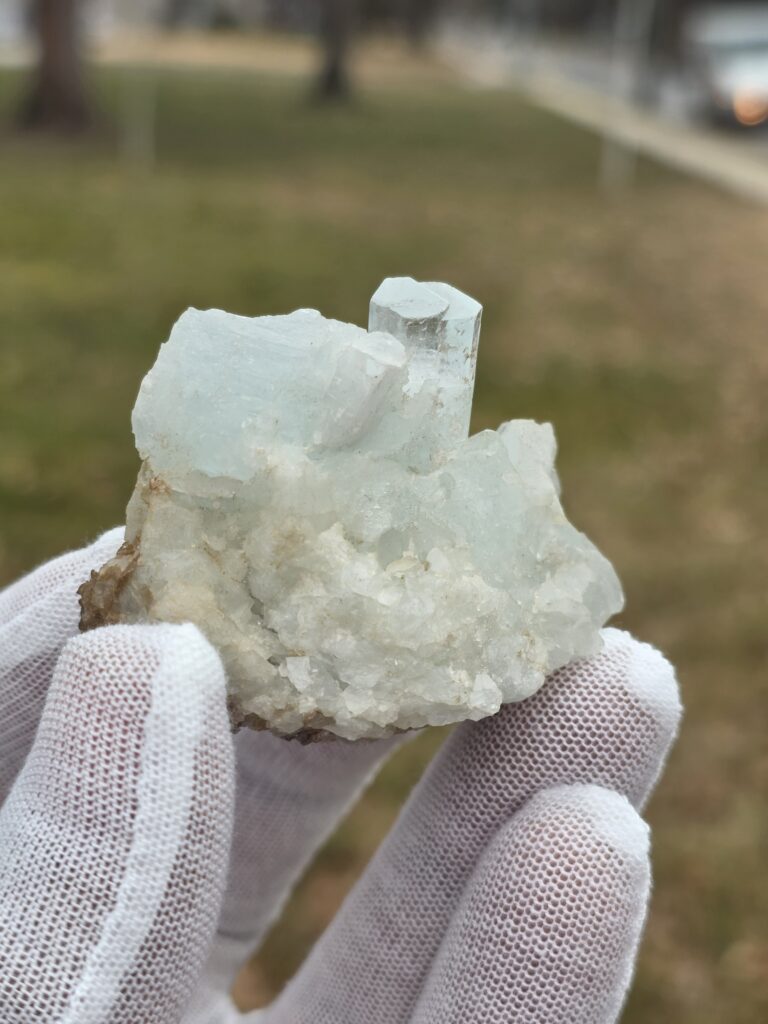
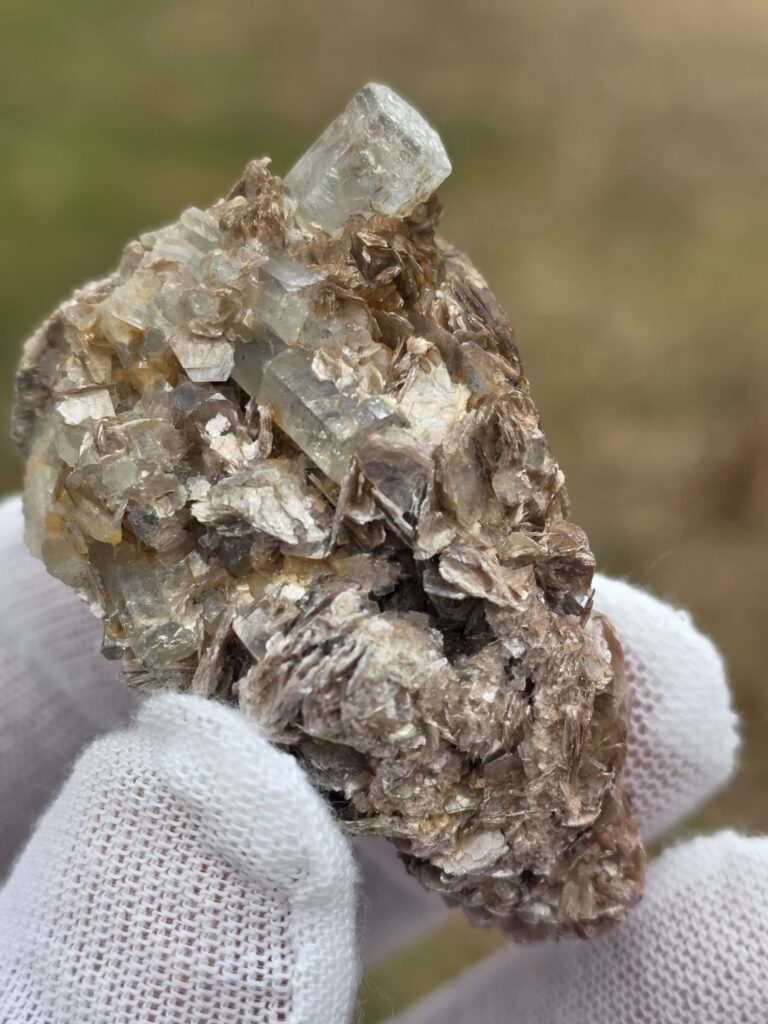
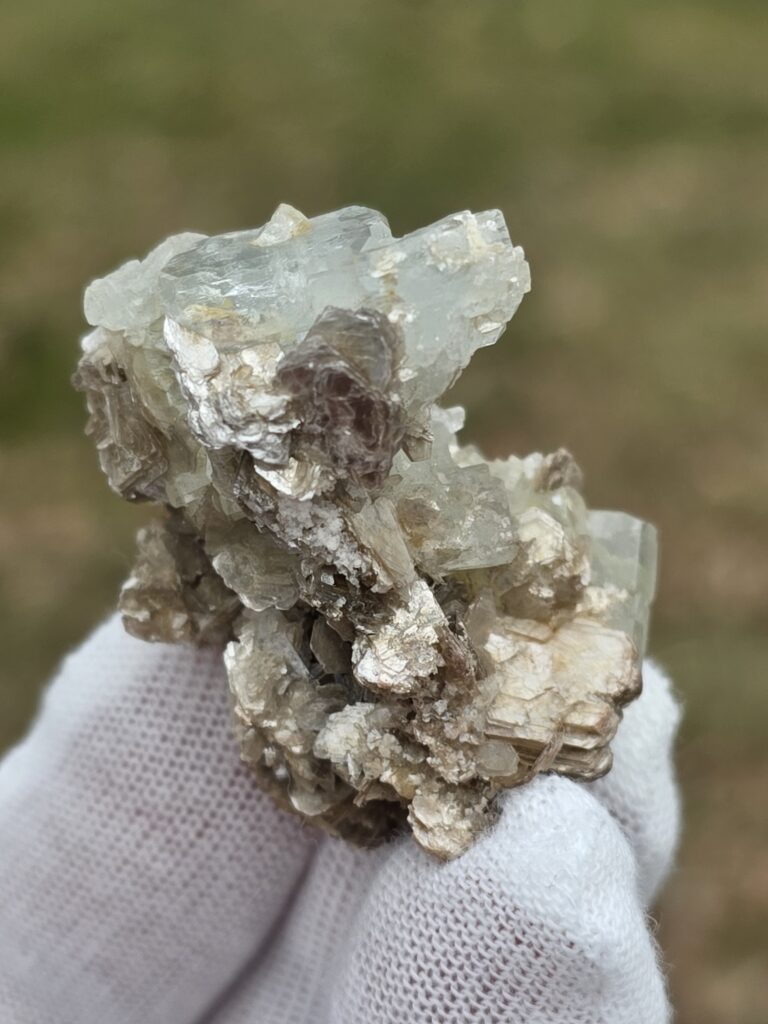
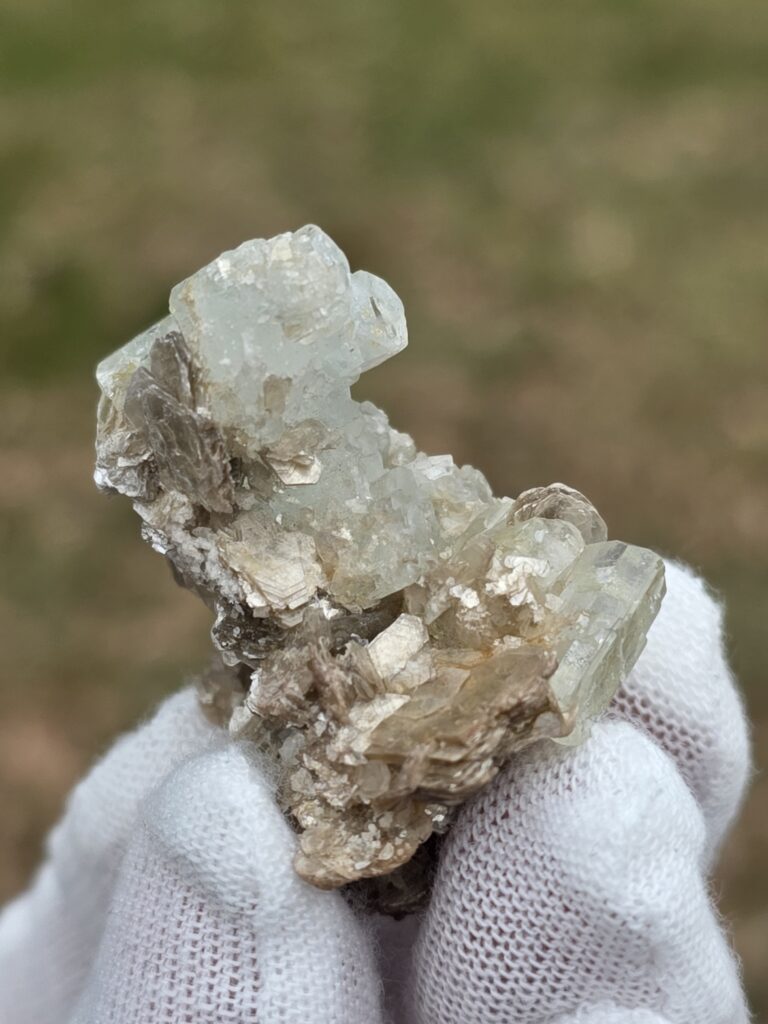
This 152.20-carat mineral specimen from Pakistan features delicate pale-blue aquamarine crystals nestled among a dense matrix of muscovite mica, quartz, and minor feldspar. The aquamarine crystals exhibit natural hexagonal form and translucent blue coloration, while the muscovite adds layered texture and sparkle. Quartz growths cover much of the surface, providing a brilliant contrast typical of high-altitude pegmatite formations from the Gilgit-Baltistan region. A well-balanced and highly textural collector specimen.
🔷 1. Primary Mineral: Aquamarine (Blue Beryl)
Although small, there are multiple pale-blue aquamarine crystals embedded within the specimen.
Visible Characteristics
Color: Very light icy blue (typical of aquamarine from northern Pakistan).
Habit: Small hexagonal prismatic crystals, some broken, some terminated.
Transparency: Translucent to semi-transparent.
Luster: Vitreous (glassy).
Distribution:
A few small aquamarine crystals are clearly visible on the edges and cracks of the specimen.
They are intermixed with quartz and muscovite layers.
These aquamarines are micro-sized compared to larger matrix specimens, but still identifiable and collectible.
Aquamarine Properties
Chemical Formula: Be₃Al₂Si₆O₁₈
Hardness: 7.5–8
Crystal System: Hexagonal
Coloration: Due to Fe²⁺ / Fe³⁺ iron impurities
🪨 2. Secondary Mineral: Muscovite Mica (Major Component)
This specimen is muscovite-rich, forming most of the visible matrix.
Features Seen in the Images
Layered, sheet-like crystal formations
Silvery to beige coloration
Pearly luster
Thin platy or book-like aggregates
Some weathering and iron staining
This mica matrix is very typical for aquamarine-bearing pegmatites.
⚪ 3. Quartz (Abundant Accessory Mineral)
Much of the shiny, glassy-looking crystalline mass is milky quartz.
Visible Signs
White to translucent clusters
Radiating and interlocking growths
High reflectivity under light
Rough, irregular crystal development
Quartz is often the most abundant mineral in Pakistani pegmatites.
🟫 4. Feldspar (Possible Albite or Microcline)
Some beige and off-white granular areas suggest feldspar.
Identifiable Clues
Blocky, non-glassy texture
Cream to tan coloration
Partially weathered surfaces
This is normal for aquamarine-bearing pegmatite host rock.
🧭 5. Geological Context (Northern Pakistan Pegmatites)
This specimen comes from the Himalayan pegmatite belt of Gilgit-Baltistan, likely from regions such as:
Shigar Valley
Skardu District
Chumar Bakhoor
Haramosh Range
These pegmatites produce:
Aquamarine
Quartz
Feldspar
Muscovite
Occasional tourmaline/Garnet (not visible here)
Formation Process
Granite magma intrudes and slowly cools.
Feldspar and quartz crystallize first.
Late-stage volatile-rich fluids deposit aquamarine in cavities.
Muscovite forms in layered plates around the beryl.
This piece reflects this classic pegmatite association.
Condition & Authenticity Assessment
100% natural aquamarine
Unheated and untreated
No dyeing, coating, or stabilization
Retains original growth surfaces and internal crystal features
Suitable for:
Mineral specimen collections
Display pieces
Educational or certification purposes
Reviews
There are no reviews yet.