

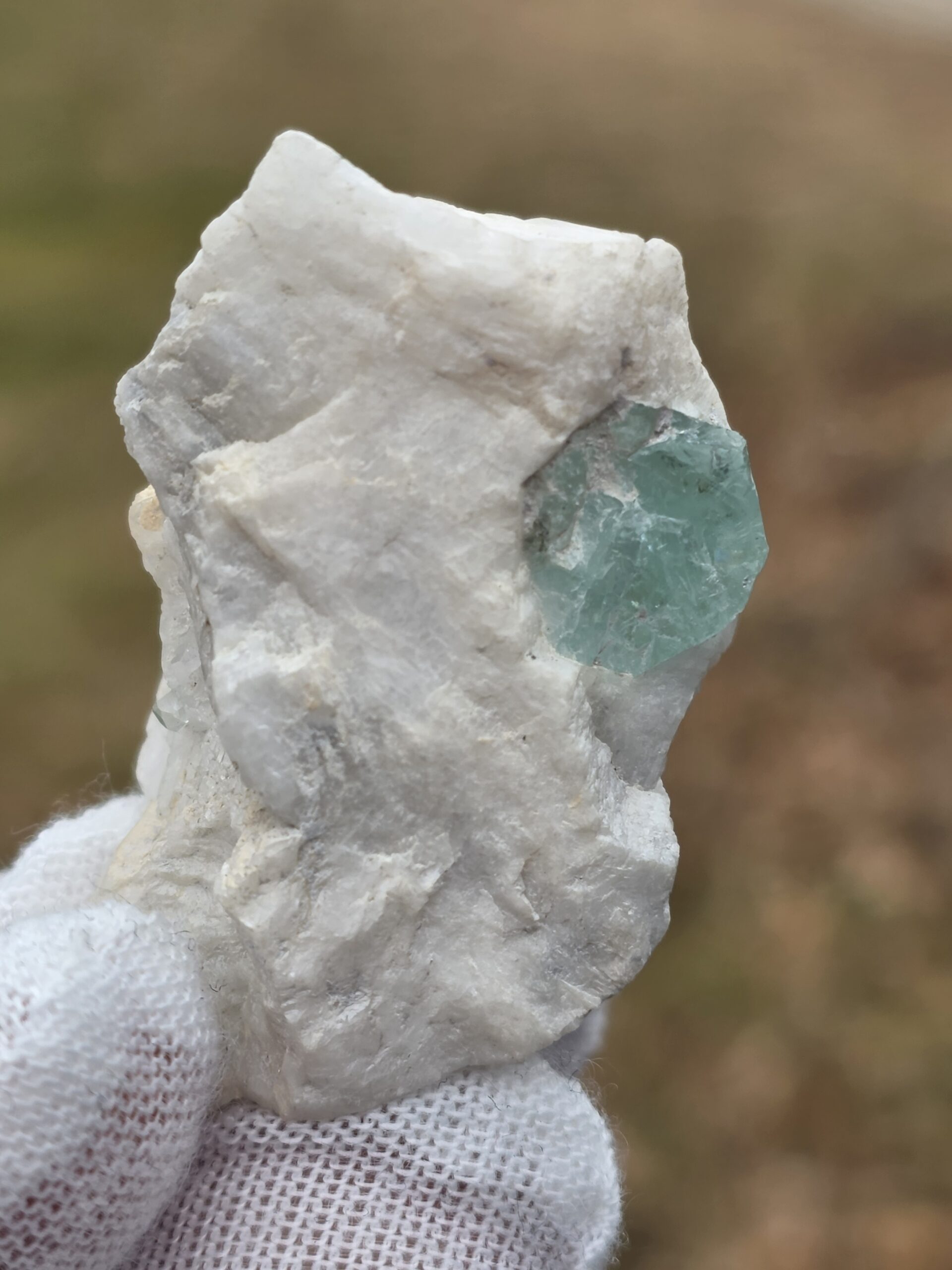
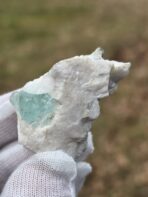
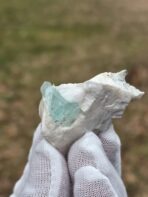
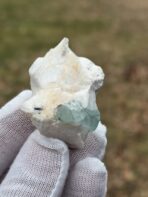
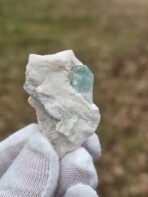
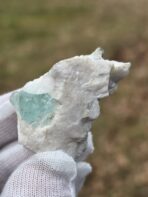
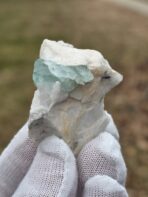
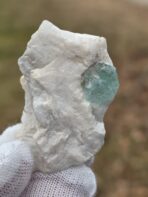

Certified 156.25 ct Natural Aquamarine Crystal on Albite Matrix – Pakistan Pegmatite Mineral Specimen
GLverify.com Certificate No: 901041469382
Certified Value: US $130.00
SUMMARY:
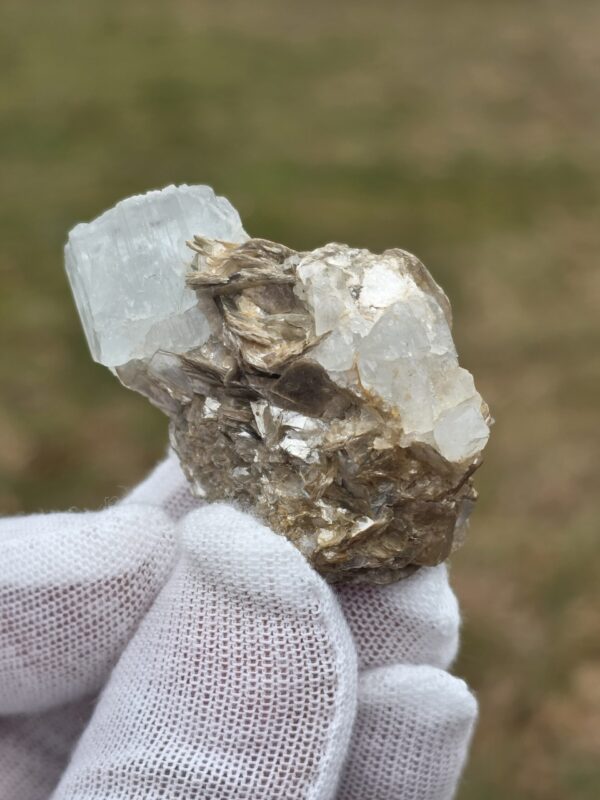
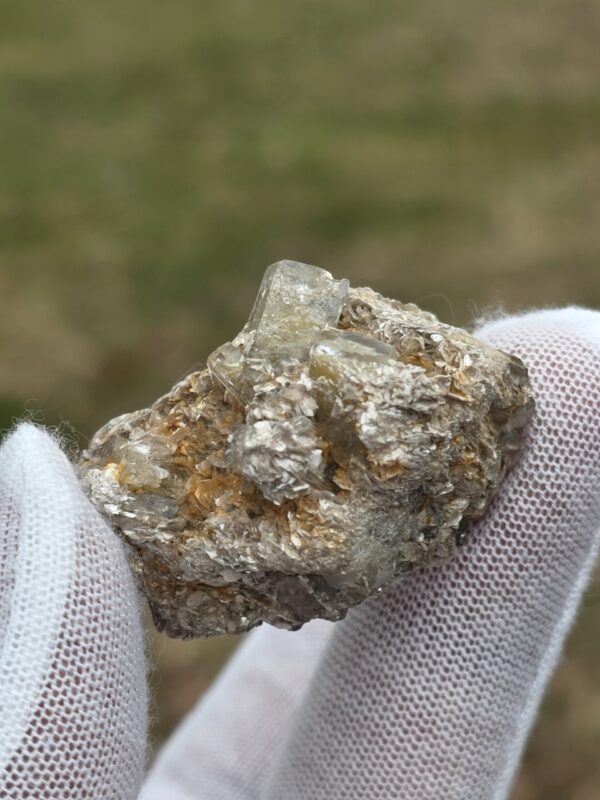
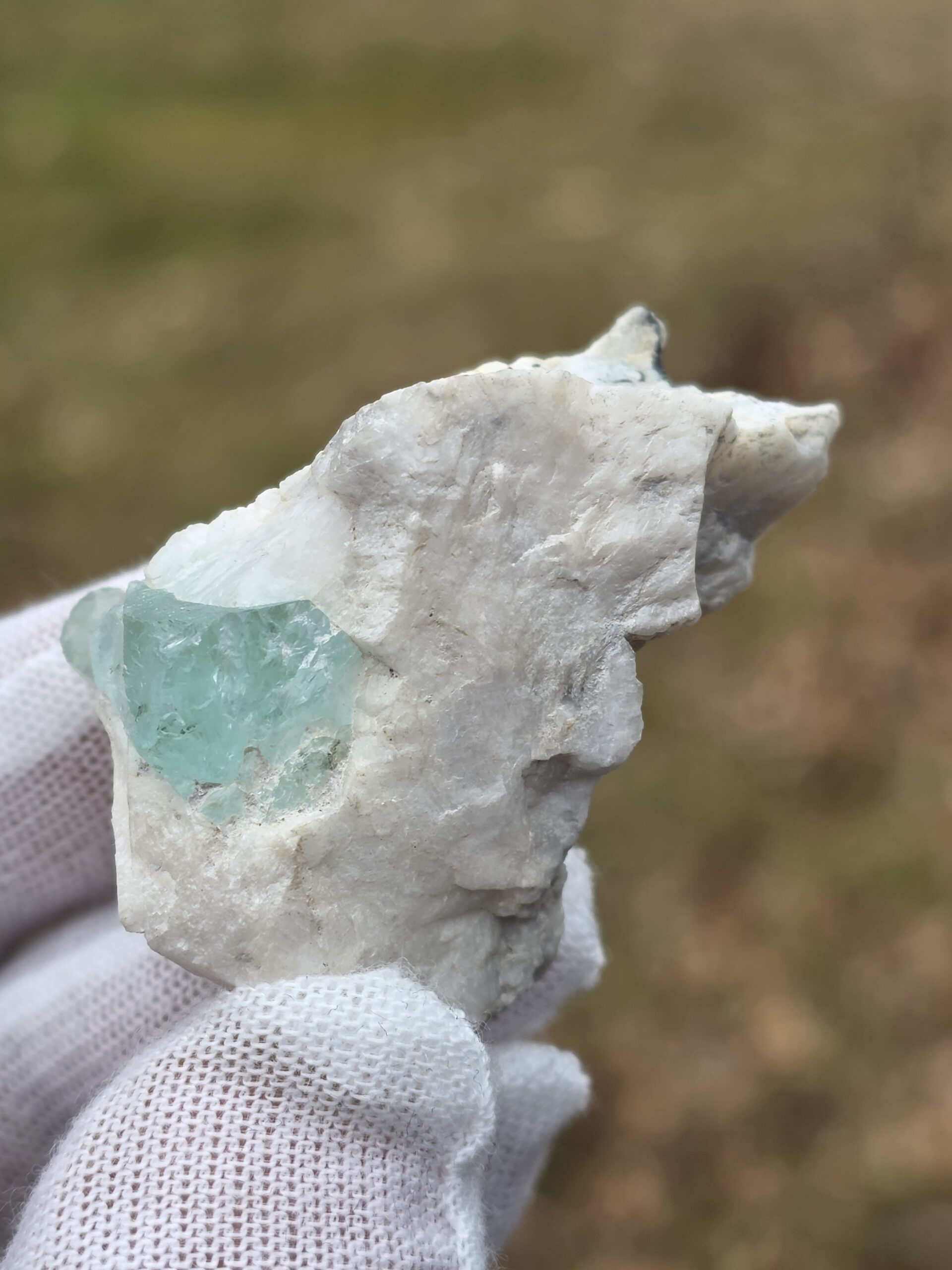
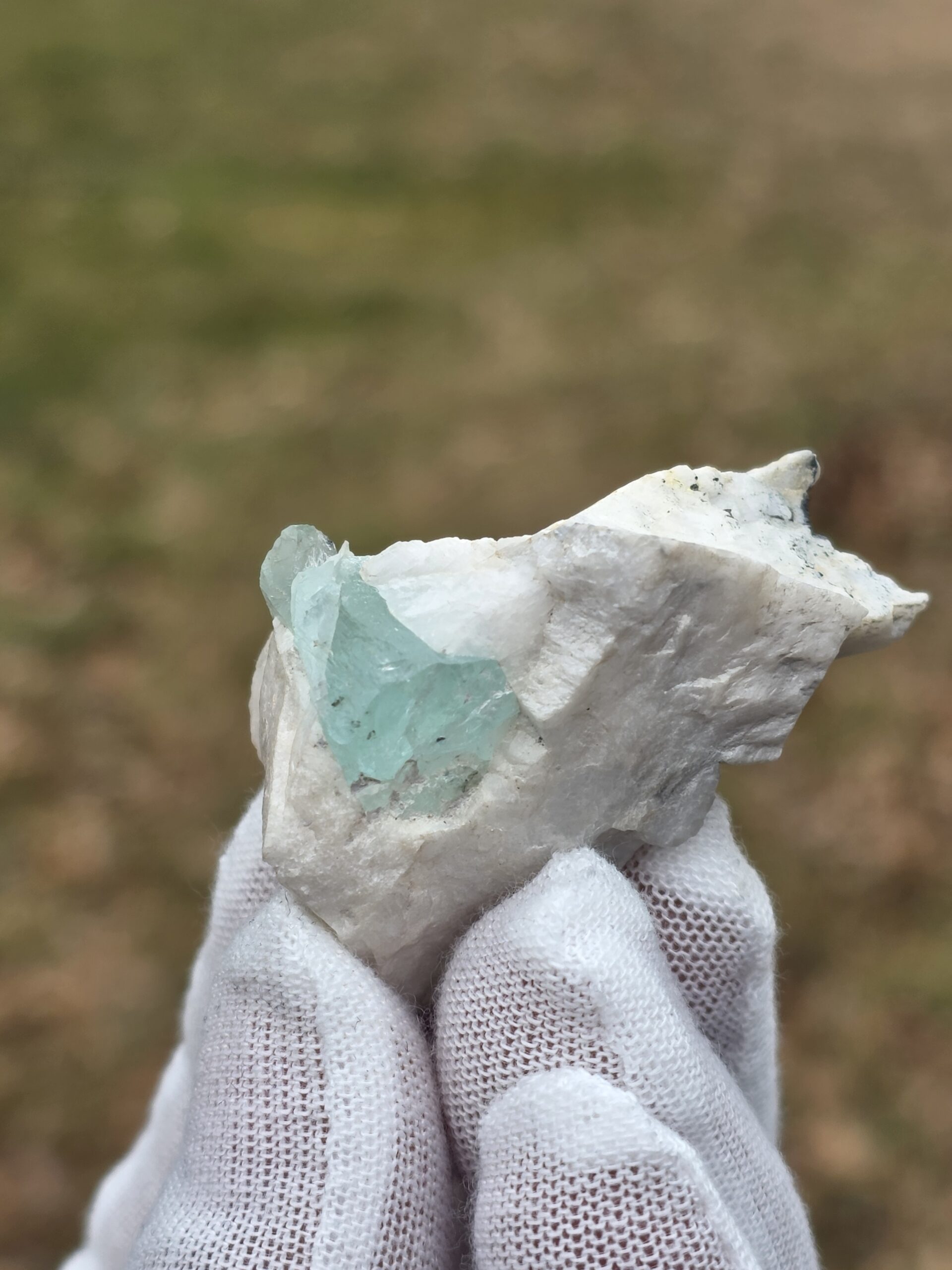
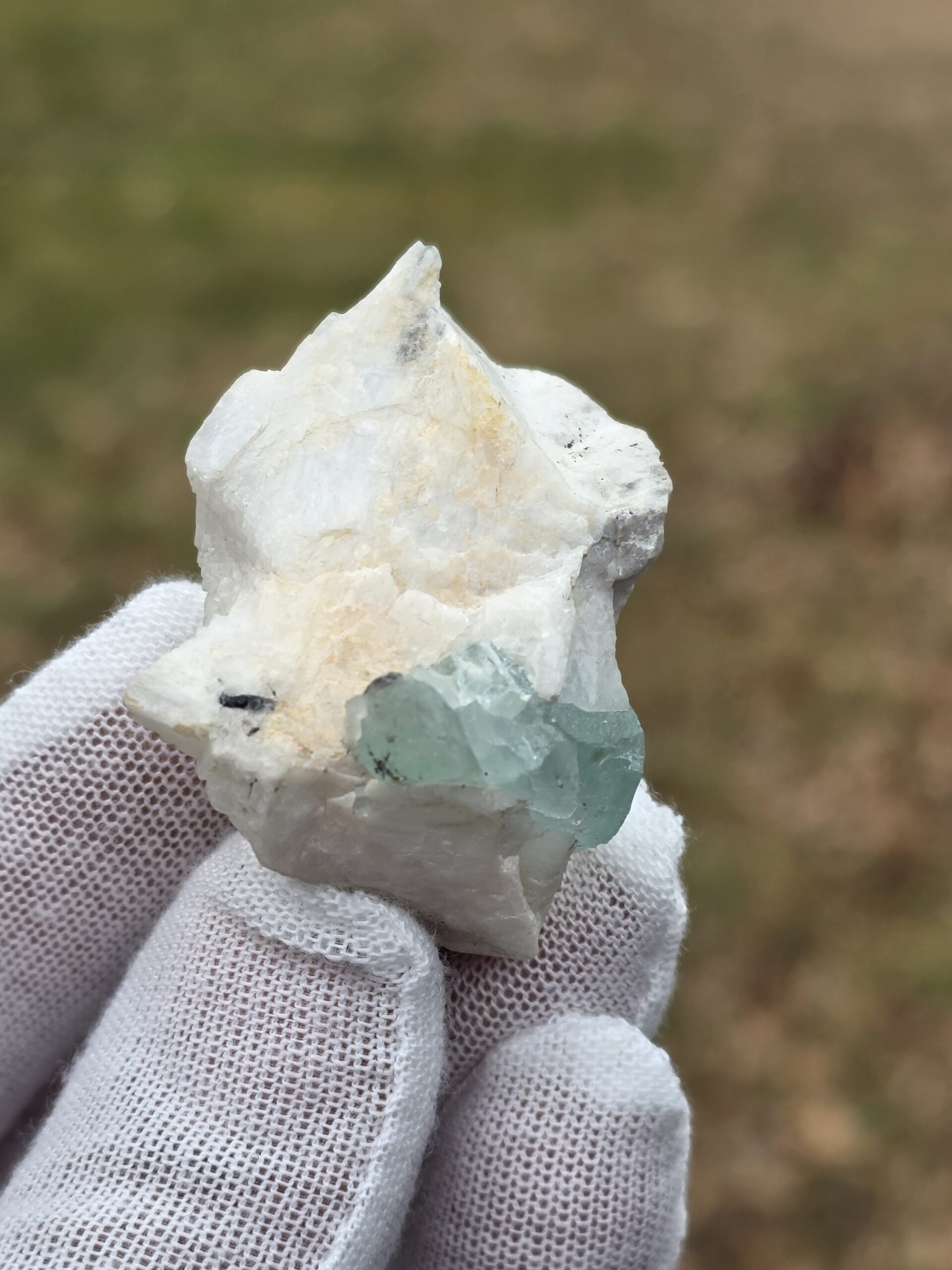
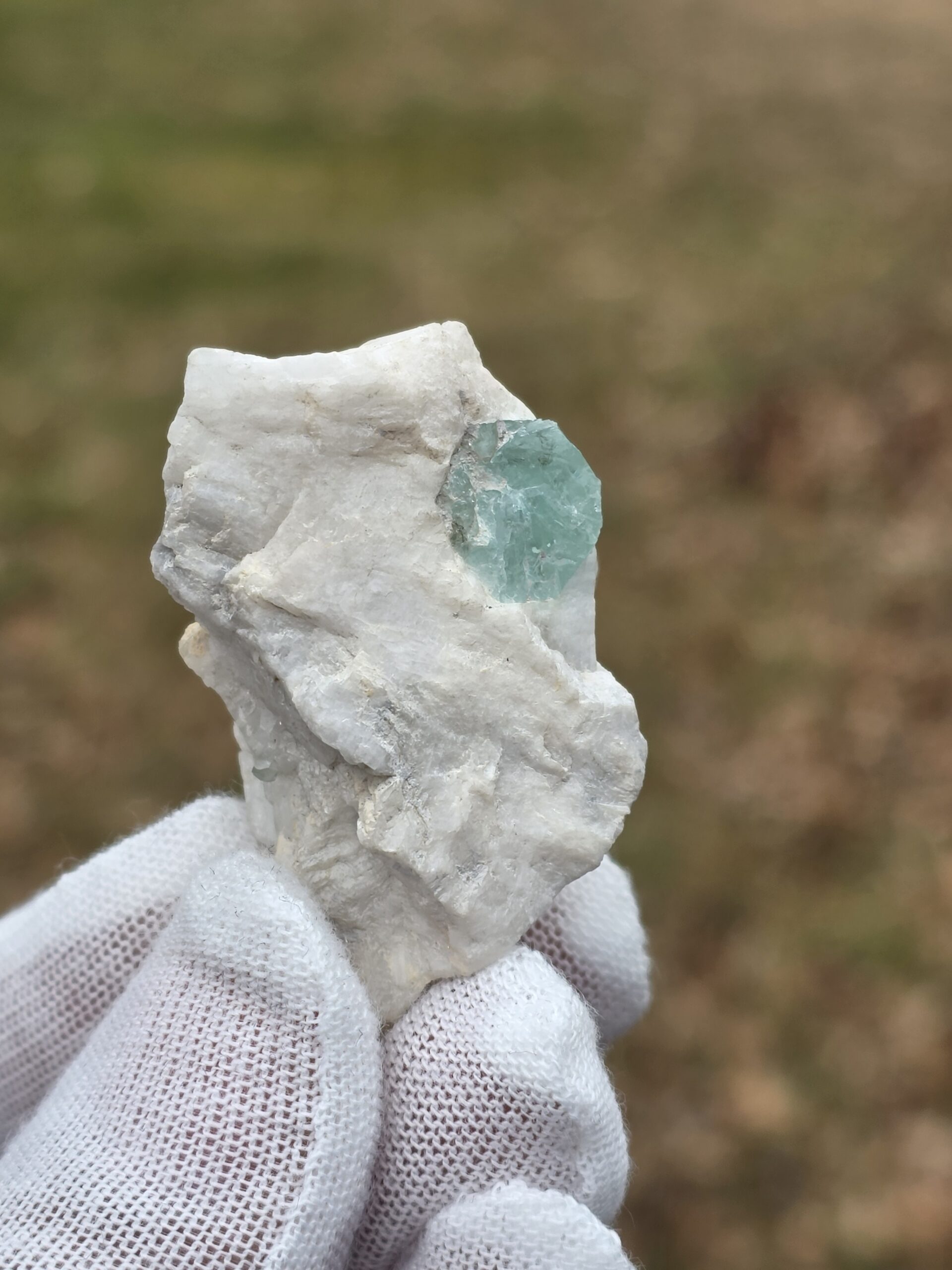
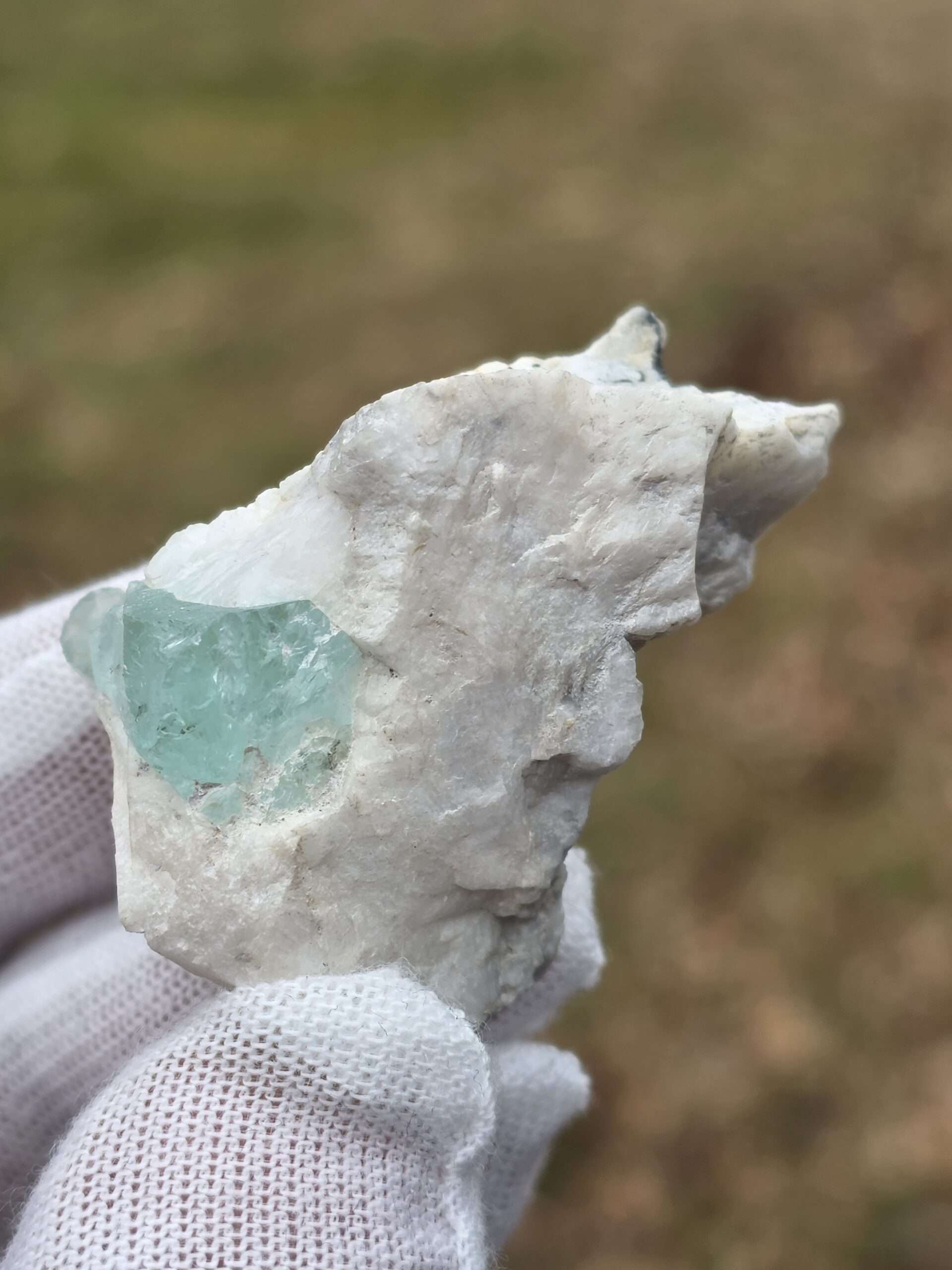
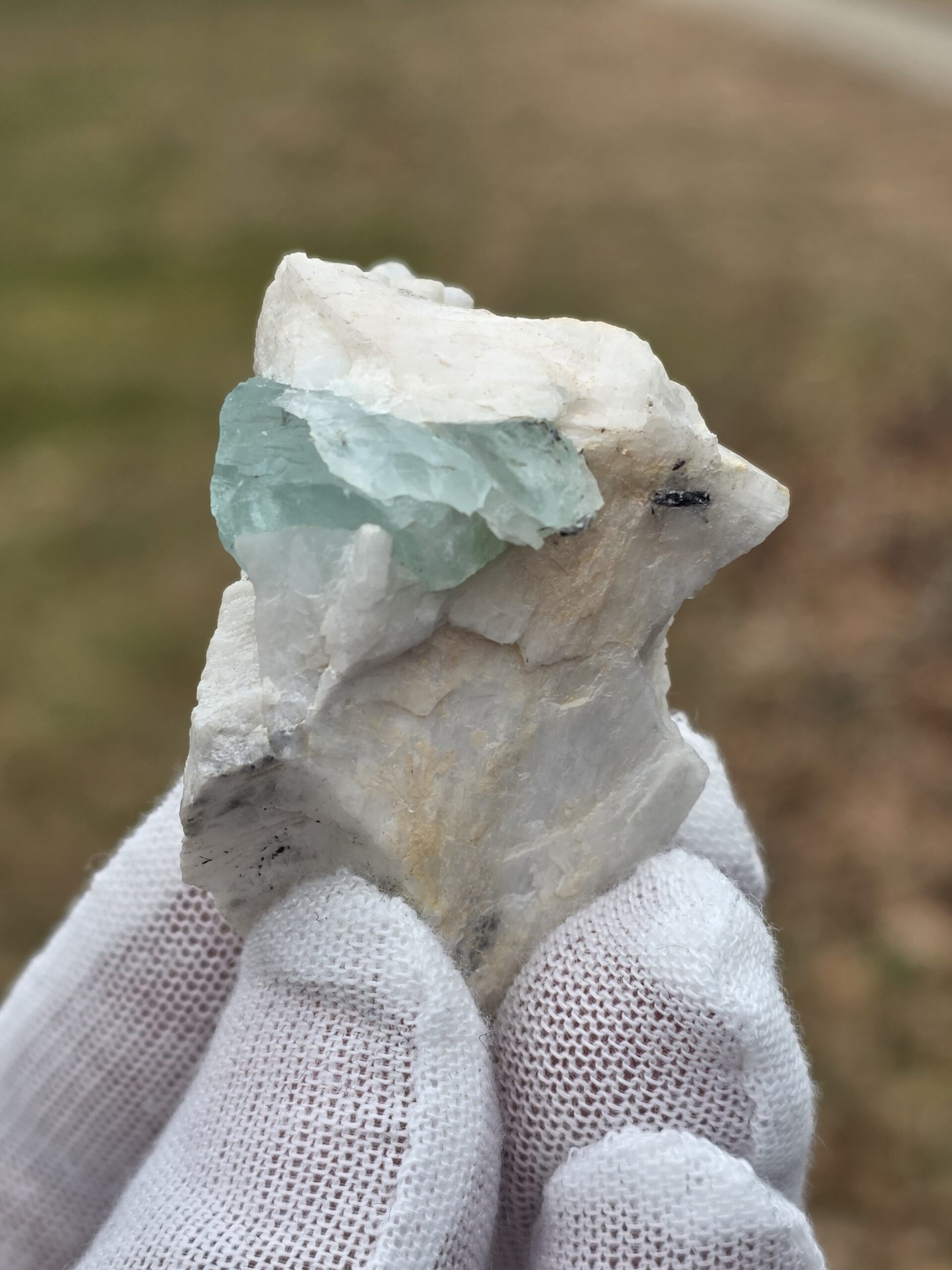
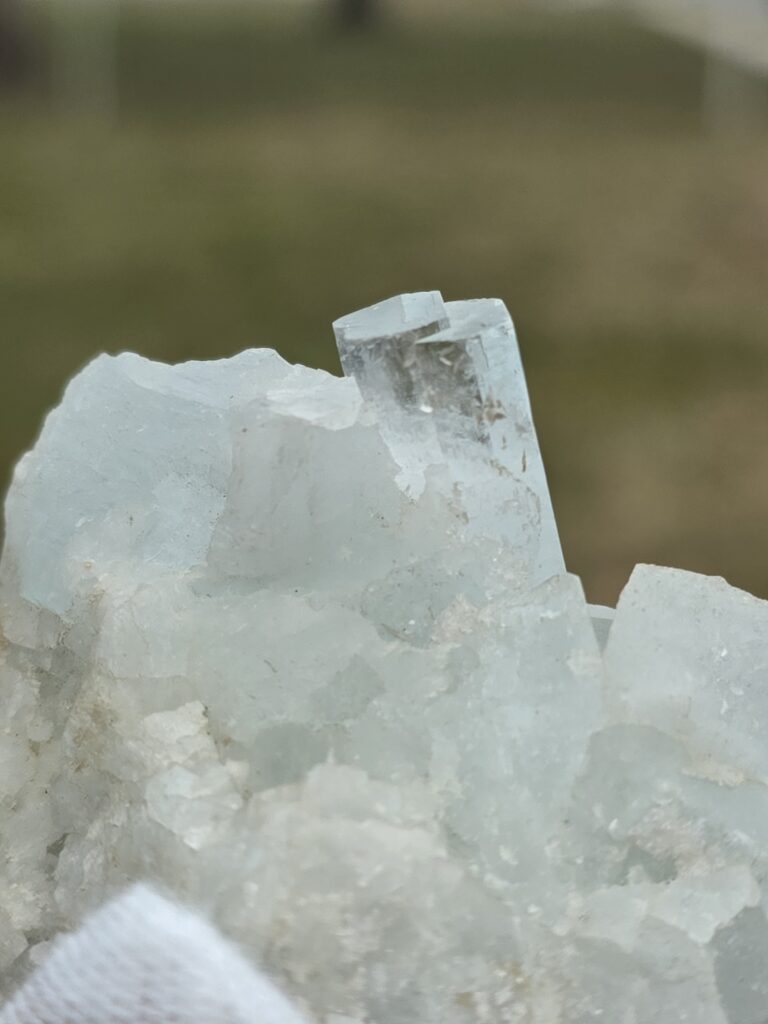
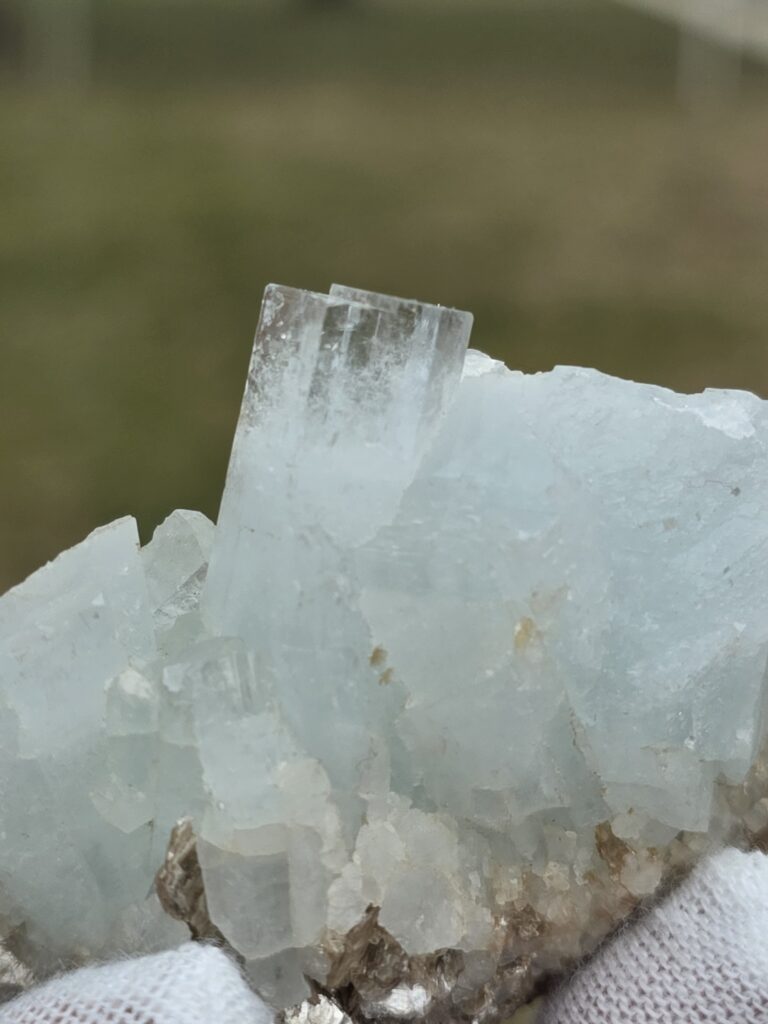
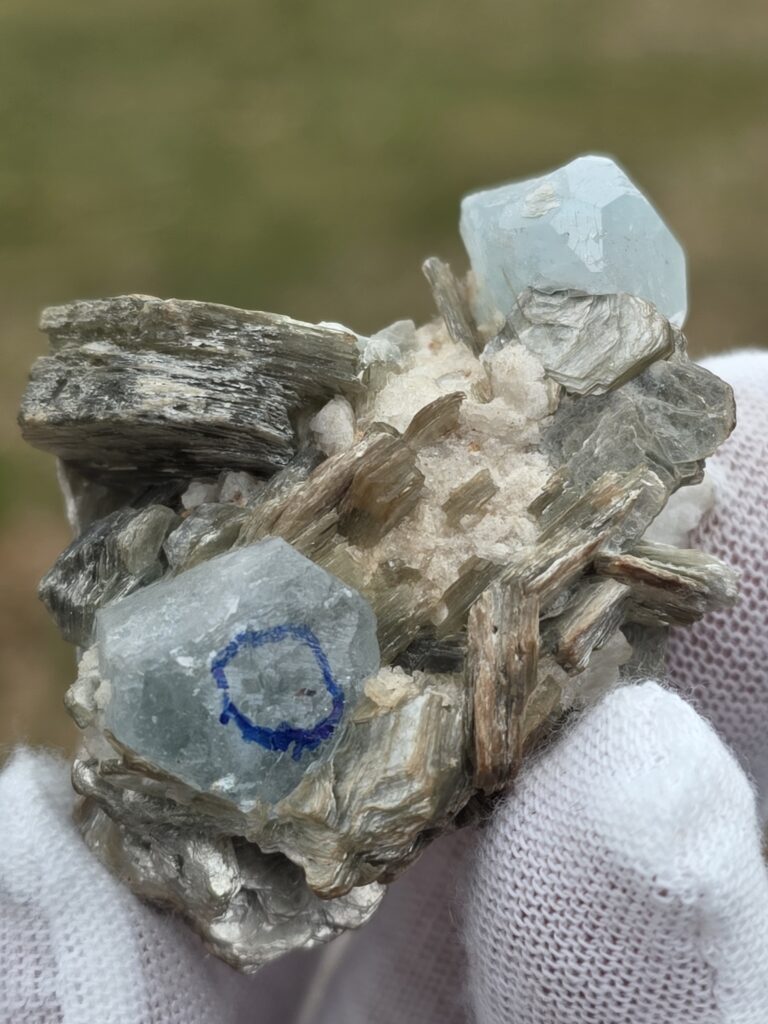
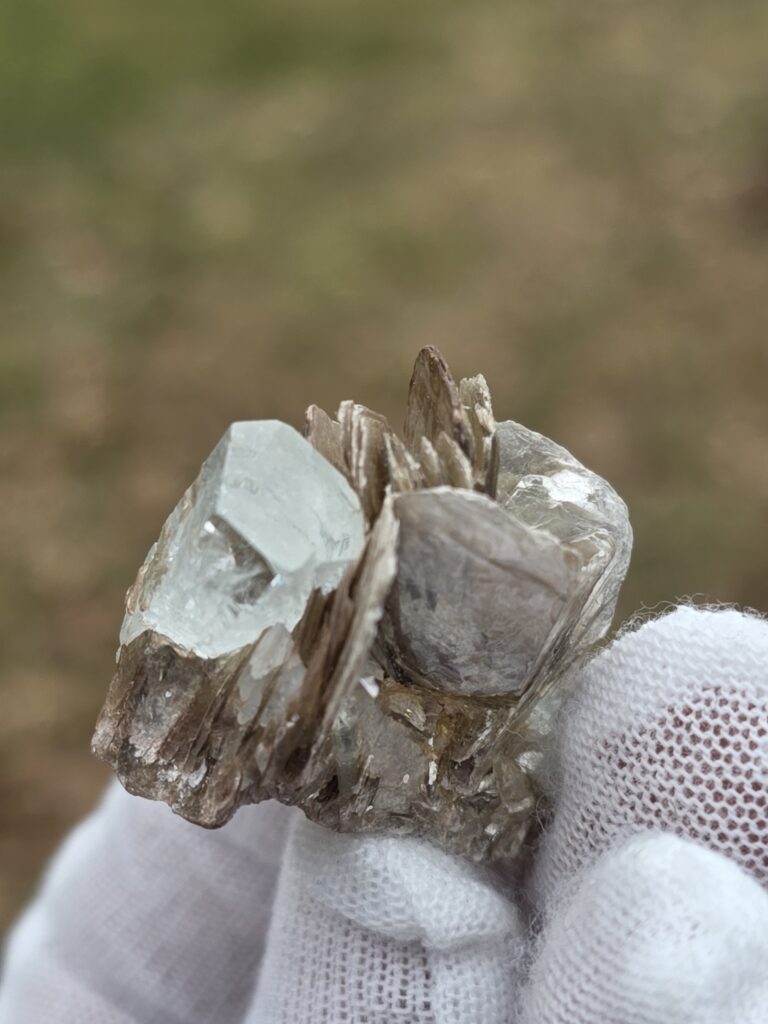
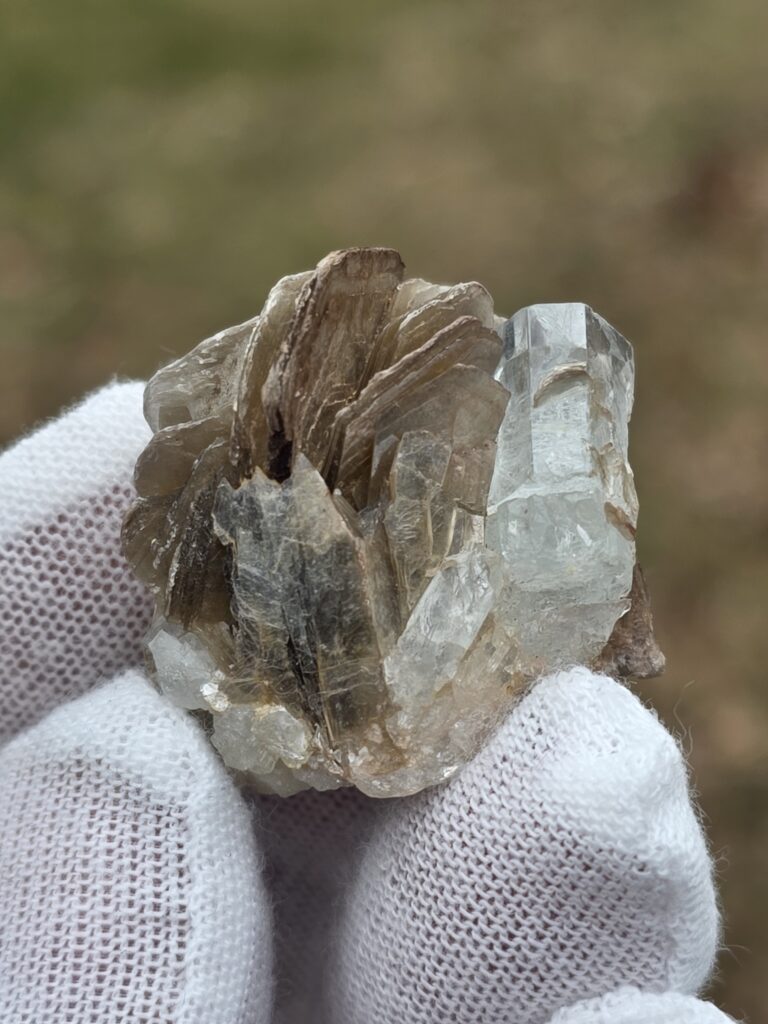
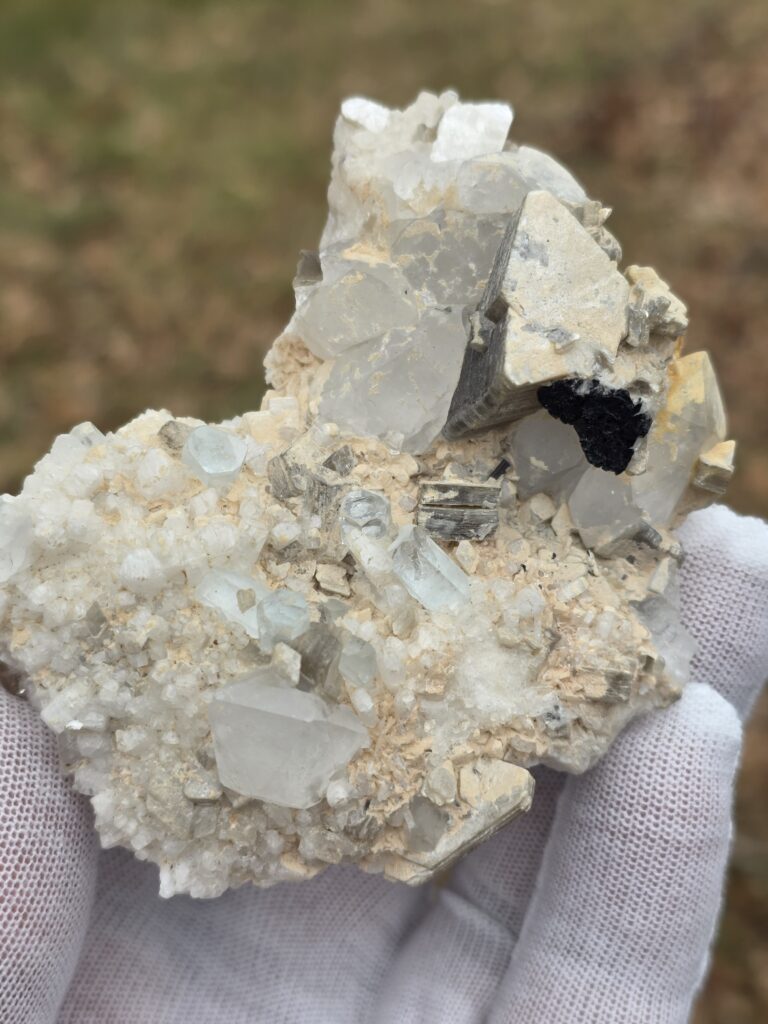
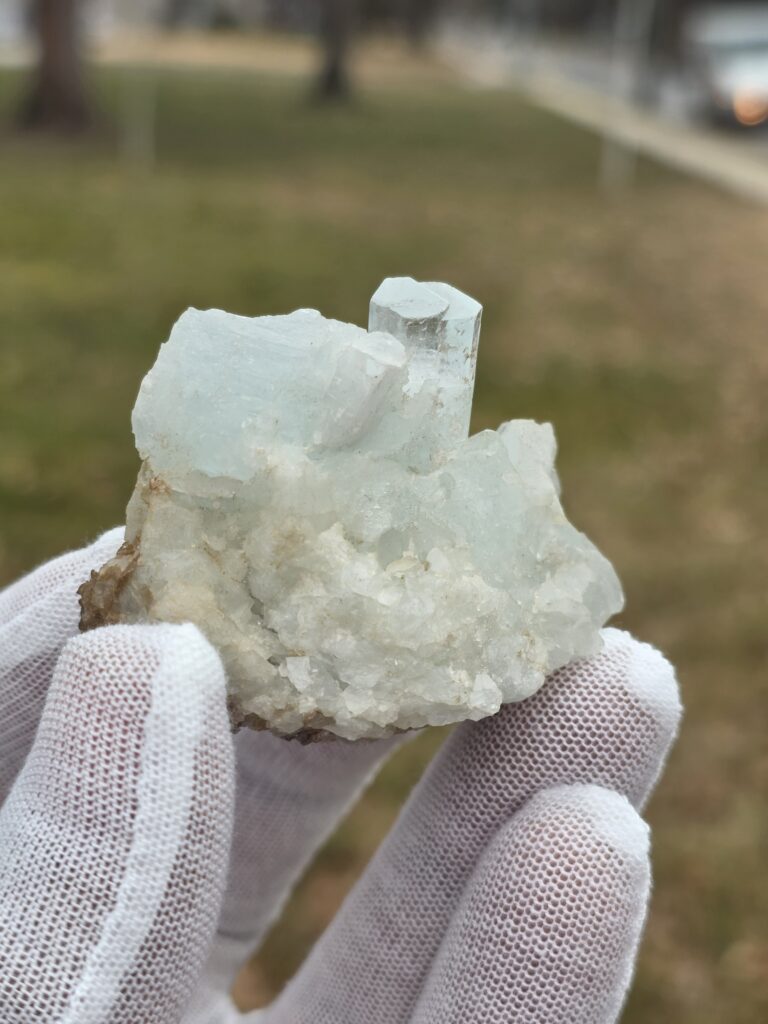
This 156.25-carat aquamarine specimen from northern Pakistan features a well-formed translucent aquamarine crystal set in a natural feldspar and quartz matrix. The aquamarine displays pale blue coloration, visible hexagonal structure, and natural growth zoning typical of Himalayan pegmatite formations. The white feldspar matrix provides strong contrast, while quartz intergrowths highlight the crystal’s natural environment. A classic example of aquamarine in situ from the renowned Gilgit-Baltistan mineral region.
🔷 1. Primary Mineral: Aquamarine (Blue Beryl)
This specimen features a large, prominent aquamarine crystal embedded in a feldspar–quartz matrix.
Visible Characteristics
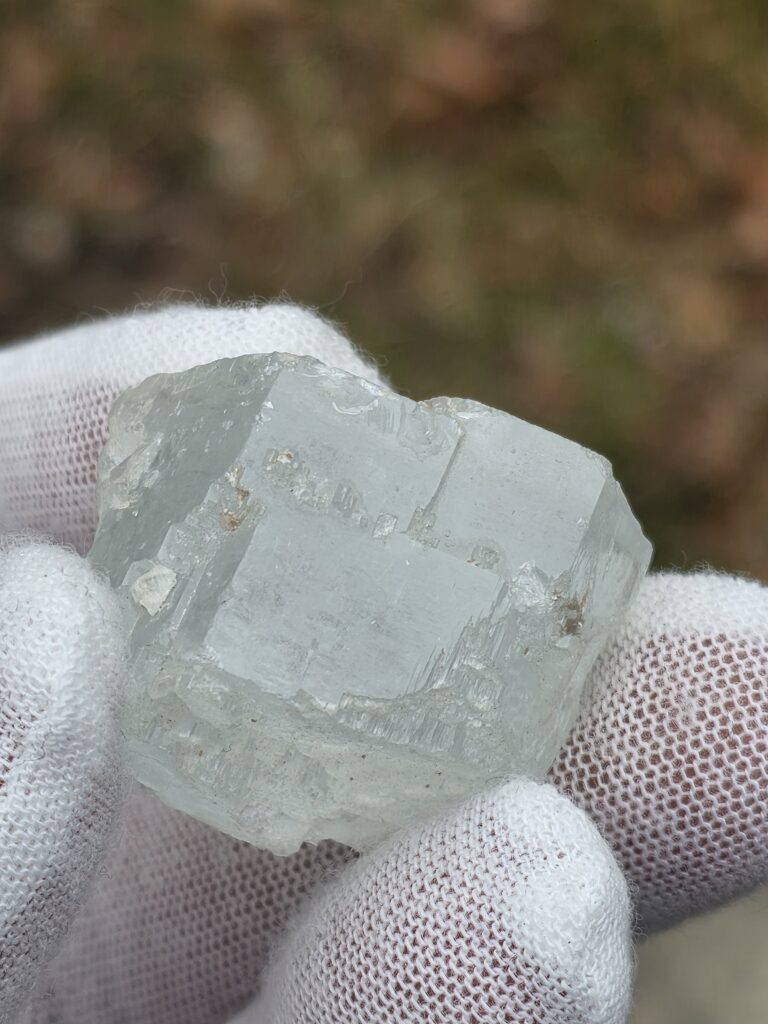
Color: Soft, pale blue to very light bluish-green
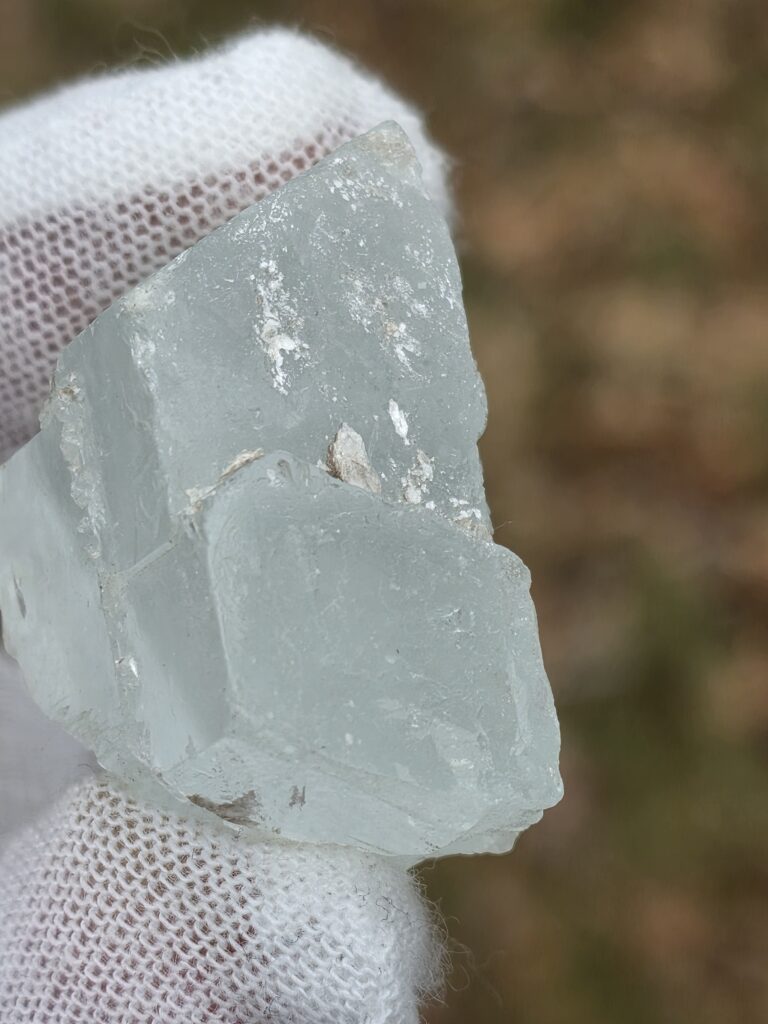
Transparency: Translucent with internal veil inclusions
Crystal Habit:
Thick hexagonal prism, typical of beryl
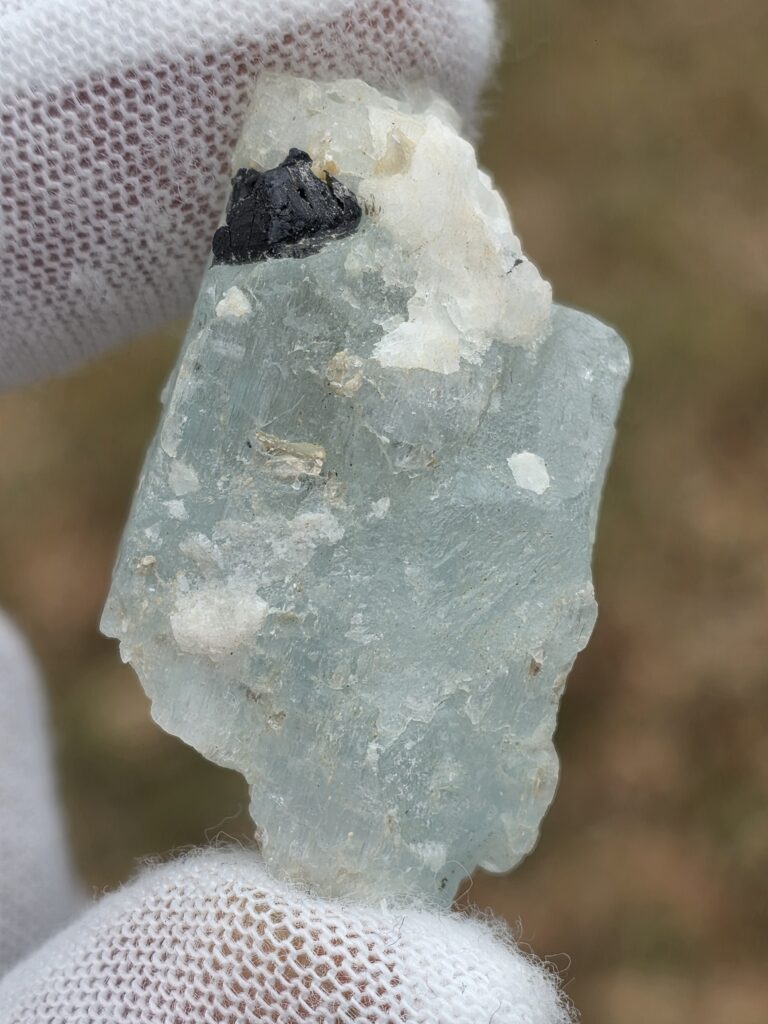
The termination appears naturally broken or etched (not polished)
Distinct vertical growth striations on the crystal sides
Luster: Vitreous (glassy)
Size: Substantial relative to the matrix, visibly well-exposed
Mineral Properties
Chemical Formula: Be₃Al₂Si₆O₁₈
Hardness: 7.5–8
Crystal System: Hexagonal
Color Origin: Trace iron impurities
This is a classic Pakistani pegmatite aquamarine, and the crystal is larger than typically found in small specimens.
🪨 2. Secondary Mineral: Feldspar (Likely Albite)
The bulk of the white/off-white host matrix is feldspar, very common in beryl-bearing pegmatites.
Indicators
White to cream coloration
Blocky or slab-like crystal habit
Clean cleavage surfaces
Slight beige or tan oxidation zones
Feldspar forms the structural foundation in which the aquamarine crystal grew.
⚪ 3. Quartz (Accessory Mineral)
Milky quartz appears intergrown with feldspar and around the aquamarine.
Identifying Features
Translucent to milky appearance
Glassy reflections
Irregular or grainy crystal surfaces
Quartz often fills late-stage cavities in pegmatites.
🟠 4. Iron Oxide / Weathering
Some yellowish staining indicates natural limonite oxidation, common on surface-exposed pegmatite pieces.
This is normal and supports authenticity.
🧭 5. Geological Context
The mineral combination (Aquamarine + Feldspar + Quartz) is strongly associated with granitic pegmatites of northern Pakistan, especially:
Shigar Valley
Chumar Bakhoor, Skardu region
Haramosh Range
Gilgit-Baltistan pegmatite belt
Pegmatites here form when mineral-rich molten rock cools extremely slowly, allowing large crystals to grow.
Typical formation sequence:
Feldspar and quartz crystallize first.
Beryllium-rich fluids deposit aquamarine in fractures and pockets.
Later hydrothermal activity modifies crystal surfaces, producing etching or partial dissolution.
This specimen fits this geological model perfectly.
Condition & Authenticity Assessment
100% natural aquamarine
Unheated and untreated
No dyeing, coating, or stabilization
Retains original growth surfaces and internal crystal features
Suitable for:
Mineral specimen collections
Display pieces
Educational or certification purposes
Reviews
There are no reviews yet.