


Certified Rare 153.25 ct Aquamarine Crystal on Mica Matrix – Natural Pakistan Himalayan Mineral Specimen
GLverify.com Certificate No: 901038527093
Certified Value: US $165.00
SUMMARY:
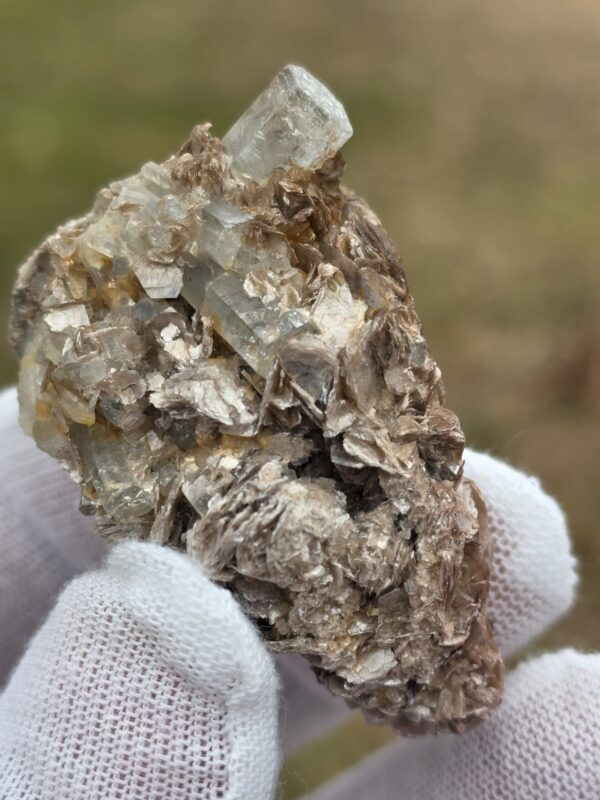
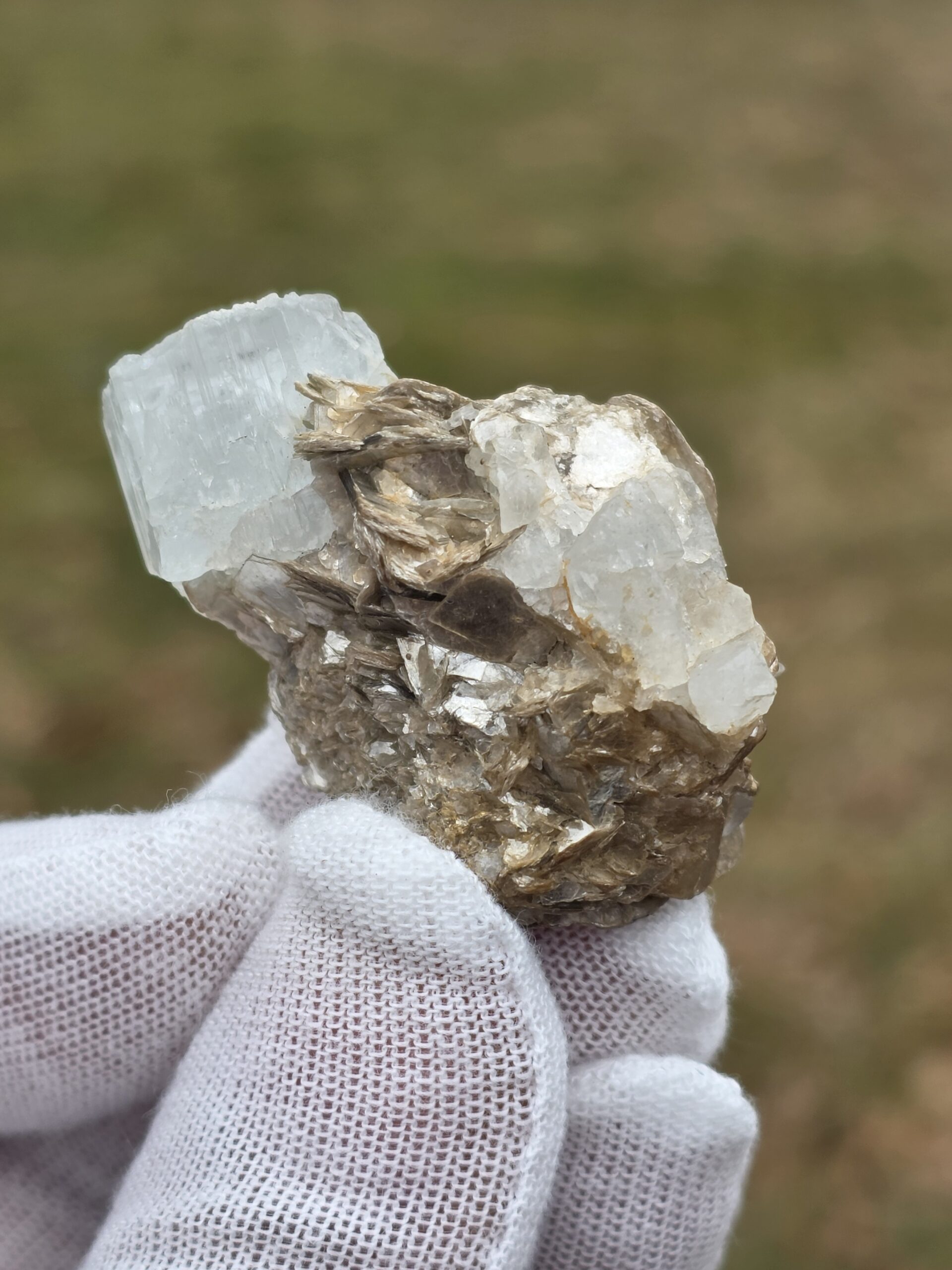
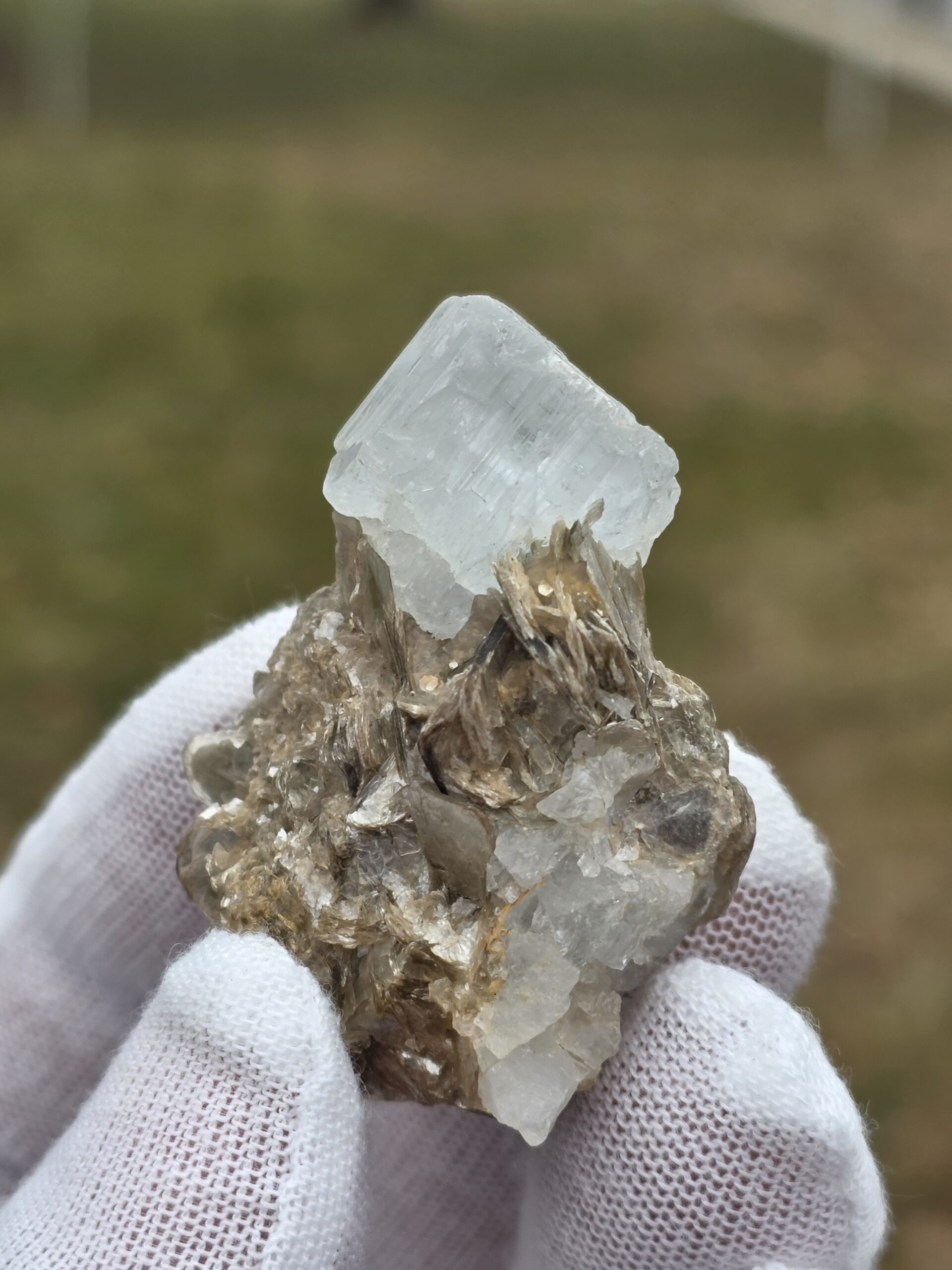
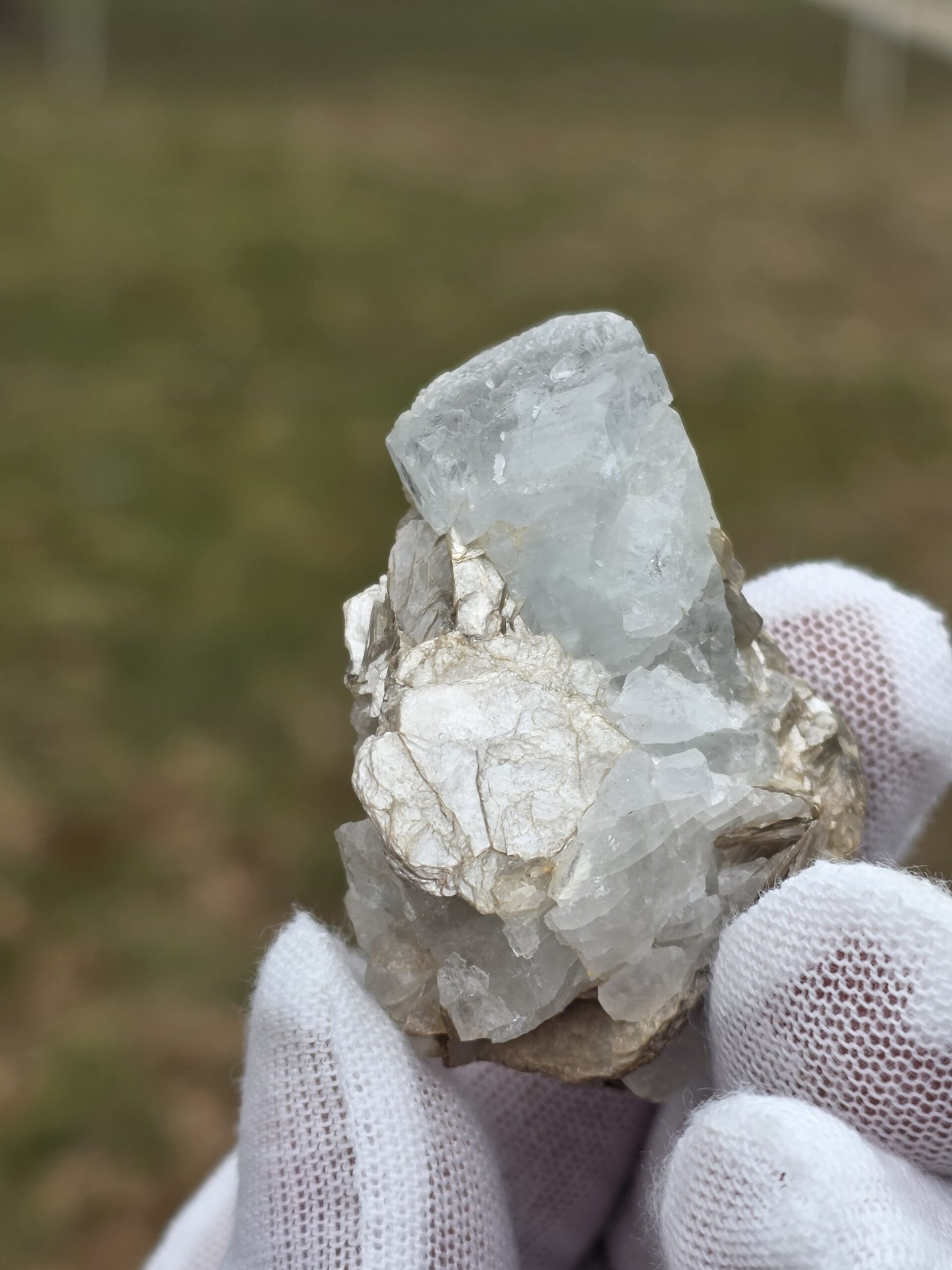
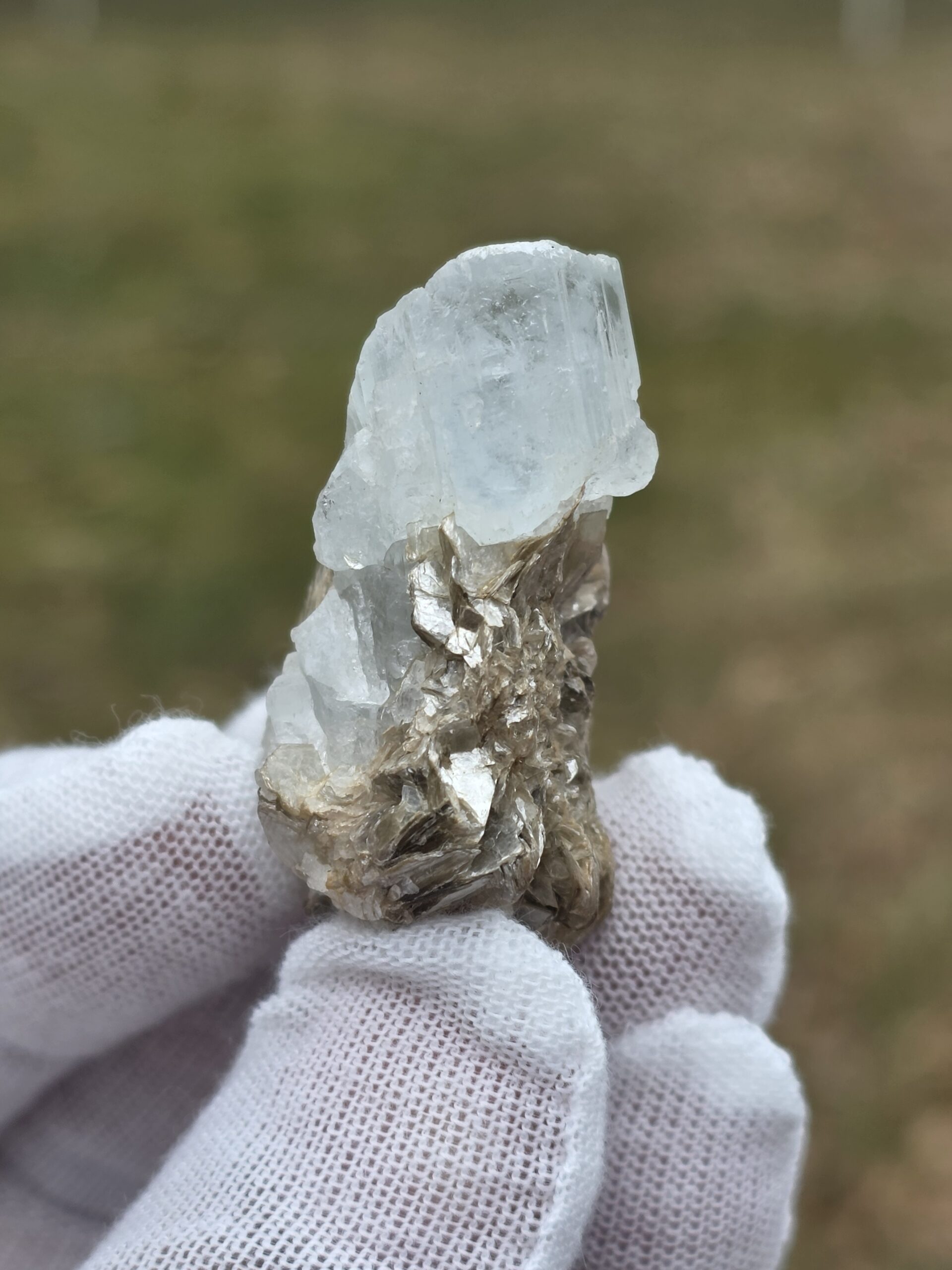
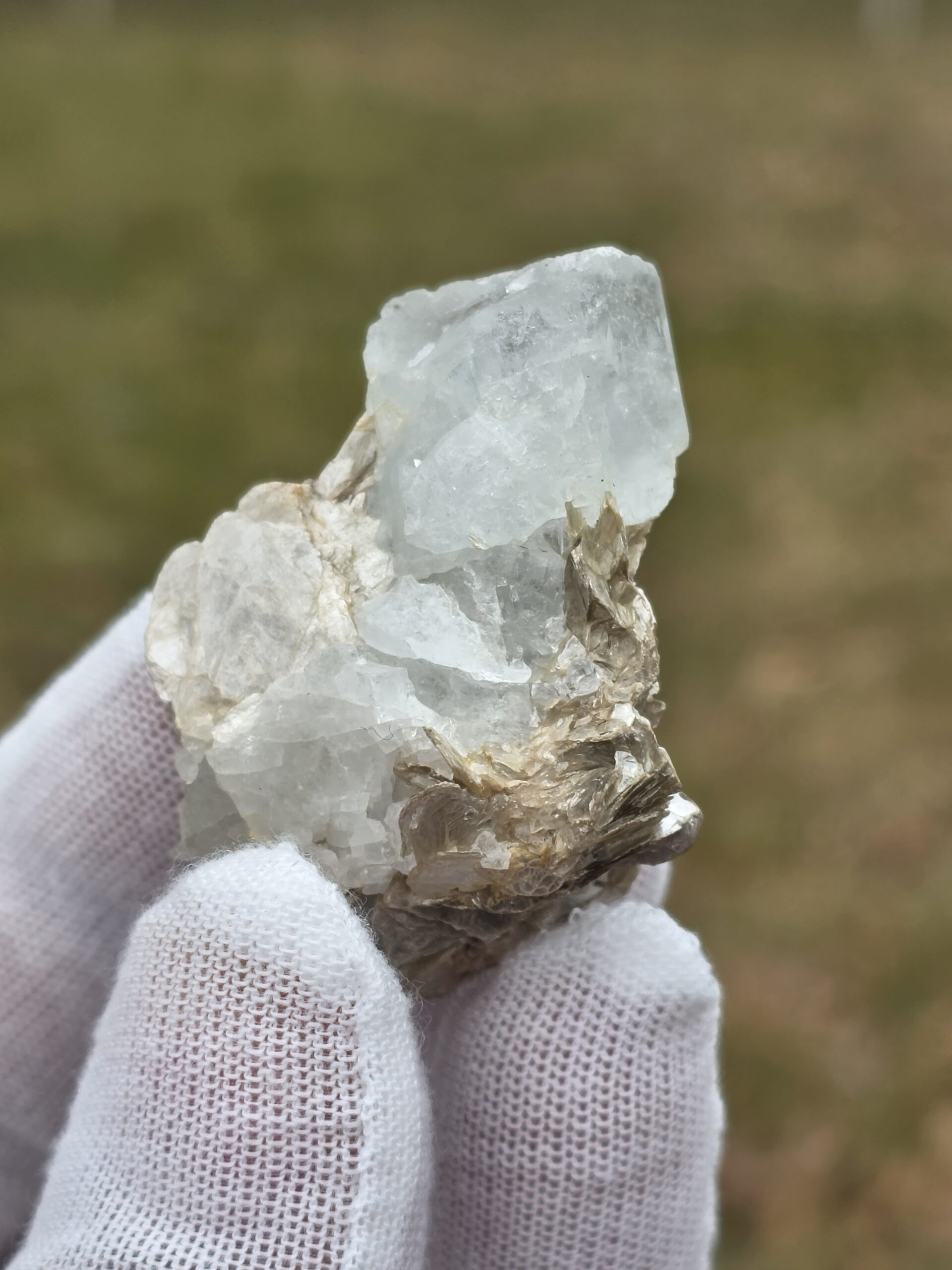
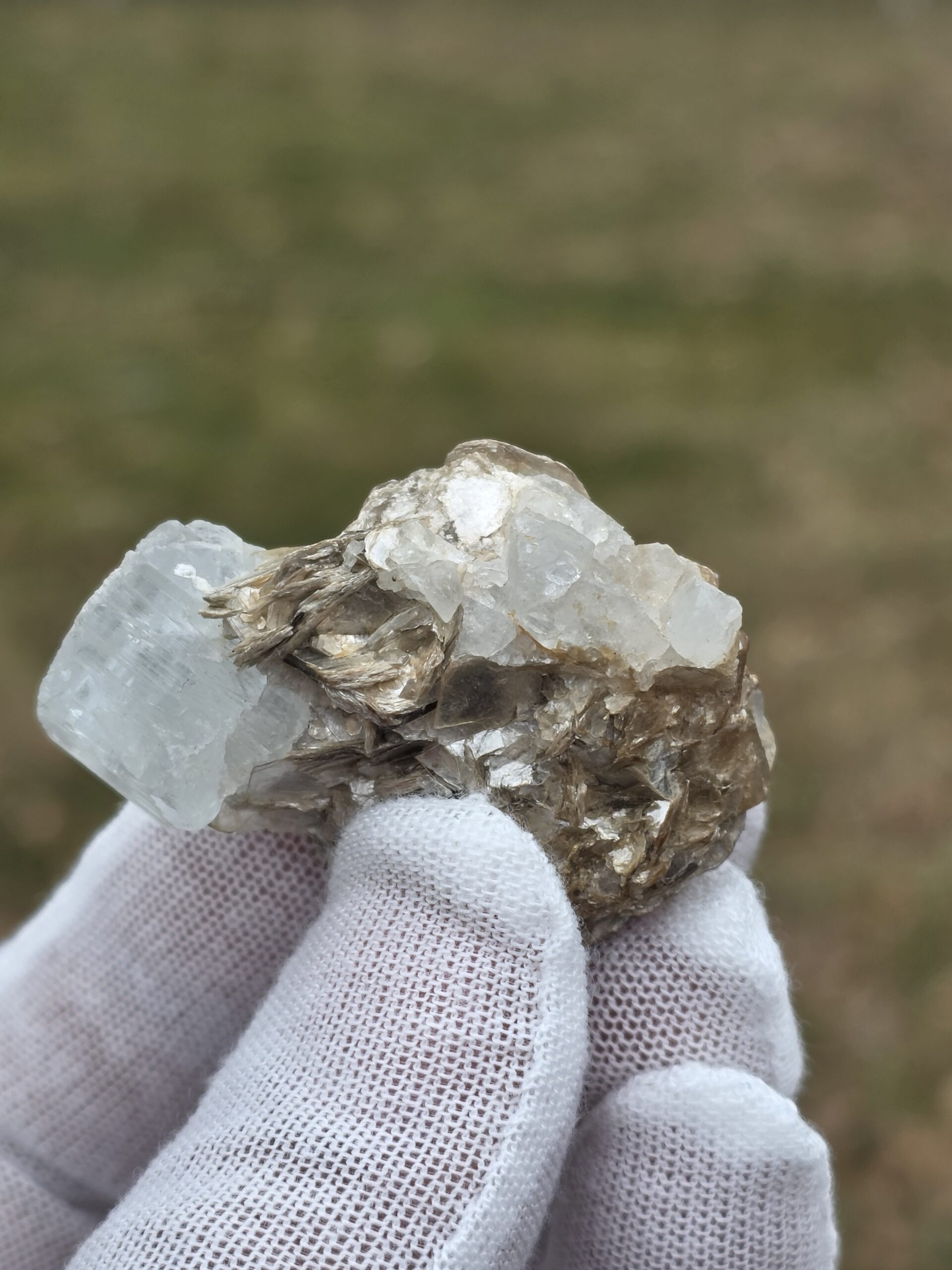
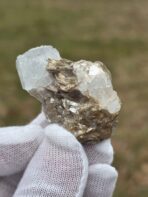
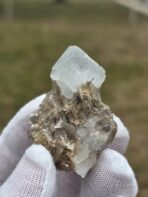
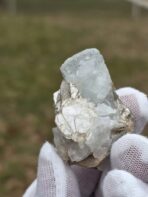
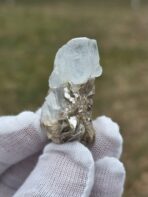
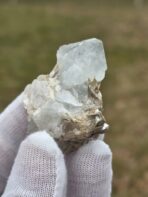
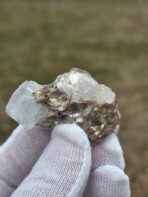
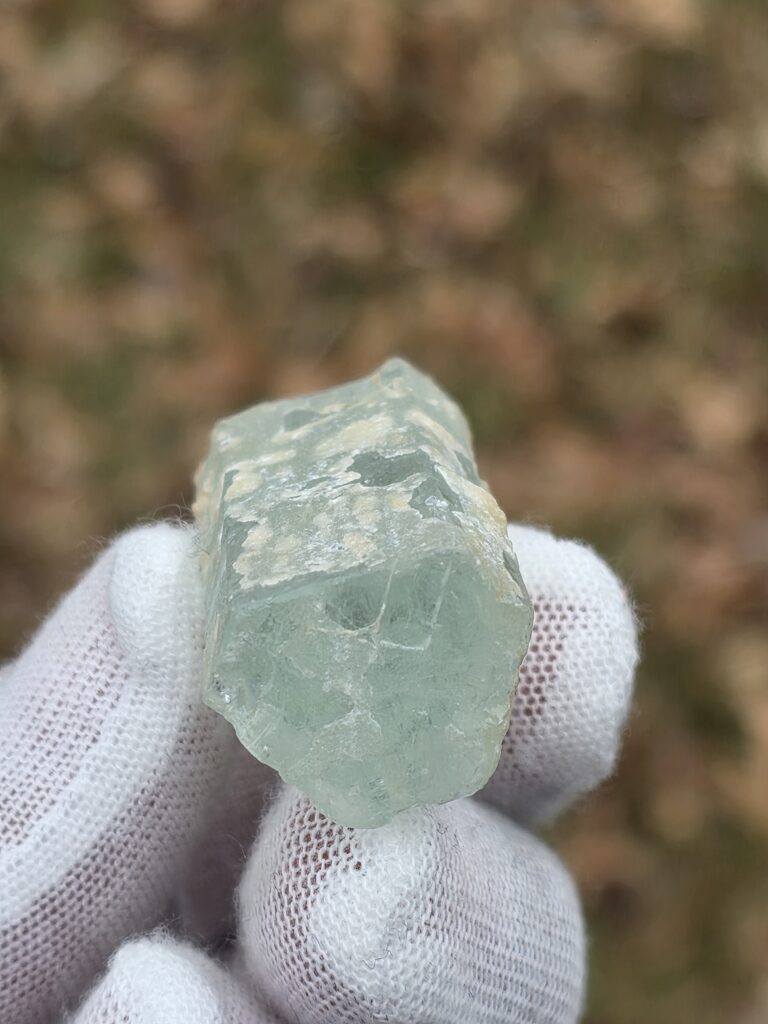
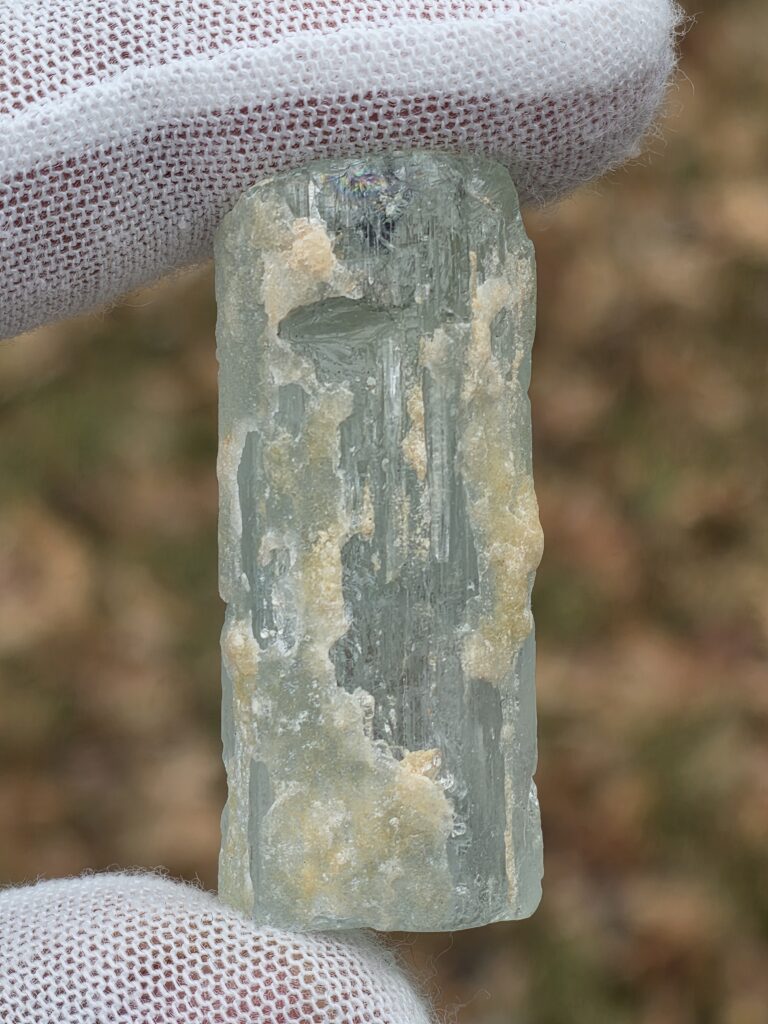
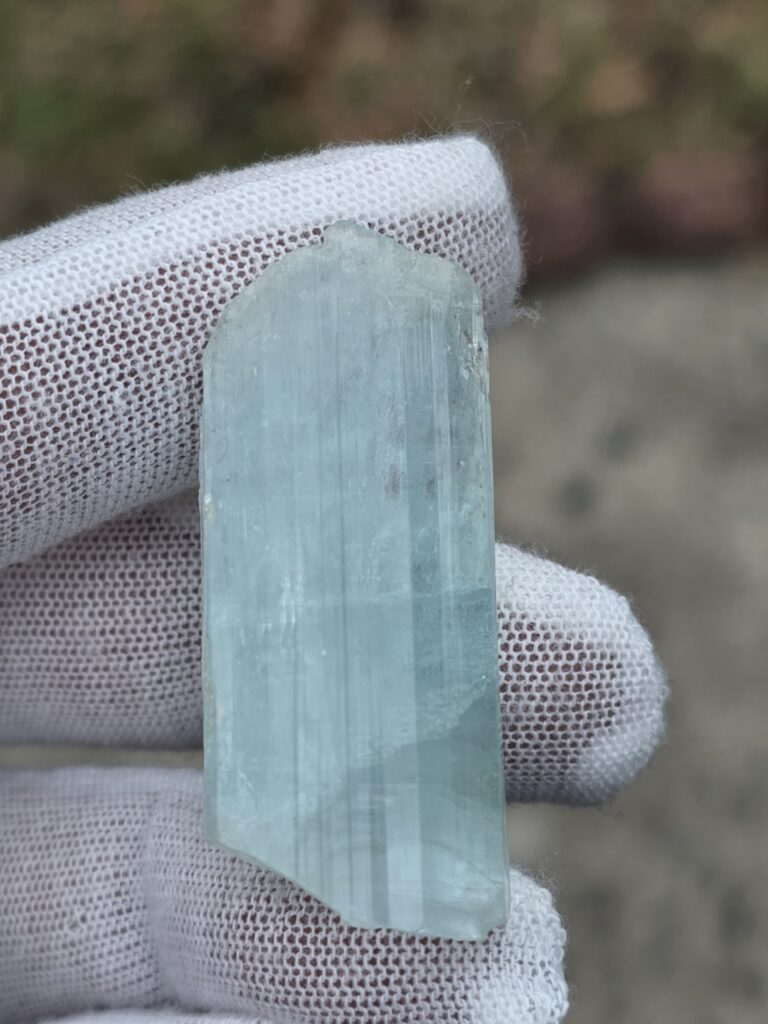
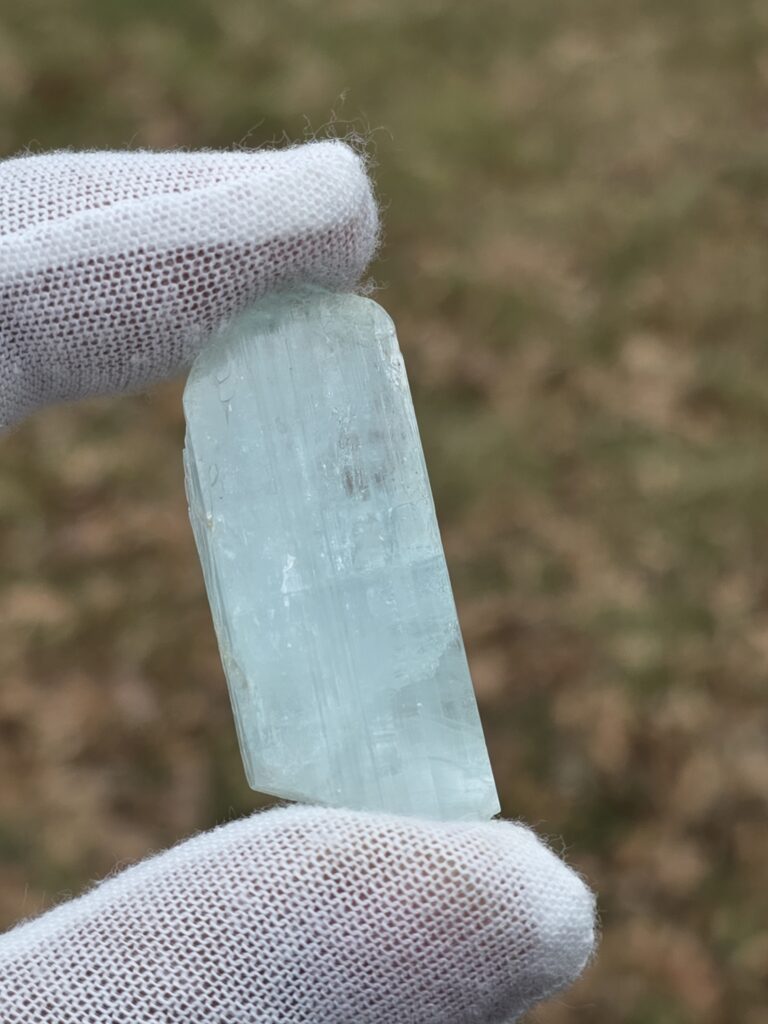
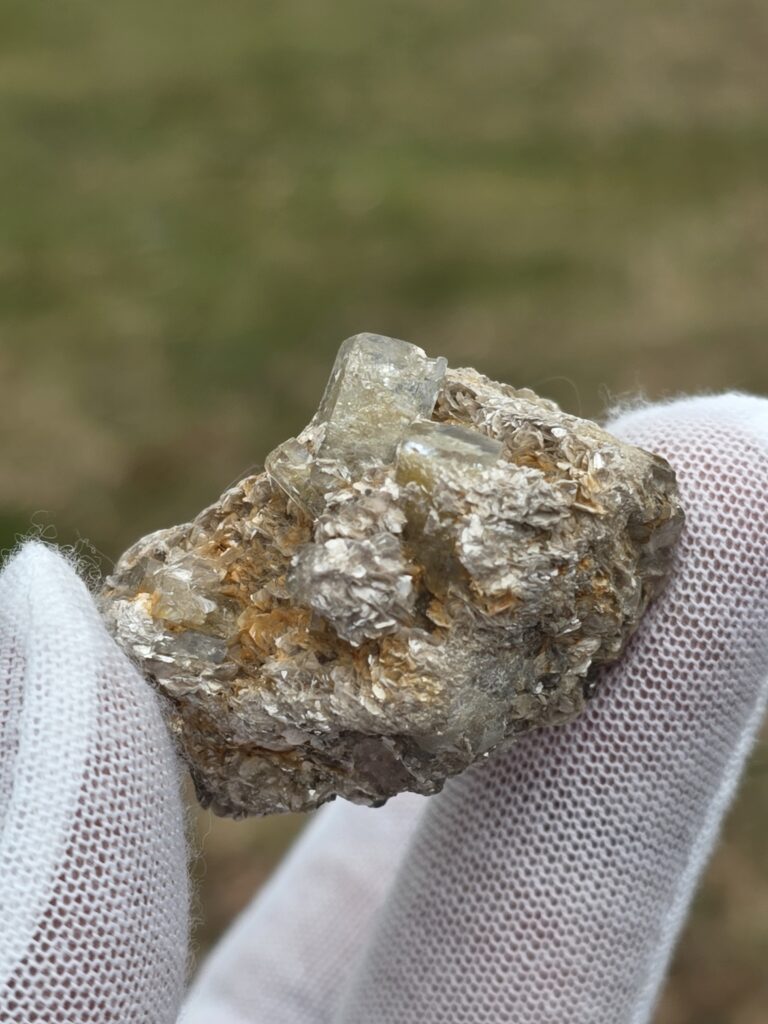
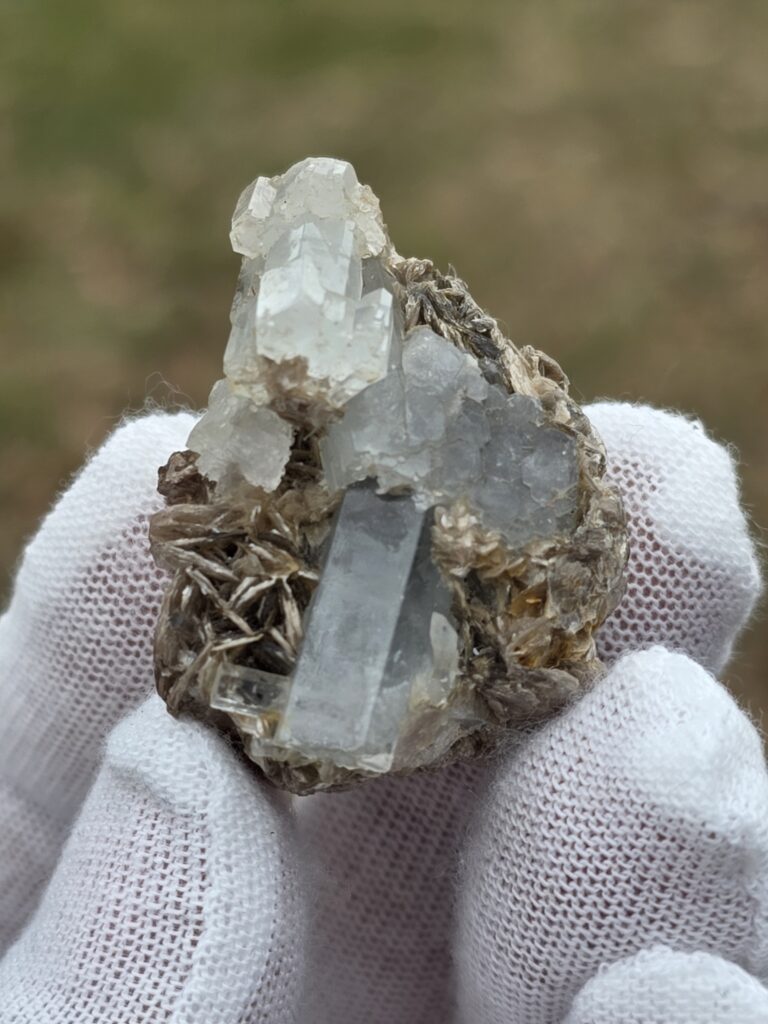
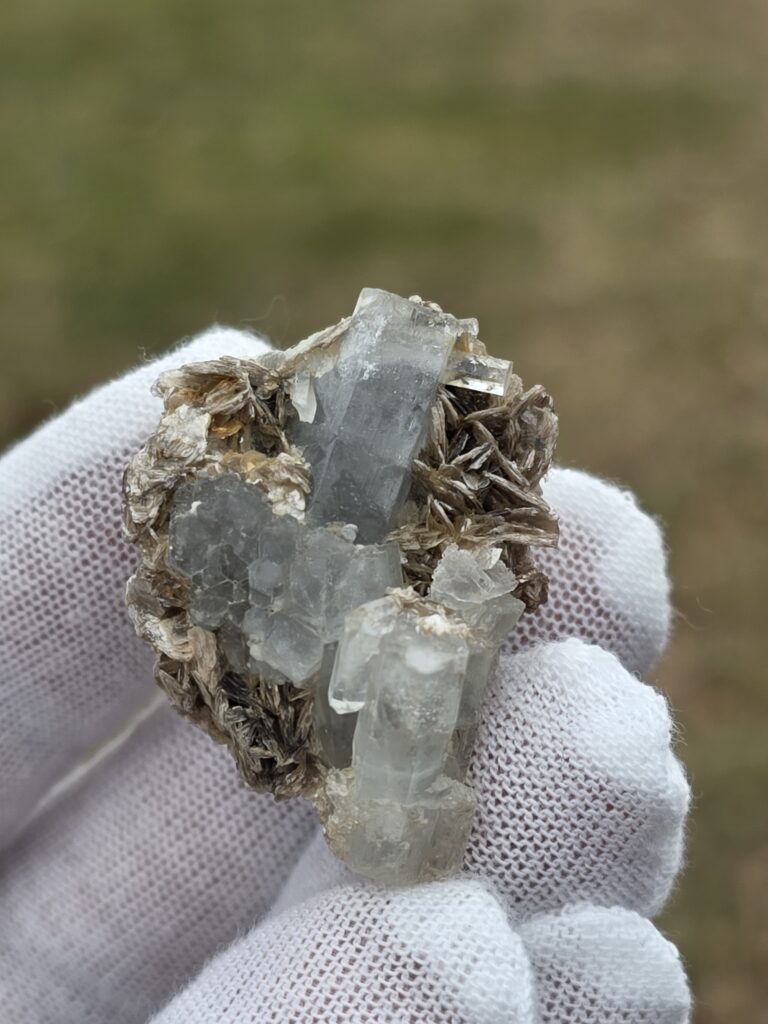
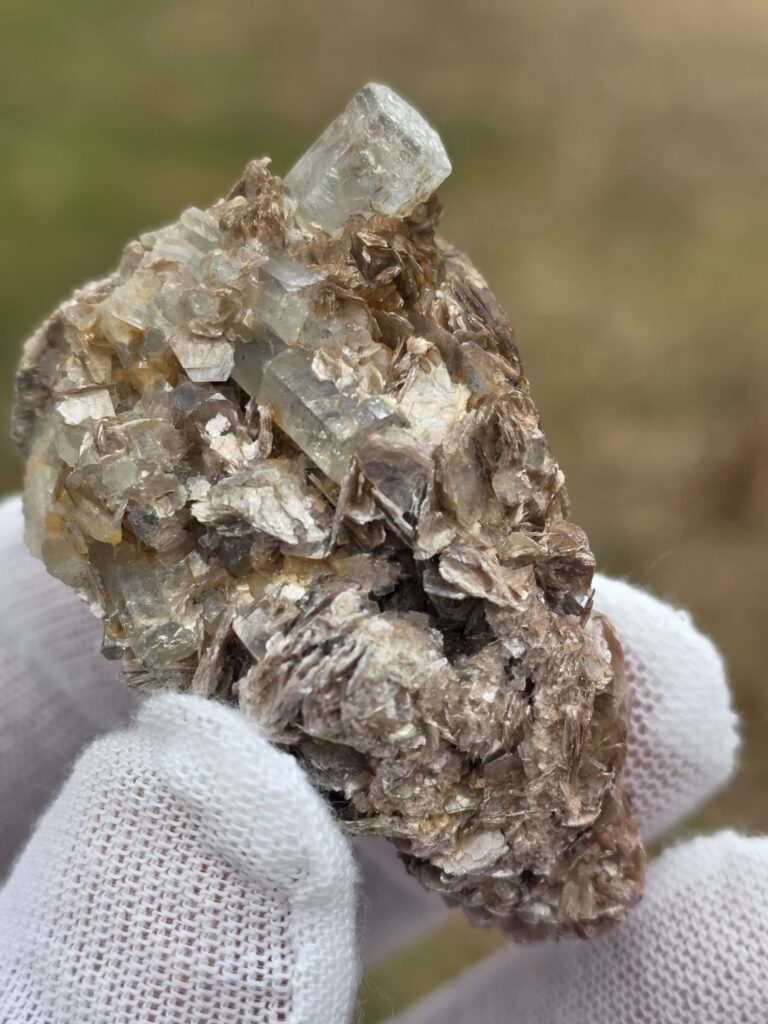
This 153.1-carat specimen from northern Pakistan features a prominent aquamarine crystal with classic hexagonal form and pale natural blue coloration. The aquamarine rises from a matrix of silvery muscovite mica, milky quartz, and beige feldspar—minerals commonly associated with pegmatitic beryl formations. The main crystal displays natural etching and translucency, while the surrounding mica provides attractive contrast and structural support. This is a well-balanced, visually appealing example of Pakistani aquamarine crystallization.
🔷 1. Primary Mineral: Aquamarine (Blue Beryl)
Visible Characteristics
The main feature of the specimen is a large, well-defined aquamarine crystal positioned at the top.
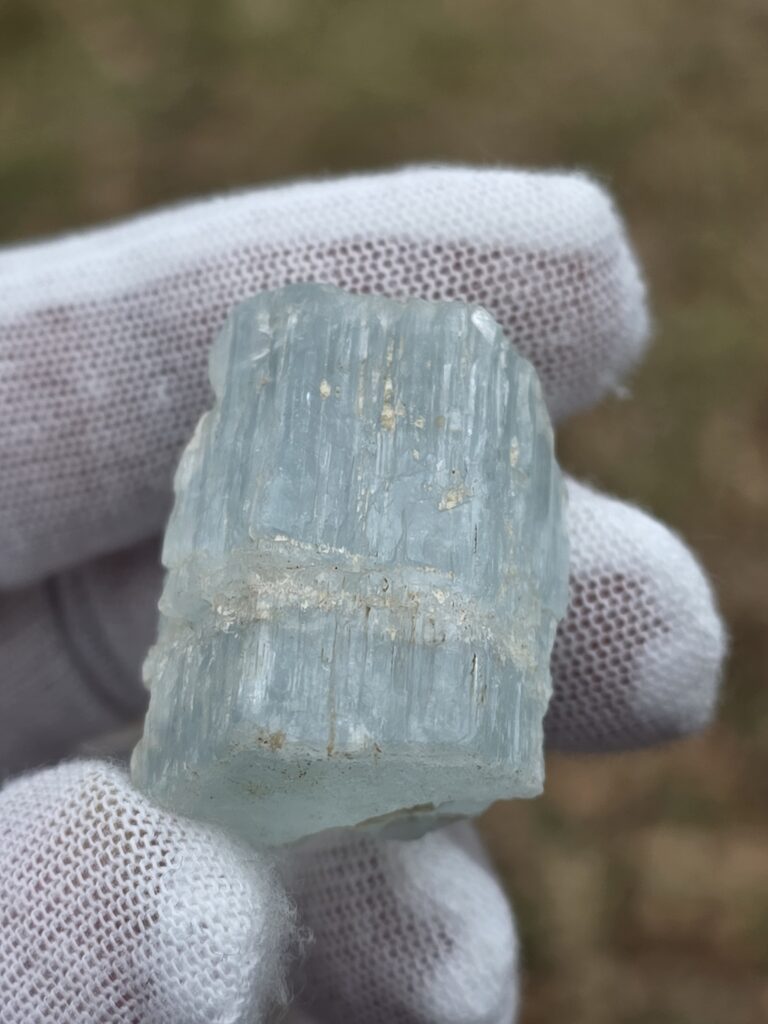
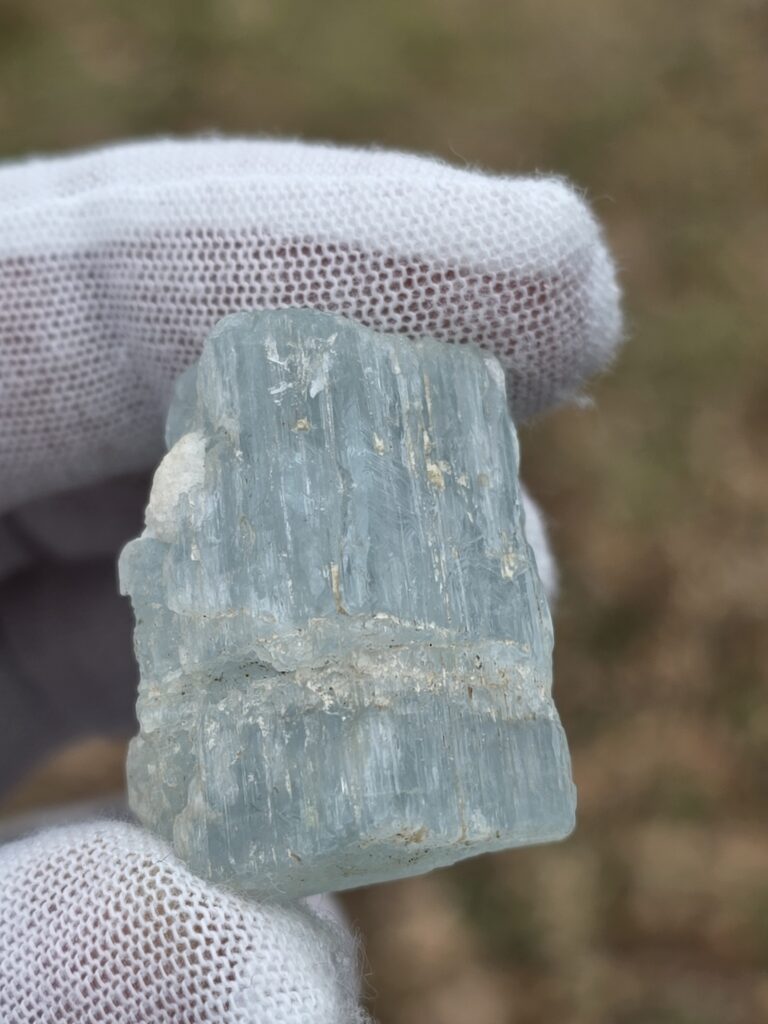
Color: Very pale icy blue, nearly colorless in some angles (typical for aquamarine from high-altitude pegmatites).
Clarity: Translucent, with internal veils and natural fractures.
Crystal Habit:
Hexagonal prism, classic geometry for beryl.
The termination appears etched or partially stepped, likely from natural hydrothermal dissolution.
Vertical growth lines (striations) are present on the sides.
The crystal seems significantly larger than the aquamarines in similar other specimens.
Mineral Properties
Chemistry: Be₃Al₂Si₆O₁₈
Hardness: 7.5–8
Luster: Vitreous (glassy)
Crystal System: Hexagonal
Color Origin: Trace iron impurities (Fe²⁺ / Fe³⁺)
This is a textbook pegmatite aquamarine, showing natural unpolished faces and good overall structure.
🪨 2. Secondary Mineral: Muscovite Mica
The back and sides of the specimen are rich in muscovite mica, a very common associate of aquamarine in Pakistani pegmatites.
Visible Signs
Silvery-gray mica sheets with a reflective pearly luster
Layered “book” formations
Flexible sheet-like cleavage
Some iron staining (light brown/yellow patches)
Properties
Hardness: 2–2.5
Luster: Pearly to metallic
Excellent cleavage in one direction
The mica forms the matrix foundation into which the aquamarine crystal is anchored.
⚪ 3. Quartz Crystals (Accessory Mineral)
The front and lower regions of the specimen contain several white to translucent quartz crystals.
Visible Indicators
Sharp, glassy sparkle
Irregular but natural crystal faces
Milky-white coloration (common in pegmatitic quartz)
Some appear broken from extraction, which is normal
Properties
Hardness: 7
Luster: Vitreous
Crystal System: Hexagonal
Quartz frequently forms alongside aquamarine due to similar geological conditions.
🟫 4. Feldspar (Likely Albite or Microcline)
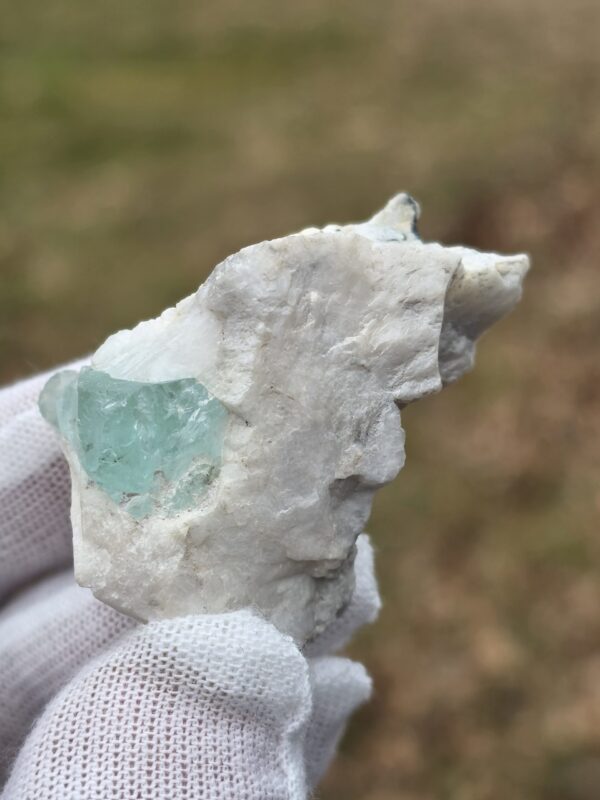
Some beige to off-white blocky matrix areas suggest feldspar, which is nearly always present in aquamarine-bearing pegmatites.
Features
Cream or beige coloration
Compact, blocky formation
Slight natural weathering
Feldspar forms the framework of the pegmatite and is often intermixed with mica.
🟡 5. Iron Staining / Oxidation
Some yellow-brown tints are present, which indicate:
Natural iron oxide (limonite)
Typical weathering of pegmatite minerals
This does not reduce value and often helps confirm the specimen is natural and untreated.
📌 6. Geological Formation
This mineral combination—Aquamarine + Muscovite + Quartz + Feldspar—is characteristic of granitic pegmatites from:
Shigar Valley
Chumar Bakhoor
Haramosh Mountains
Skardu District
These areas in northern Pakistan are famous for high-quality aquamarine crystals grown in mica-rich pegmatites.
Condition & Authenticity Assessment
100% natural aquamarine
Unheated and untreated
No dyeing, coating, or stabilization
Retains original growth surfaces and internal crystal features
Suitable for:
Mineral specimen collections
Display pieces
Educational or certification purposes
Reviews
There are no reviews yet.