

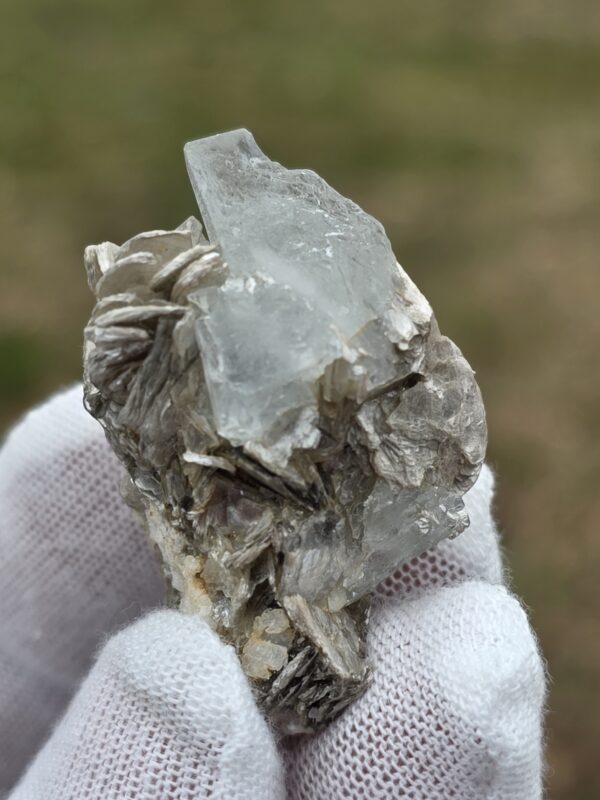
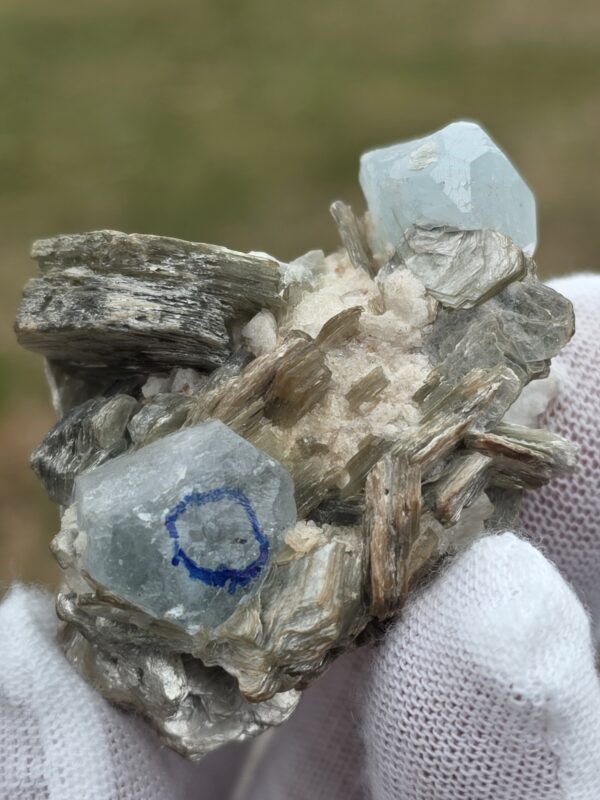
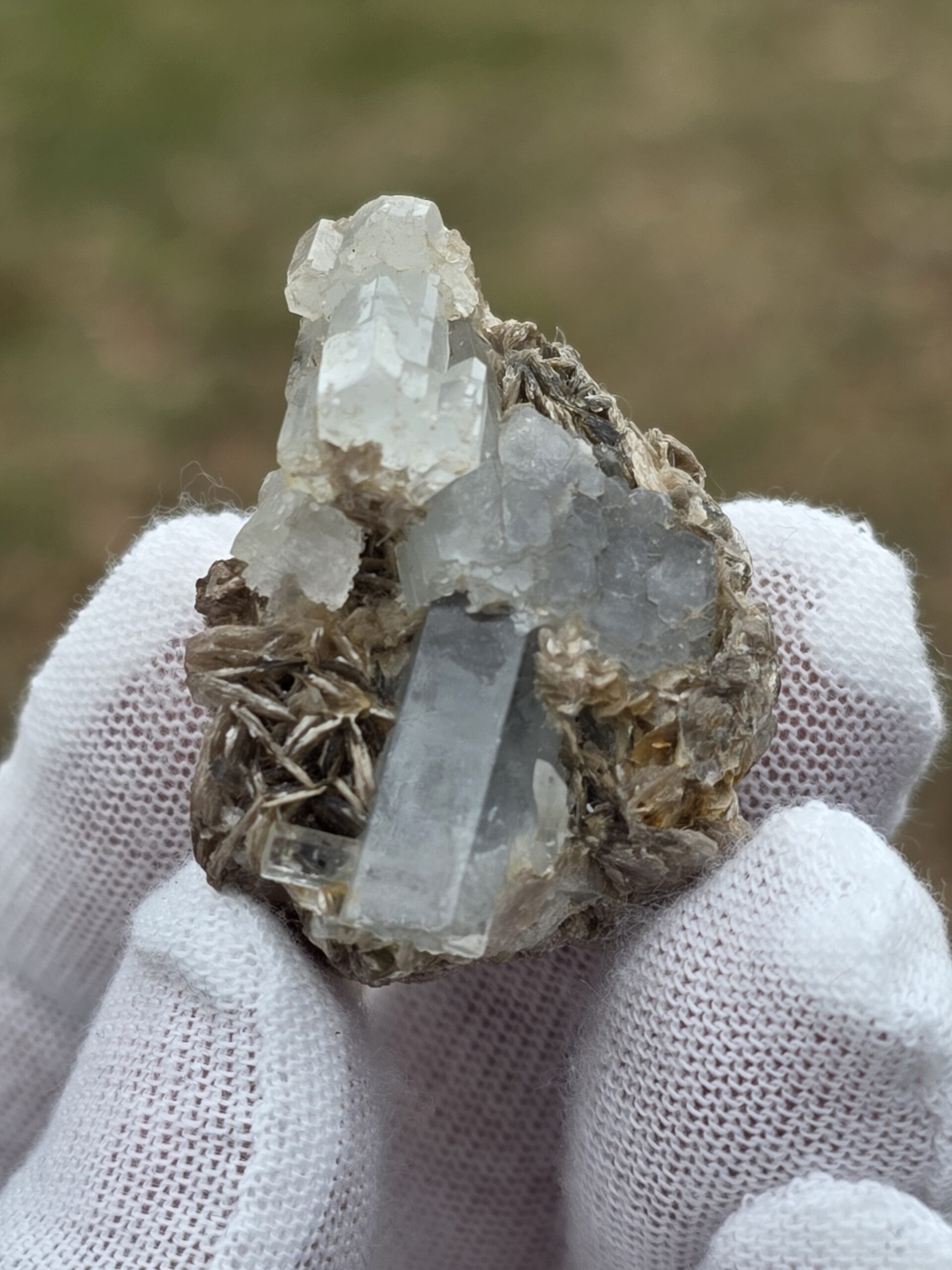
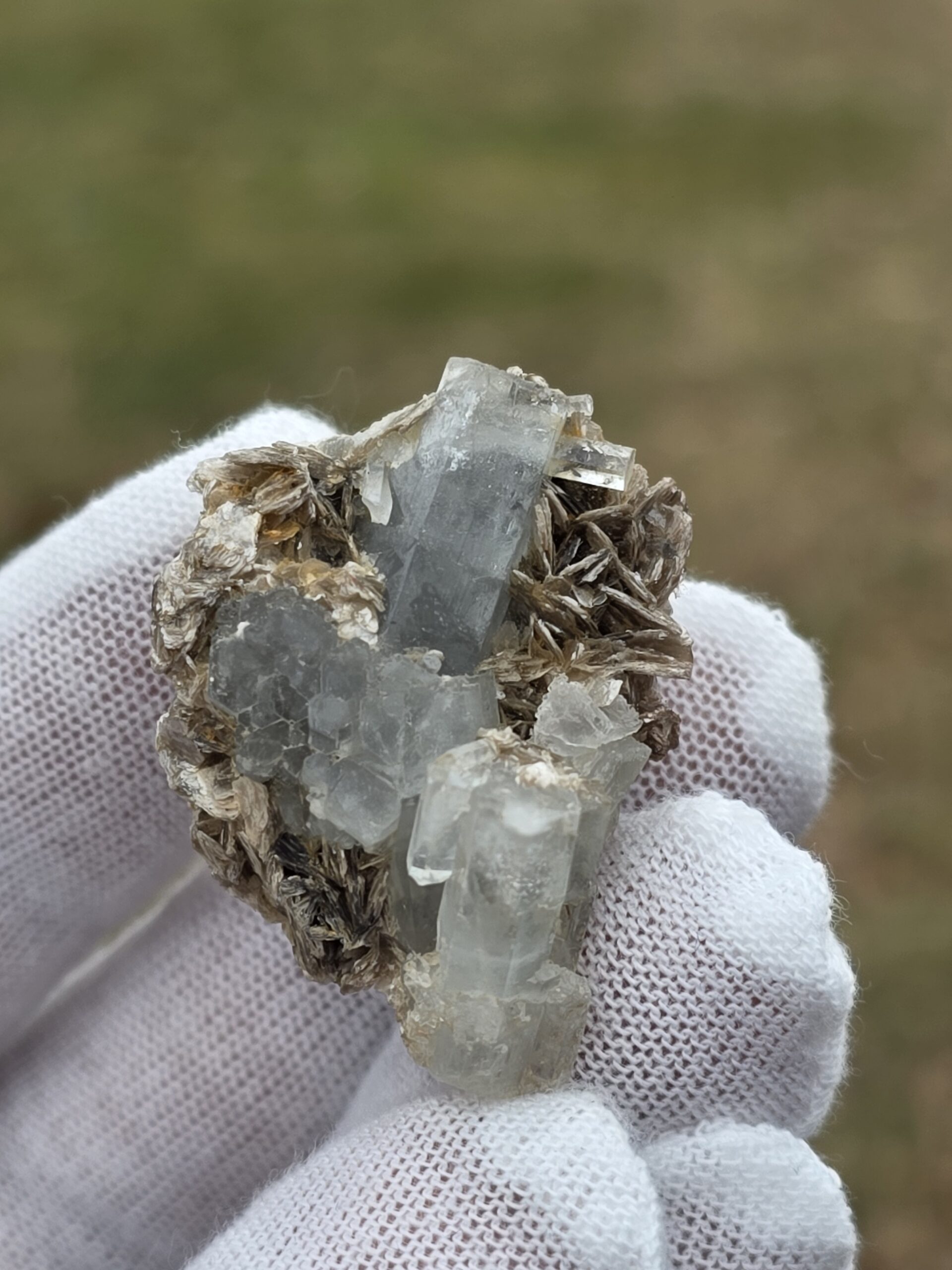
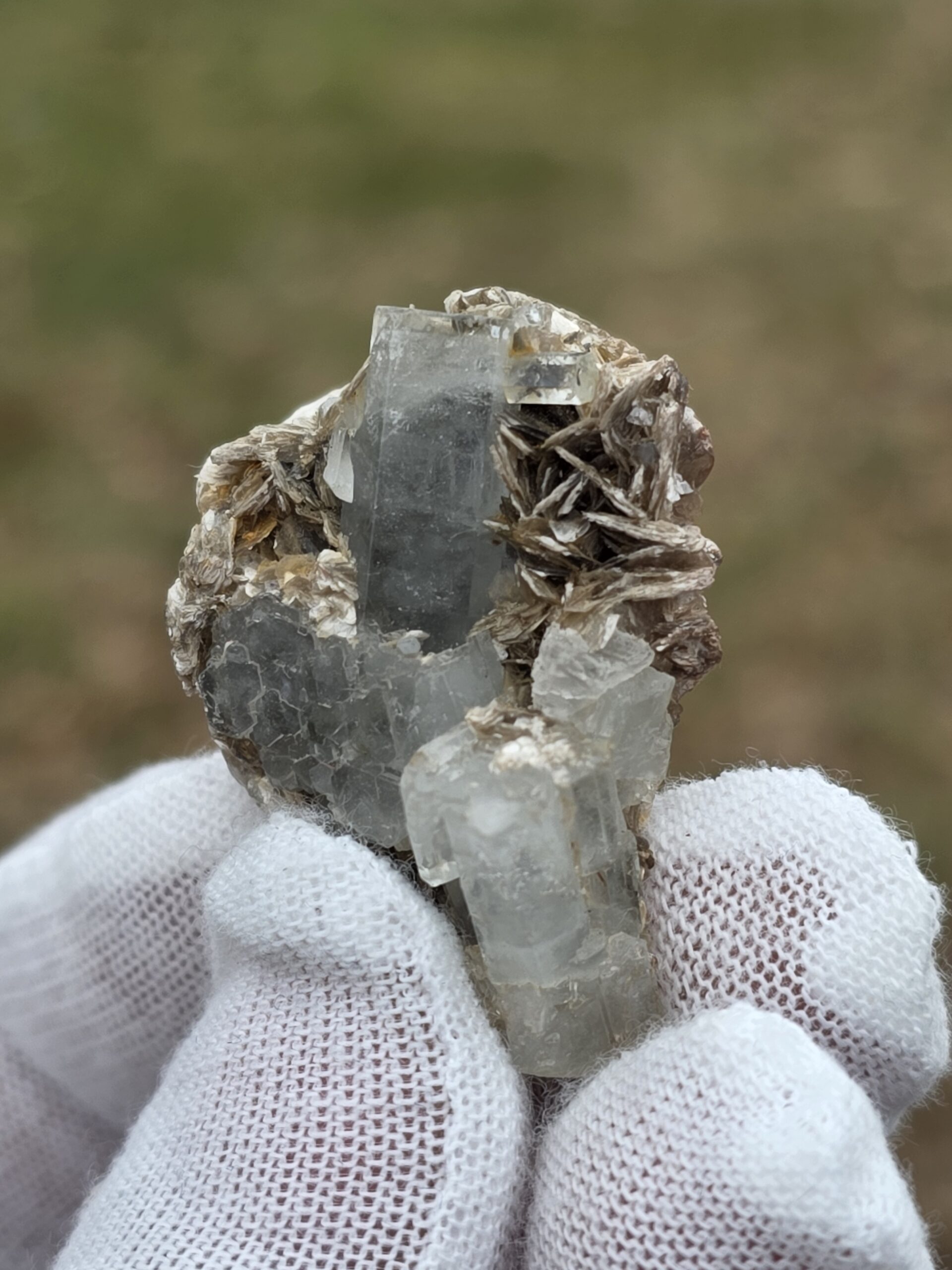
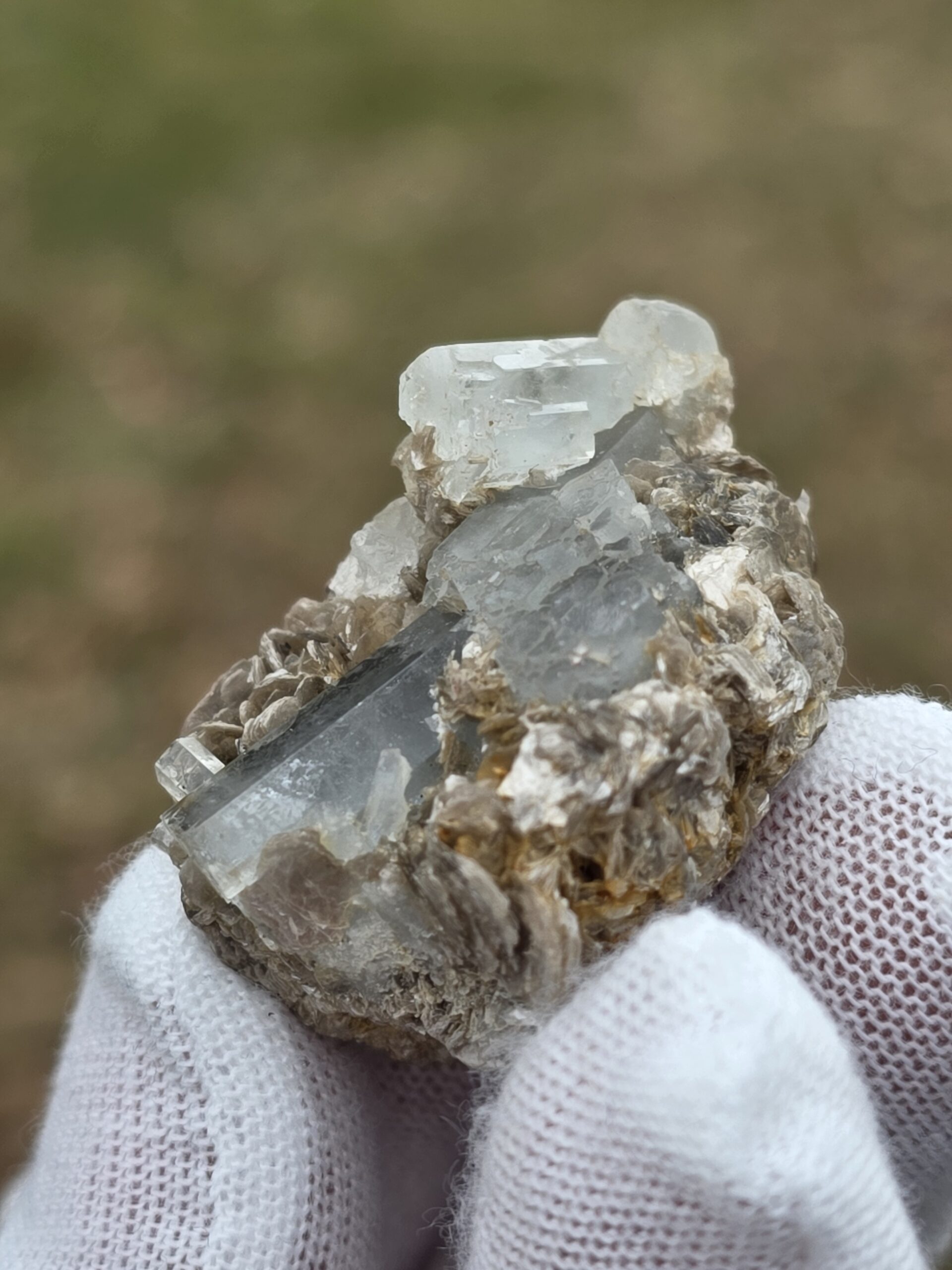
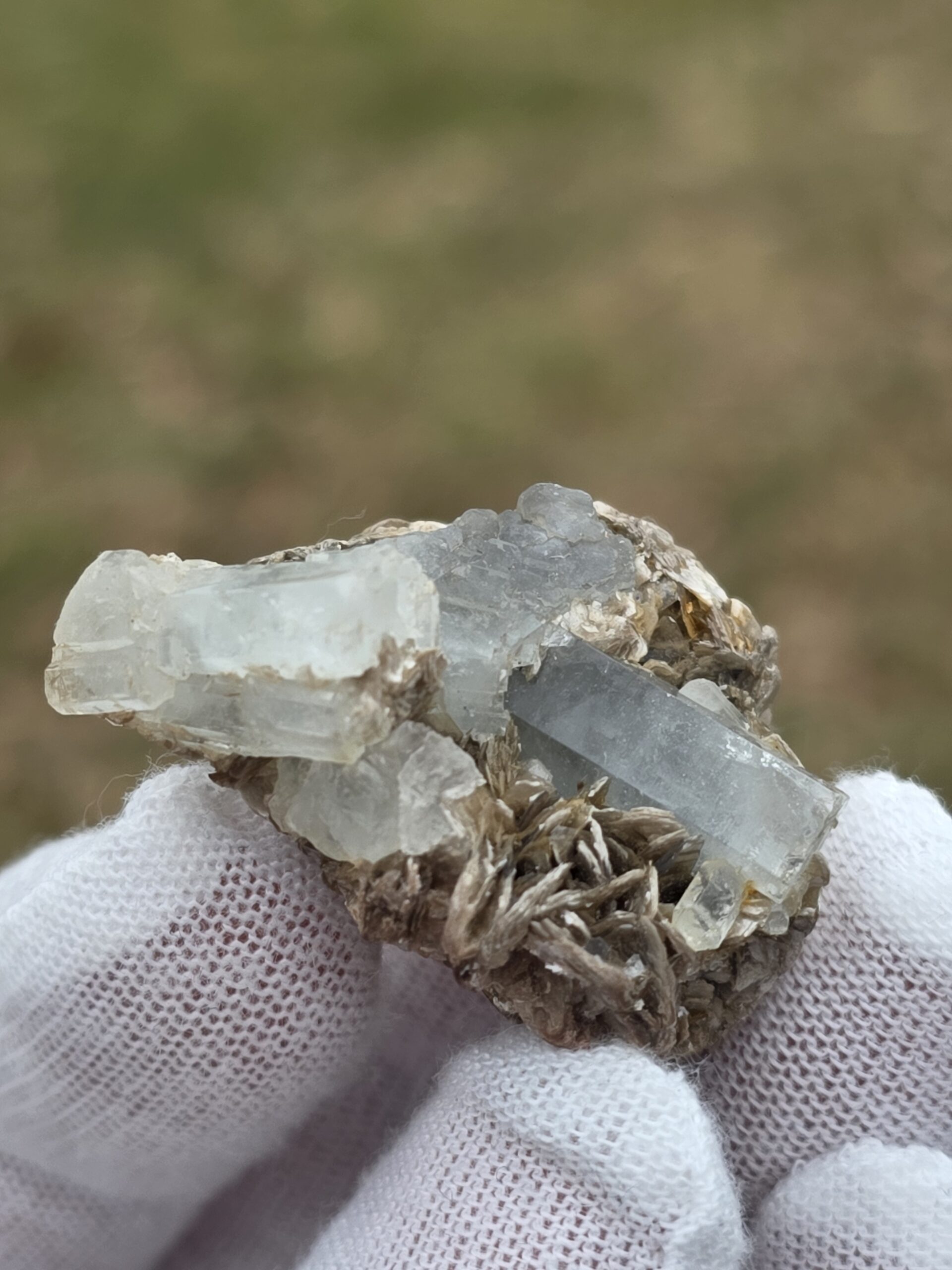
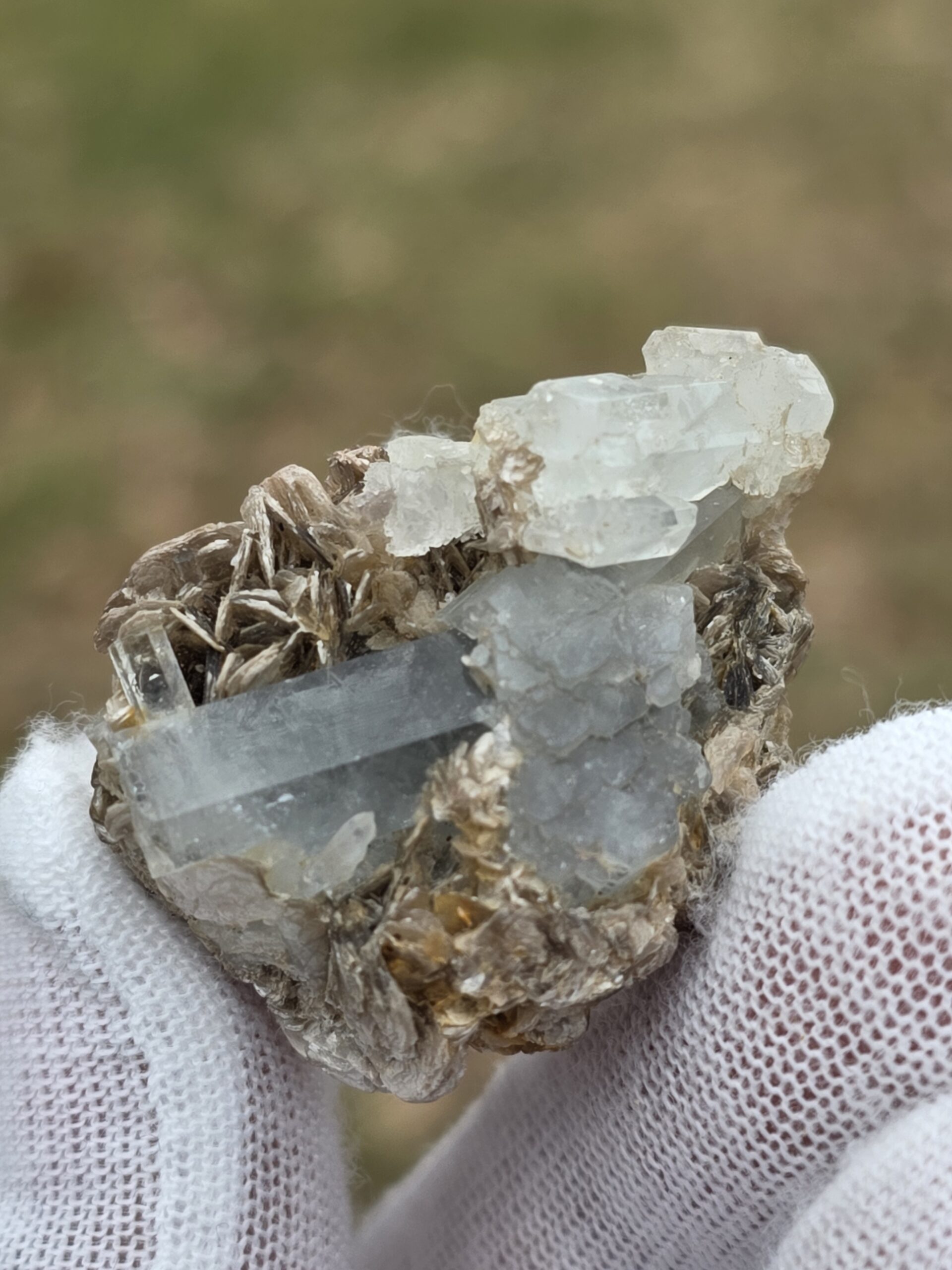
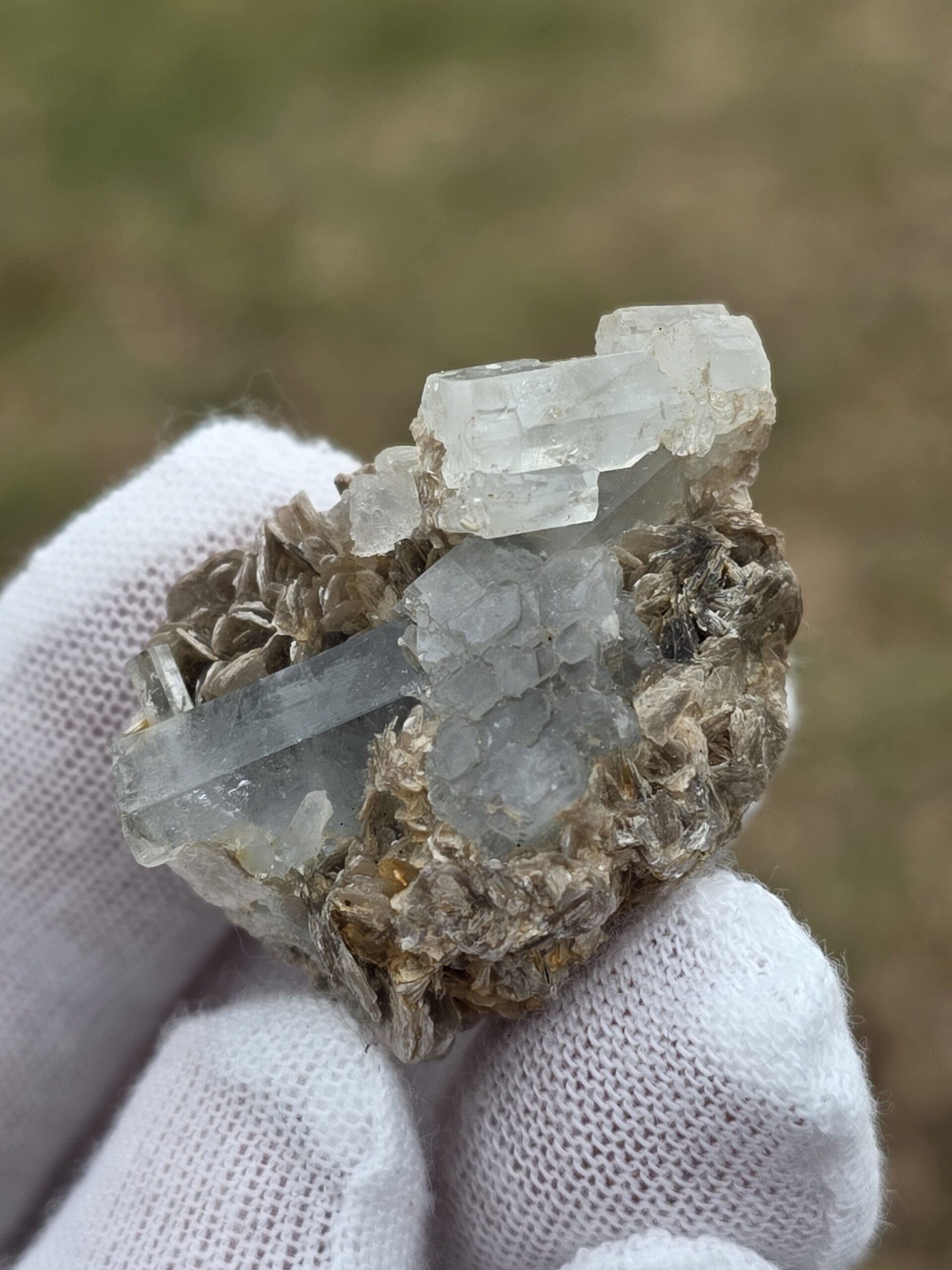
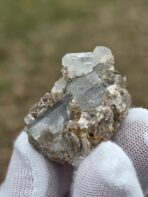
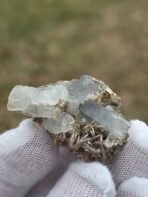
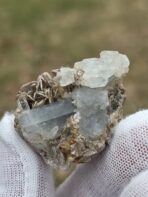
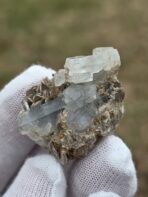

Certified Rare Multi-Crystal Aquamarine Cluster on Muscovite Rosettes – 93.15 ct Pakistan Pegmatite Gem Specimen
GLverify.com Certificate No: 901095641564
Certified Value: US $135.00
Species: Aquamarine (Beryl var.), Muscovite (Mica Group), Albite Feldspar
Locality: Likely Skardu / Shigar Valley Region, Gilgit-Baltistan, Pakistan
Weight: 93.15 carats
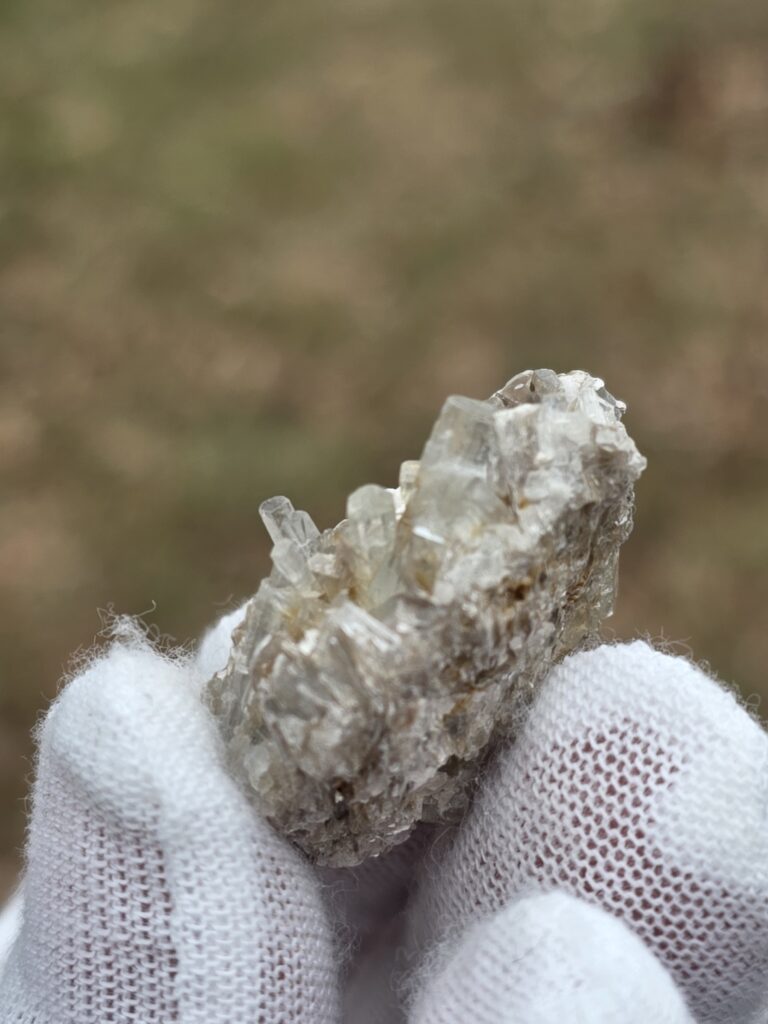
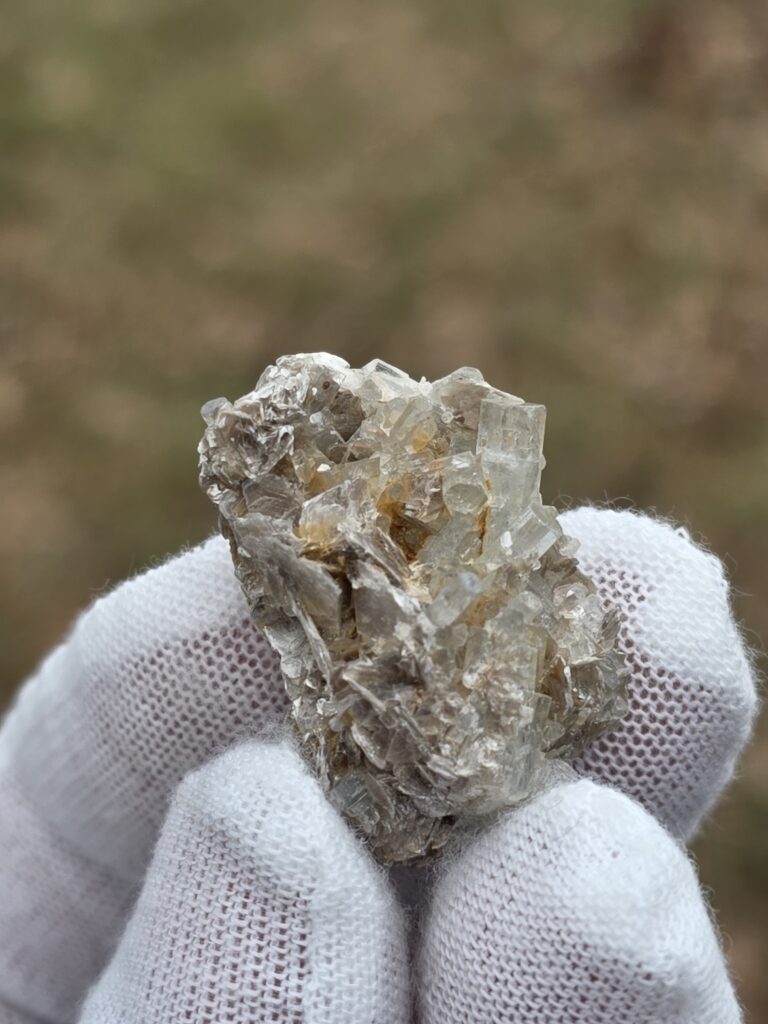
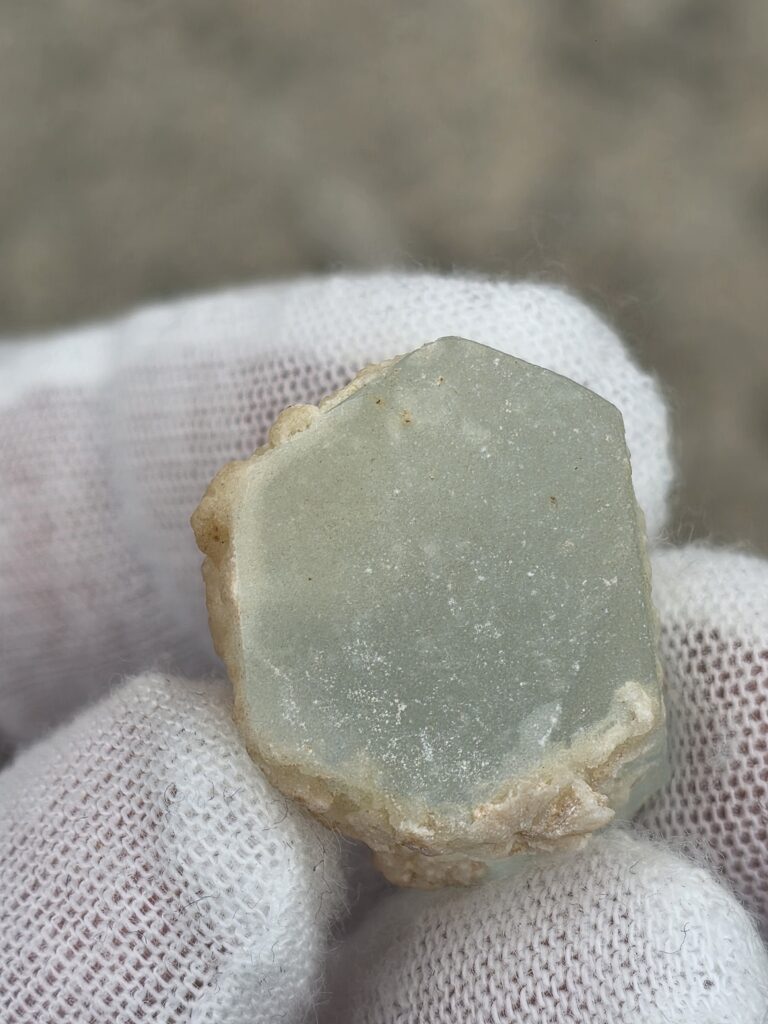
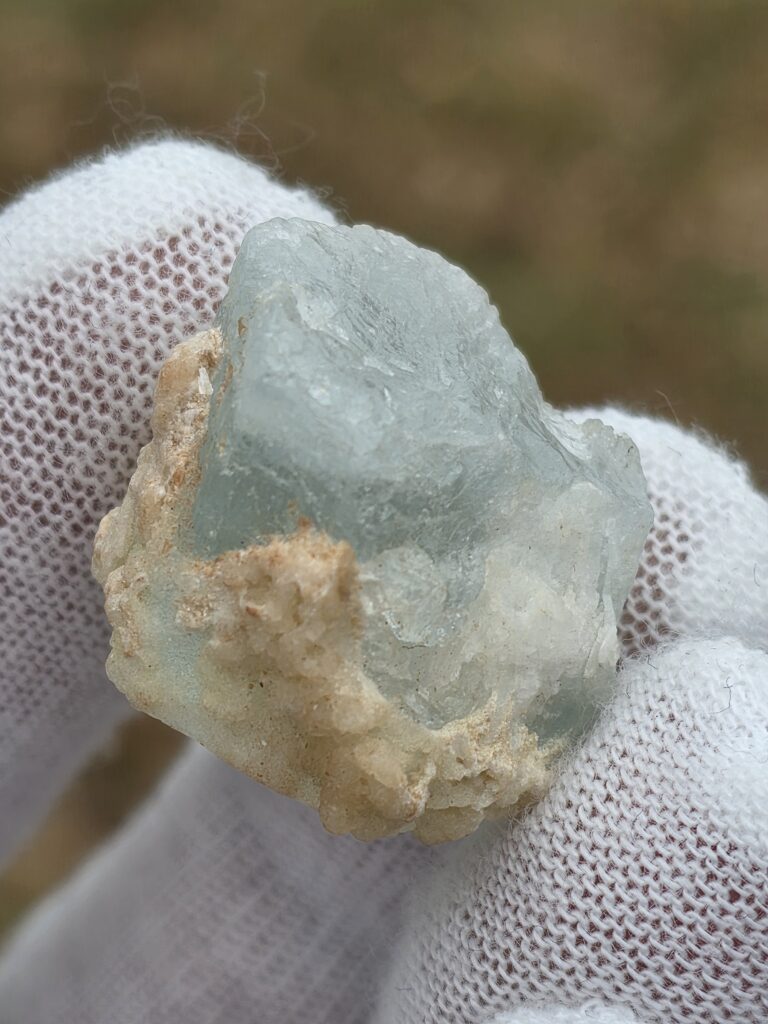
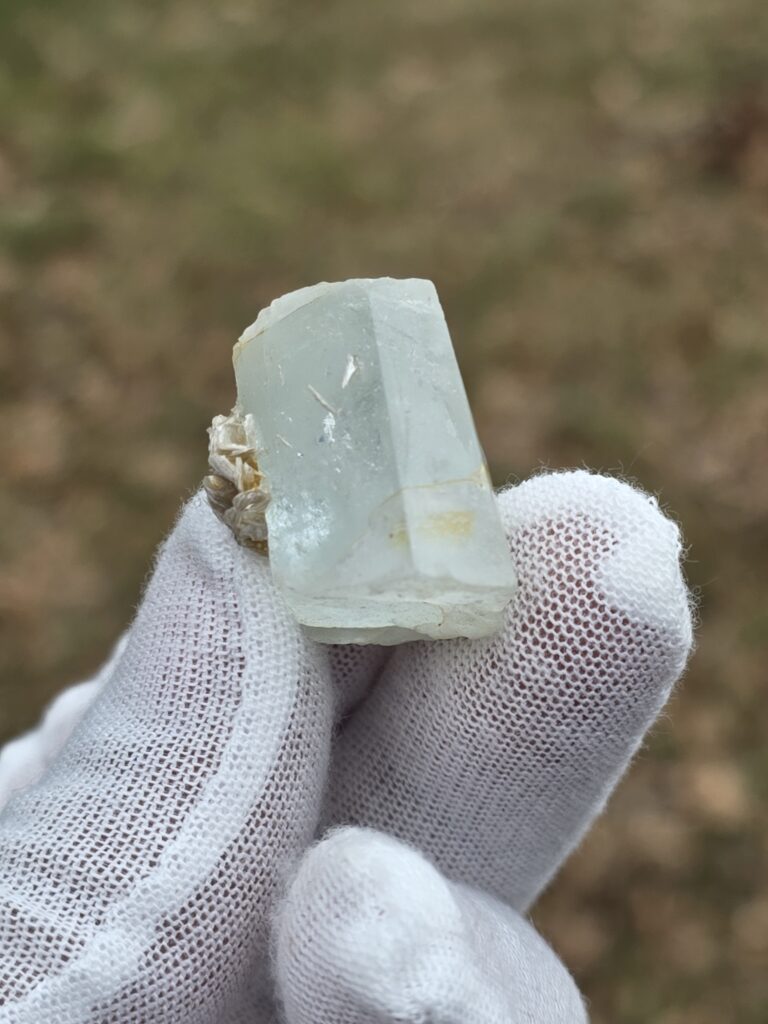
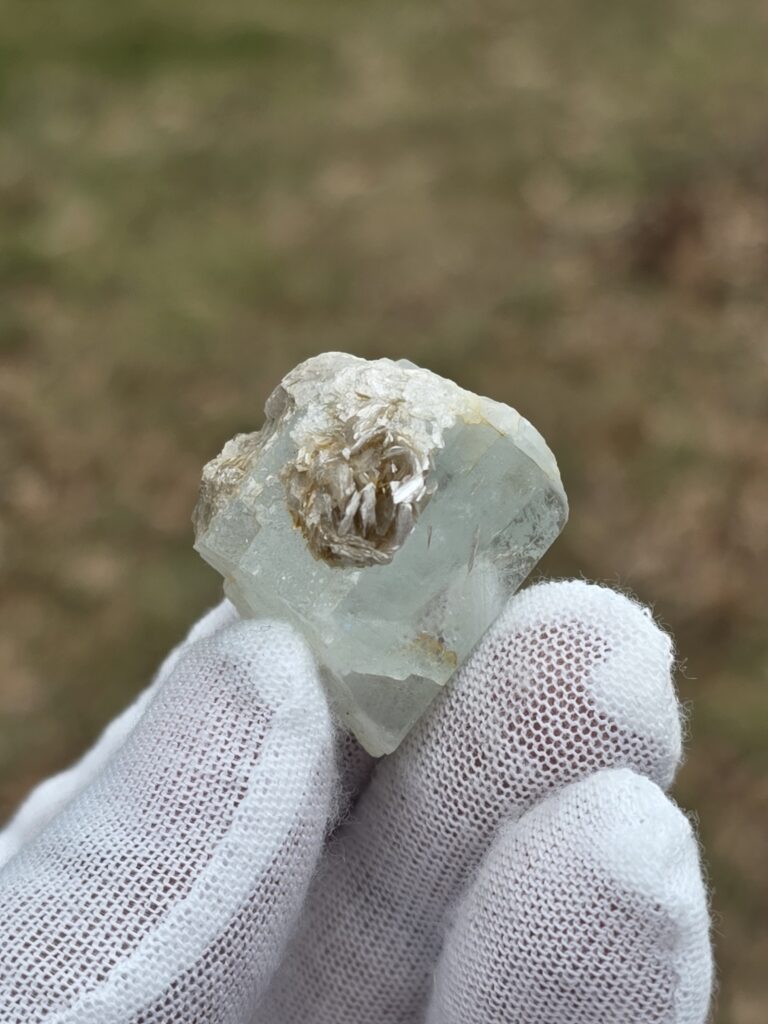
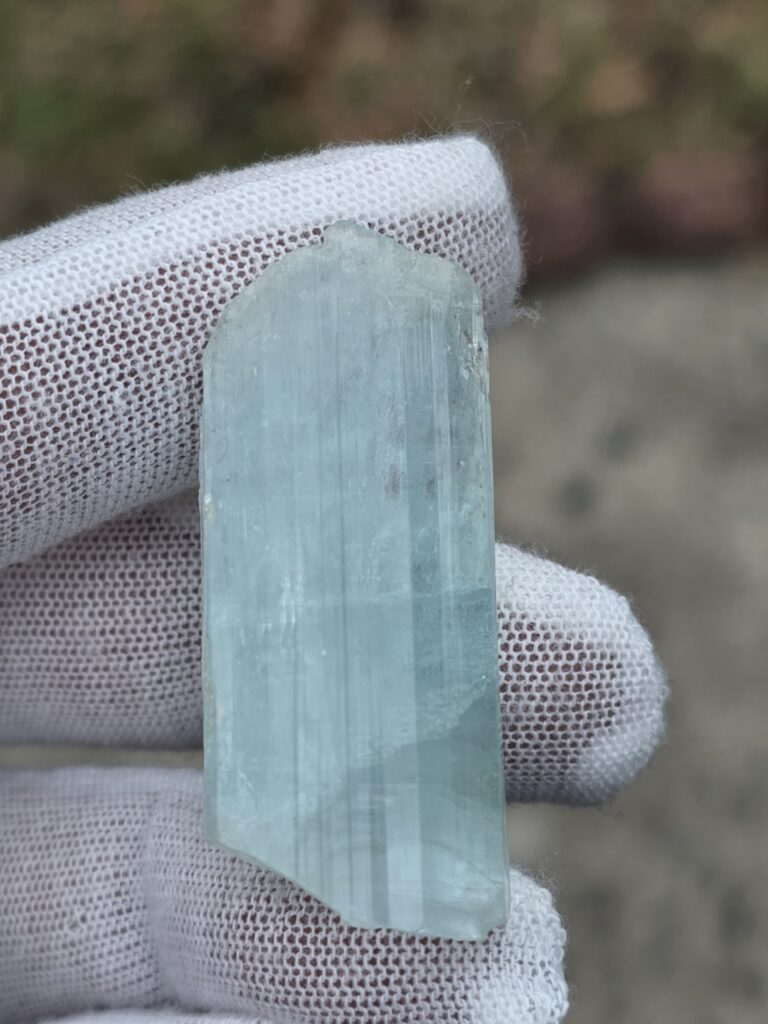
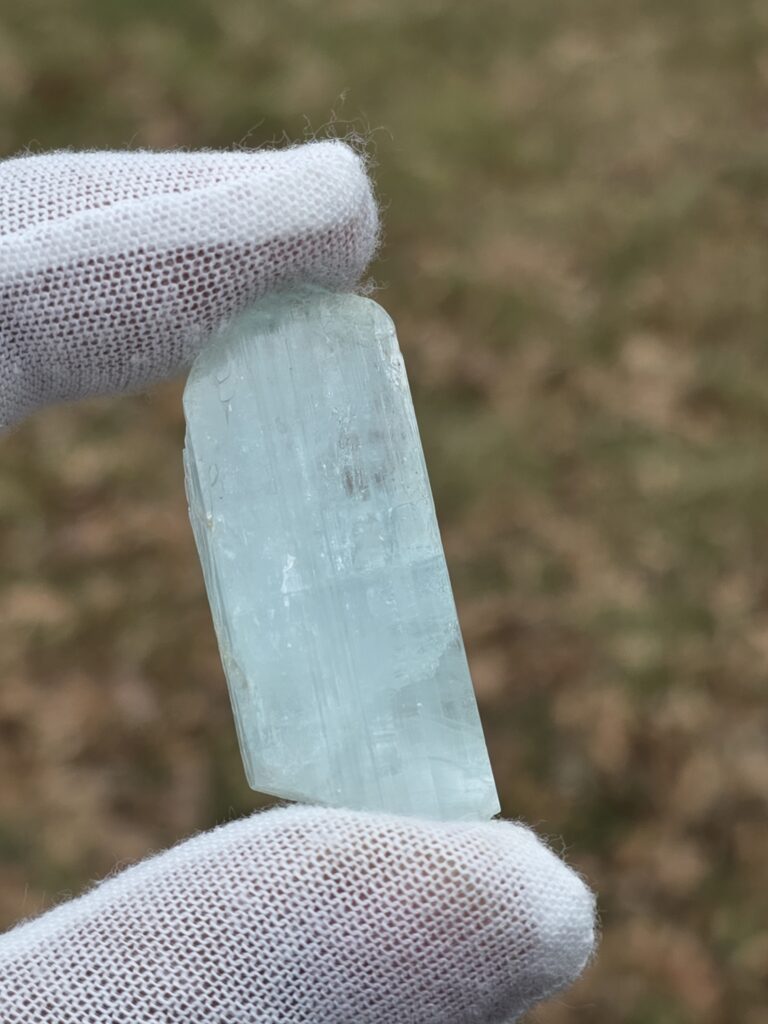
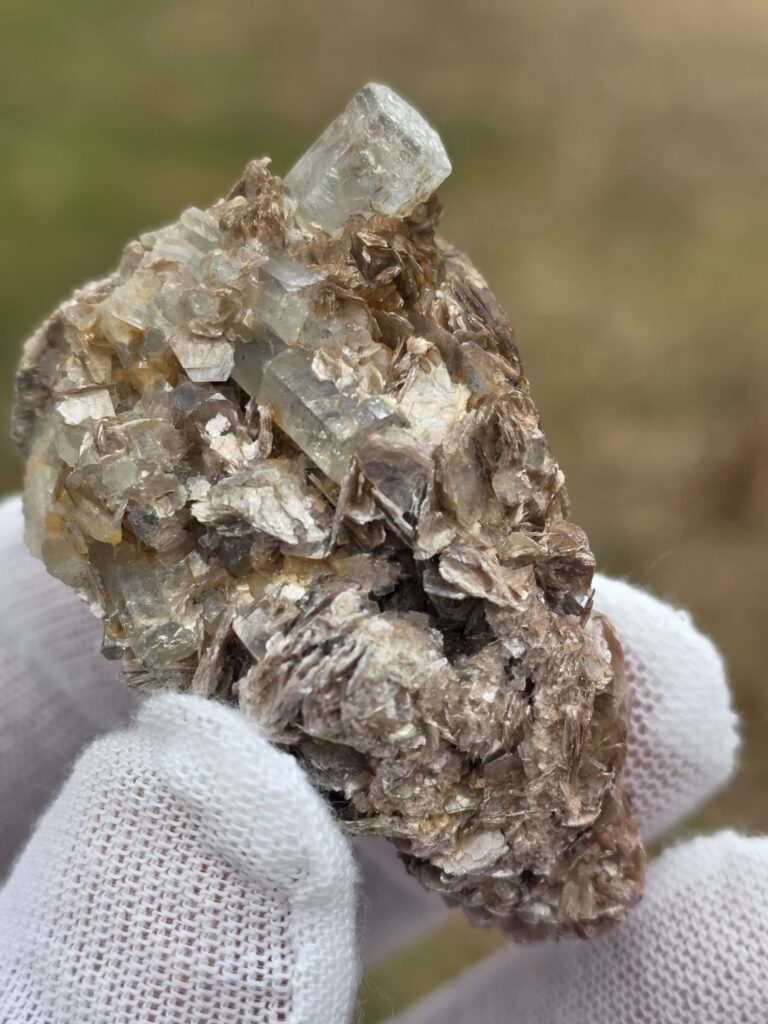
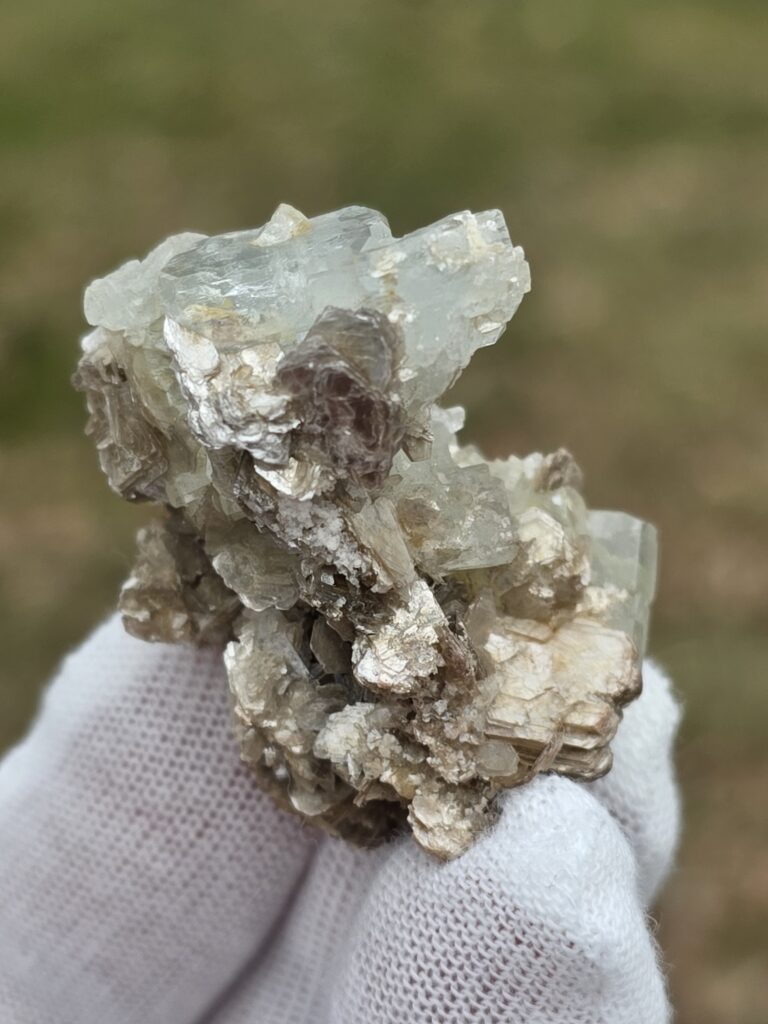
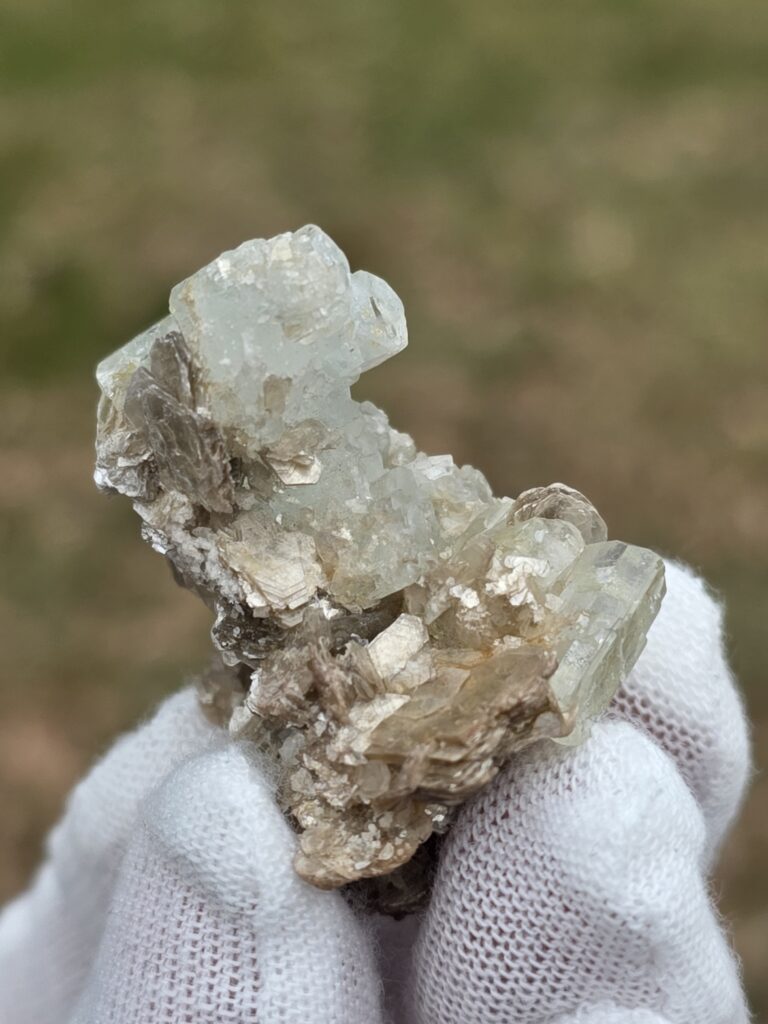
Description: This Specimen features multiple pale-blue aquamarine crystals—including one well-formed elongated prism—nestled among lustrous, silvery-beige muscovite “books” with minor albite matrix. The piece displays classic pegmatitic assemblage typical of high-altitude Pakistani gem deposits. The aquamarine exhibits good translucency to moderate clarity with hexagonal prism structure clearly visible. Muscovite rosettes provide striking contrast and showcase natural growth geometry.
Significance: A fine example of aquamarine-on-muscovite pegmatite mineralization, highly representative of Pakistan’s world-class beryl deposits. Suitable for collectors, display, study, or metaphysical use.
🔍 COMPLETE MINERALOGICAL EVALUATION
1. Mineral Identification
✔ Aquamarine (Beryl var.) – Primary Mineral
Pale icy-blue coloration characteristic of aquamarine from Gilgit-Baltistan.
Crystals exhibit elongated hexagonal prismatic habit with partially terminated ends.
Good translucency with internal veils and growth tubes visible.
Multiple aquamarine crystals are present:
One main central prism.
One shorter but thicker secondary prism.
Several partial or intergrown terminations.
✔ Muscovite – Secondary Mineral
Present as silvery-tan platy aggregates, arranged in radiating “books” typical of mica in pegmatites.
Provides structural support and aesthetic contrast.
Mica shows flexible sheets, pearly luster, and defined cleavage faces.
✔ Albite Feldspar – Matrix Mineral
Appears as pale-white to off-white granular matrix.
Common associated mineral in pegmatite pockets hosting aquamarine.
Serves as the underlying mineral from which aquamarine and muscovite have grown.
2. Structural & Textural Description
Aquamarine Crystal Habit
Well-developed hexagonal prism with length exceeding width.
Upper termination incomplete but still showing natural faces—not a break or polish.
Growth marks and gentle etching visible, typical of slow pegmatitic crystallization.
Muscovite Texture
Mica forms radiating rosettes and stacked booklets.
Crystals wrap around aquamarine prisms, indicating simultaneous growth.
Paragenesis (Growth Sequence)
Albite crystallized first, forming a coarse-grained pegmatite environment.
Muscovite plates developed along the pocket walls.
Aquamarine (beryl) crystallized last, intruding between mica clusters.
This sequencing is geologically typical for Pakistan’s granitic pegmatites.
3. Geological Context & Origin
This Specimen matches the classic mineralogy of the Shigar Valley / Skardu pegmatite belt, one of the world’s premier sources of aquamarine. Geological features of the region:
High-altitude granitic pegmatites enriched in beryllium, lithium, and mica.
Slow cooling conditions ideal for forming large, well-shaped crystals.
Muscovite-rich zones often host beryl species such as aquamarine, morganite, and goshenite.
This mineral association—beryl + muscovite + feldspar—is a textbook pegmatitic trio confirming authentic Pakistani origin.
Condition & Authenticity Assessment
100% natural aquamarine
Unheated and untreated
No dyeing, coating, or stabilization
Retains original growth surfaces and internal crystal features
Suitable for:
Mineral specimen collections
Display pieces
Educational or certification purposes
Reviews
There are no reviews yet.