

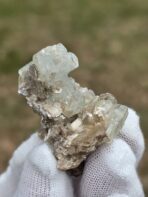
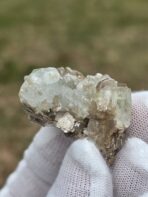
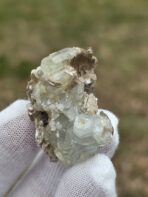
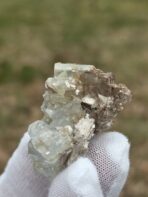
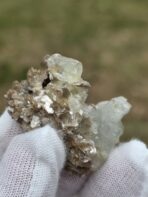
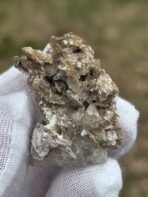
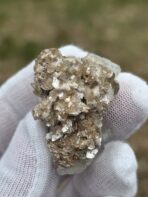
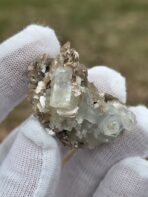

Certified Natural Pakistani Aquamarine with Mica Crystal Specimen – 93.10 ct Himalayan Pegmatite
GLverify.com Certificate No: 901075619845
Certified Value: US $260.00
SPECIMEN SUMMARY
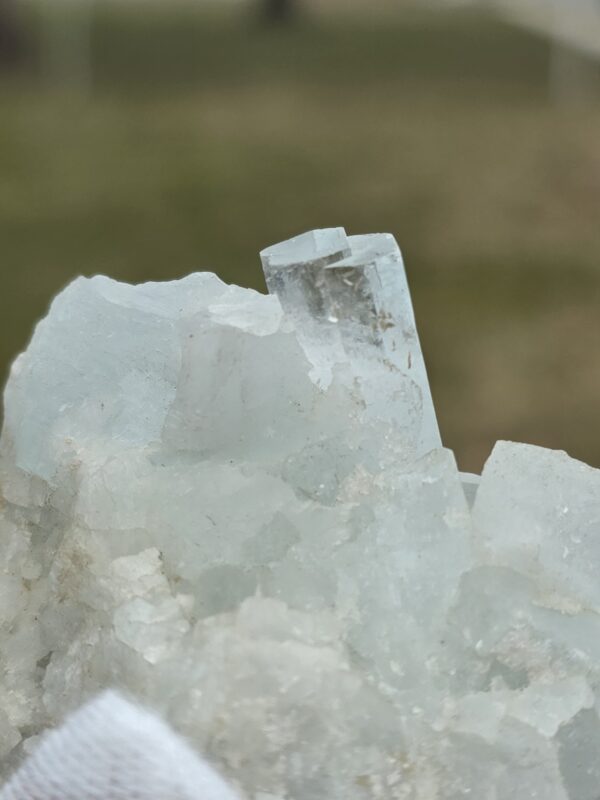
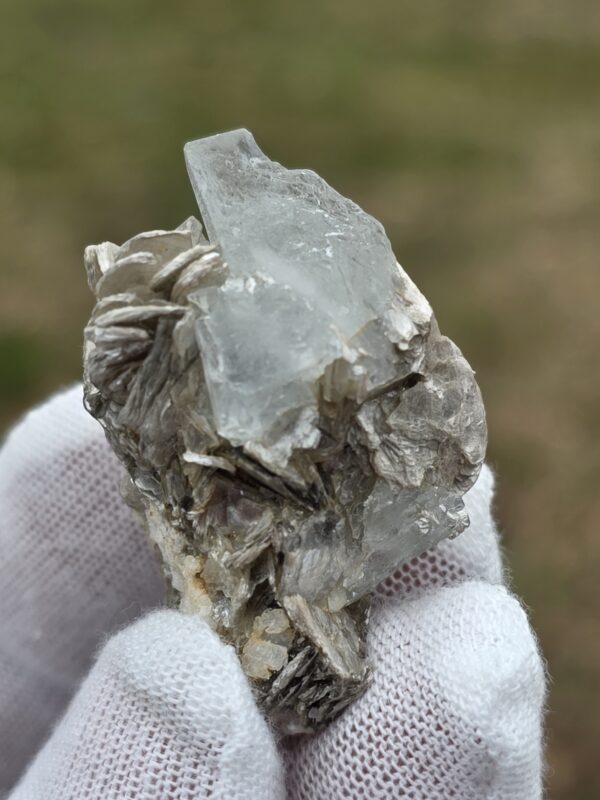
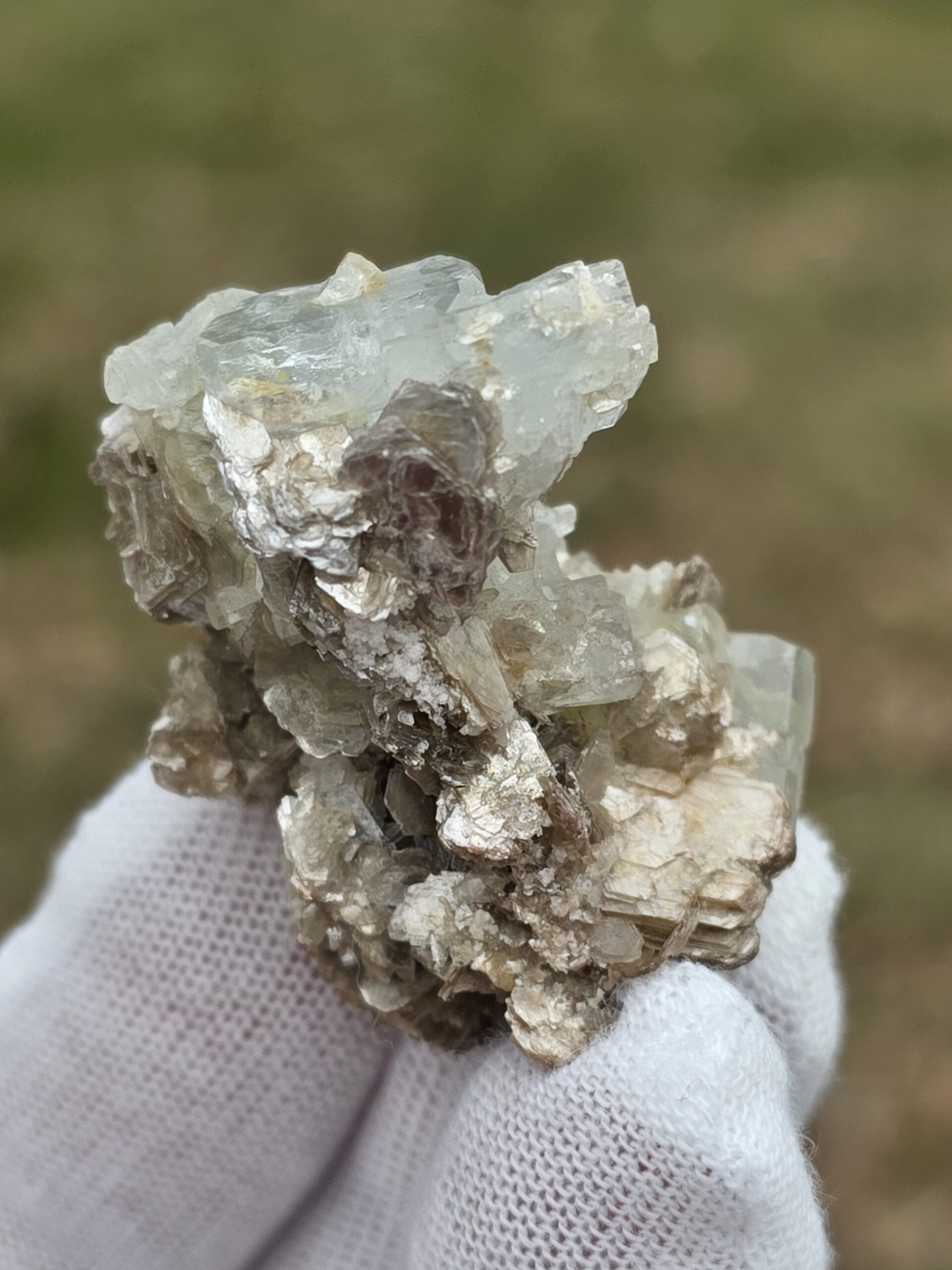
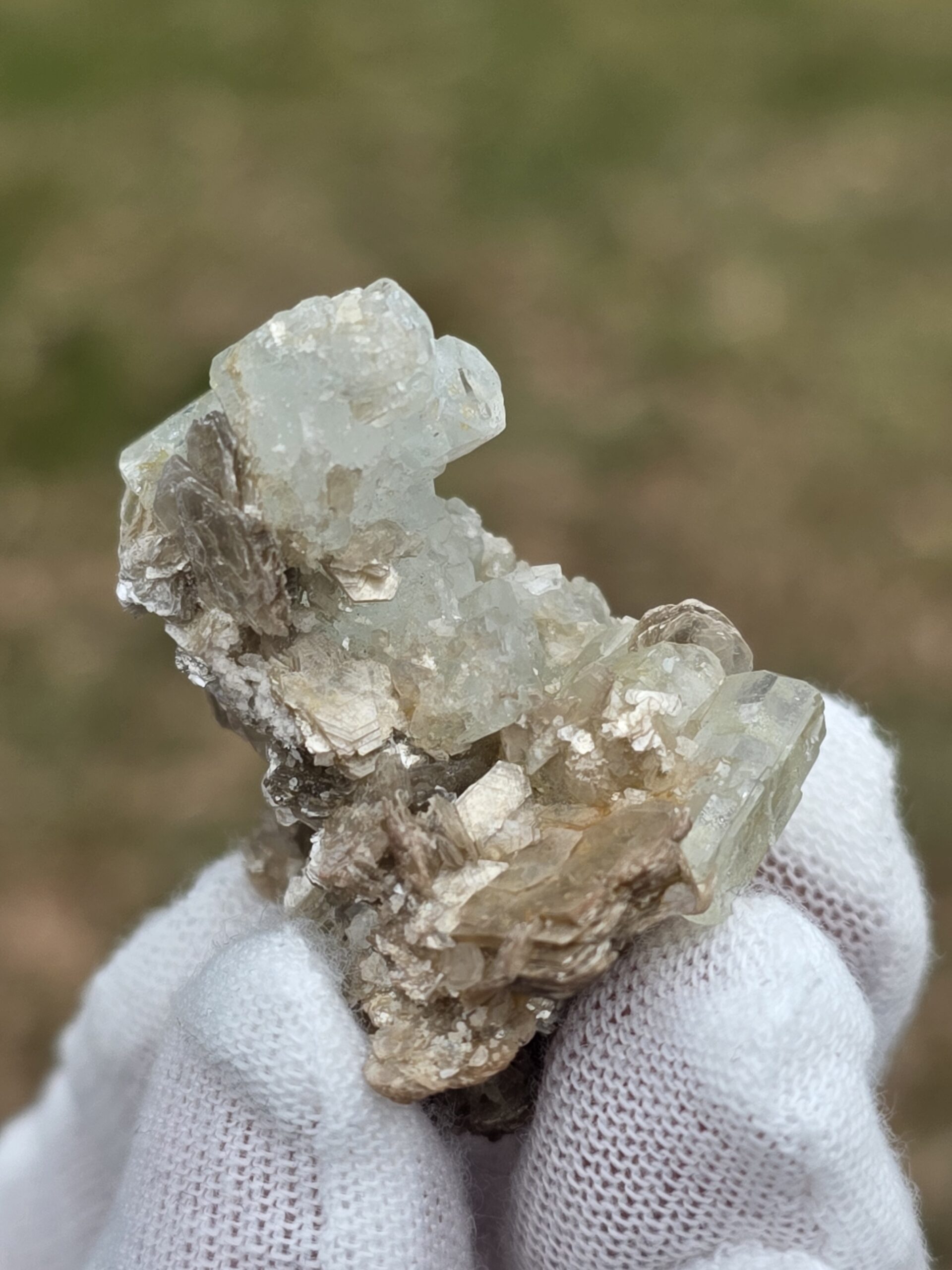
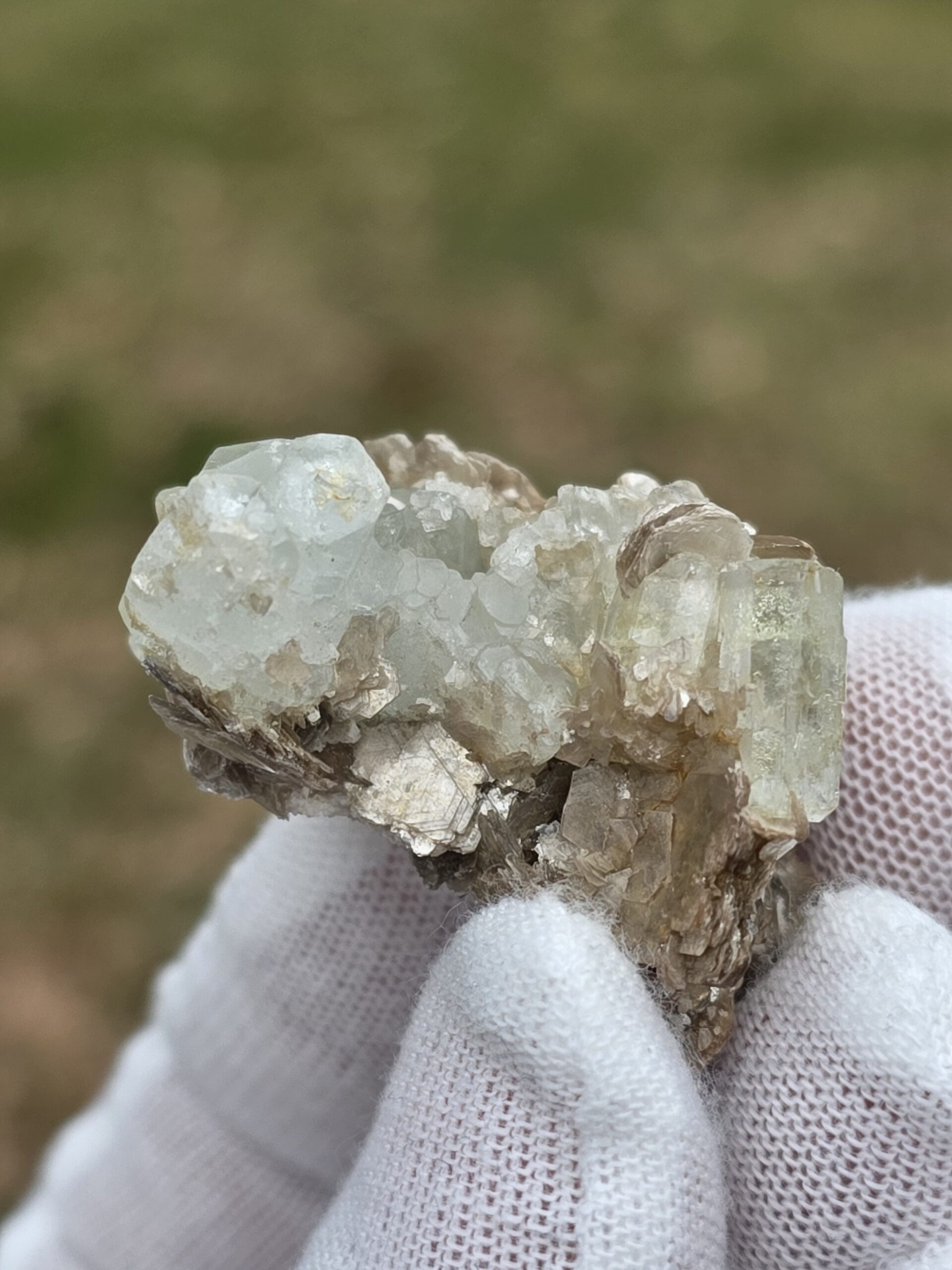
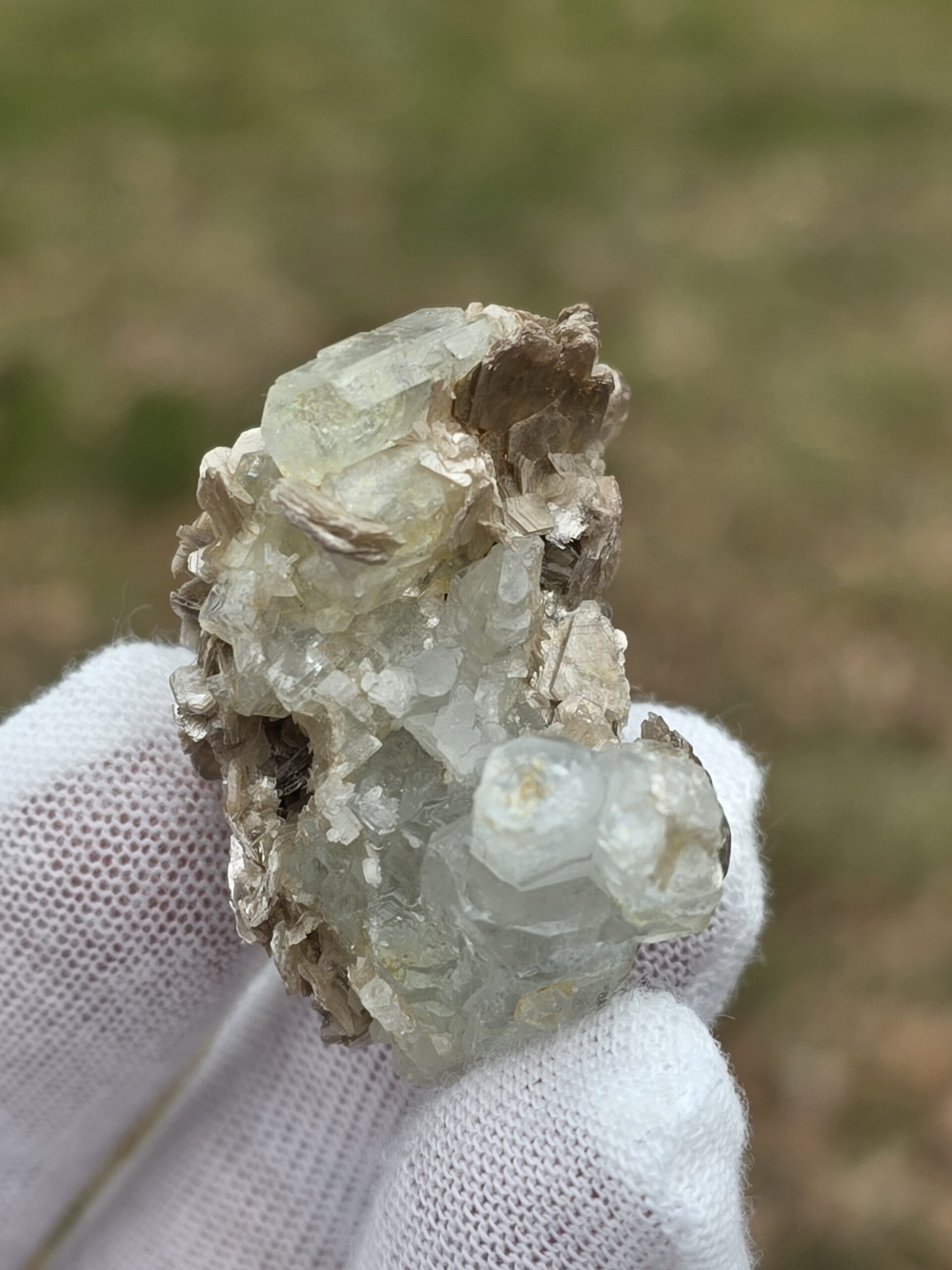
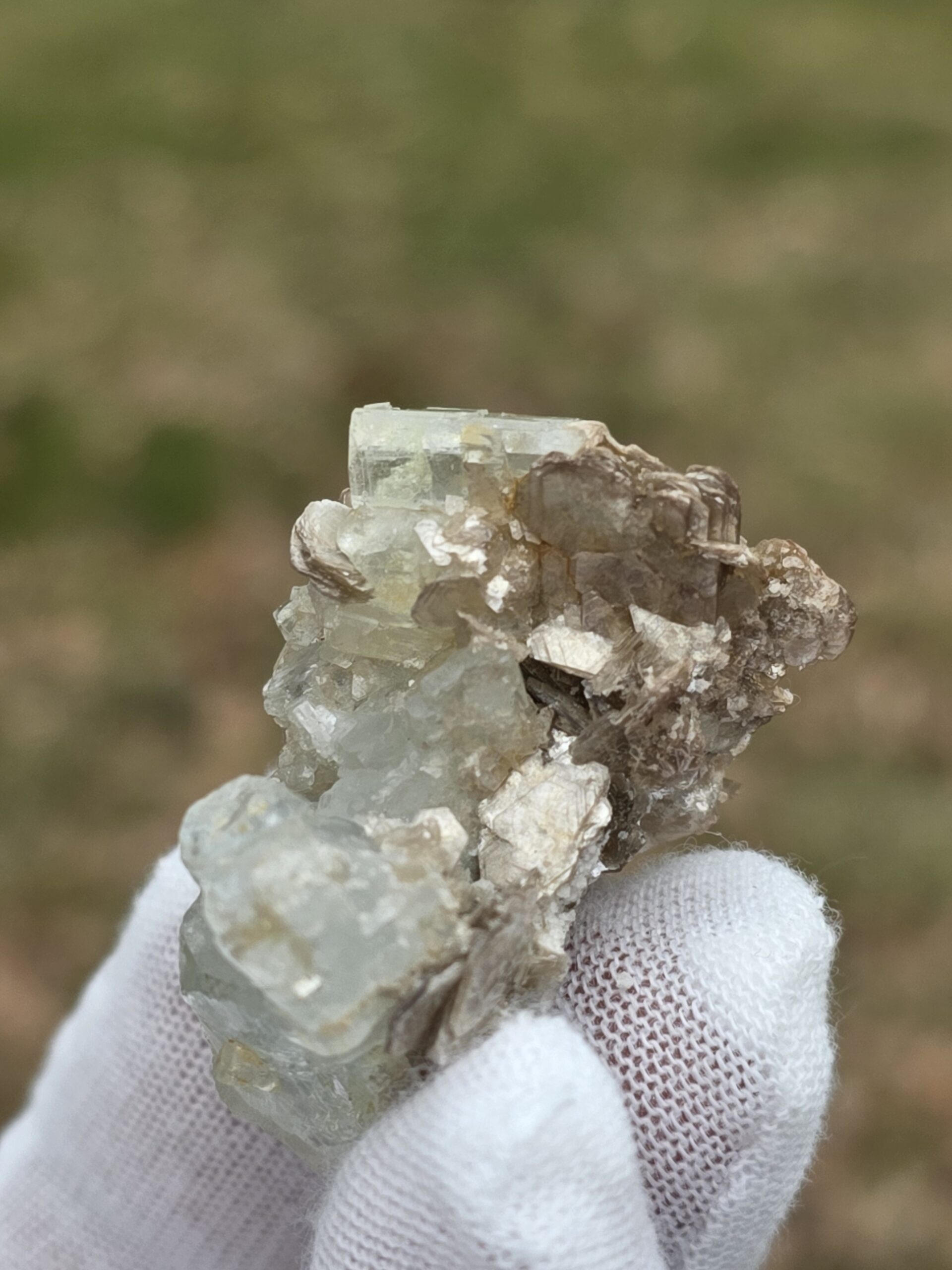
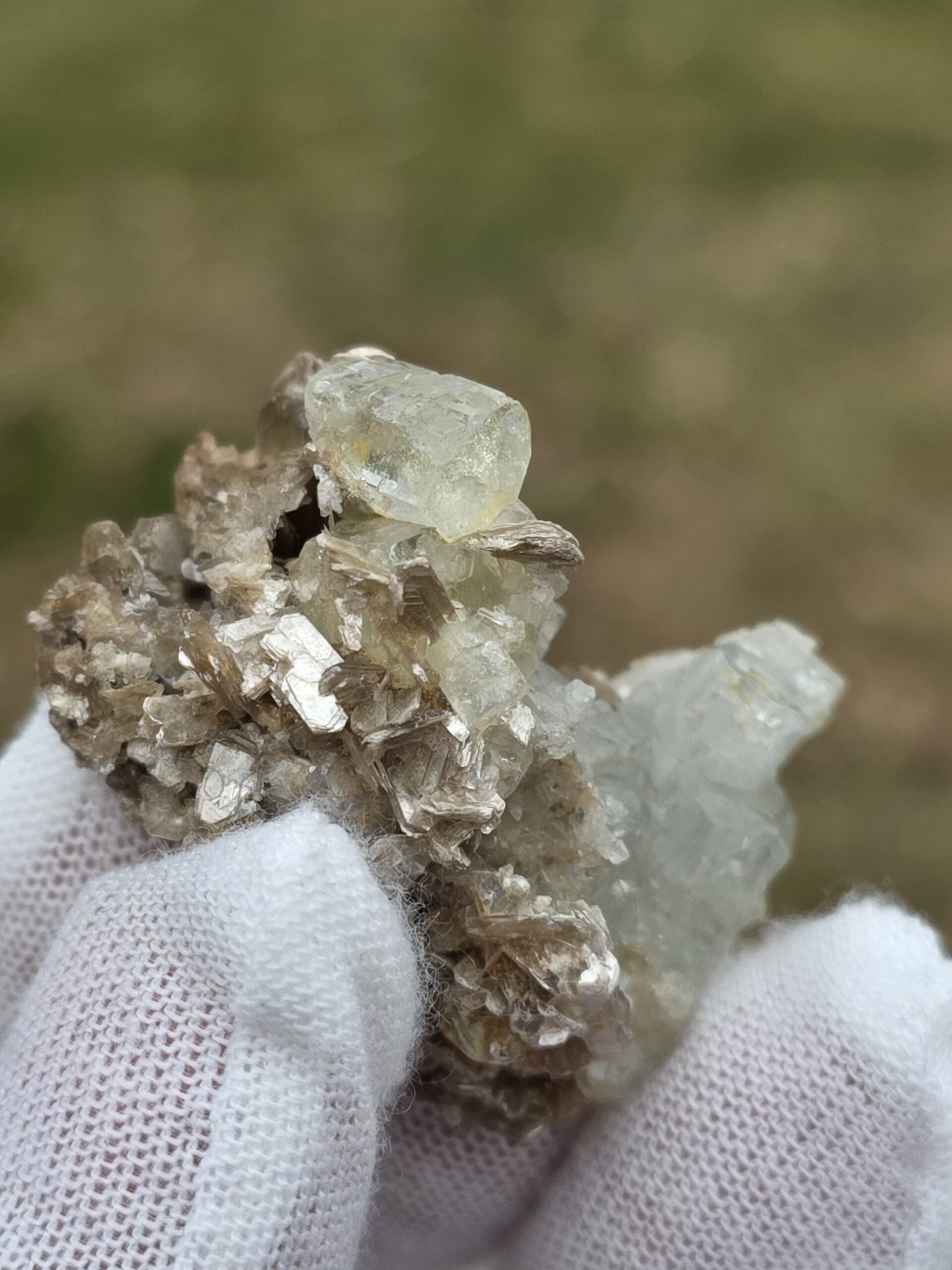
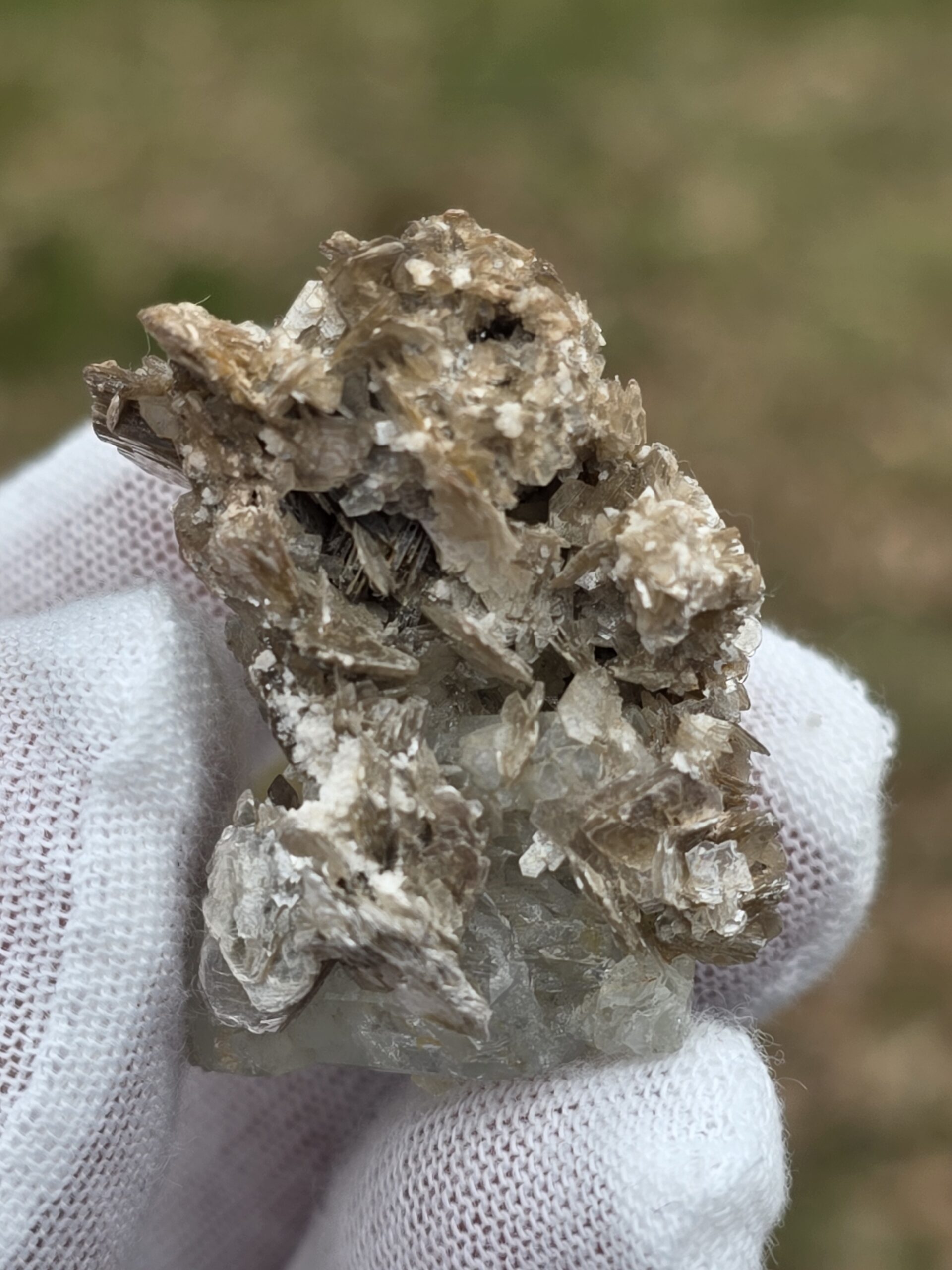
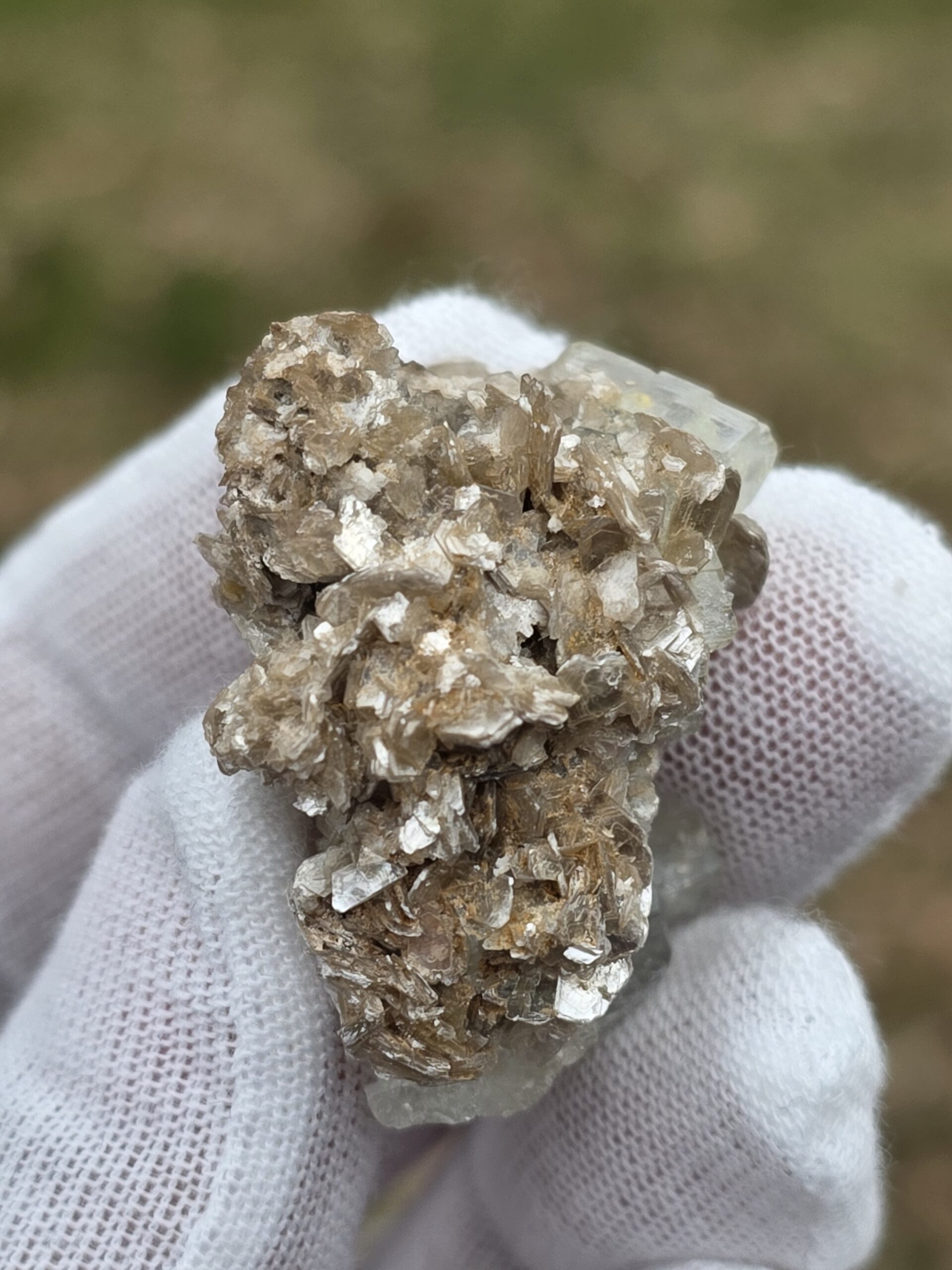
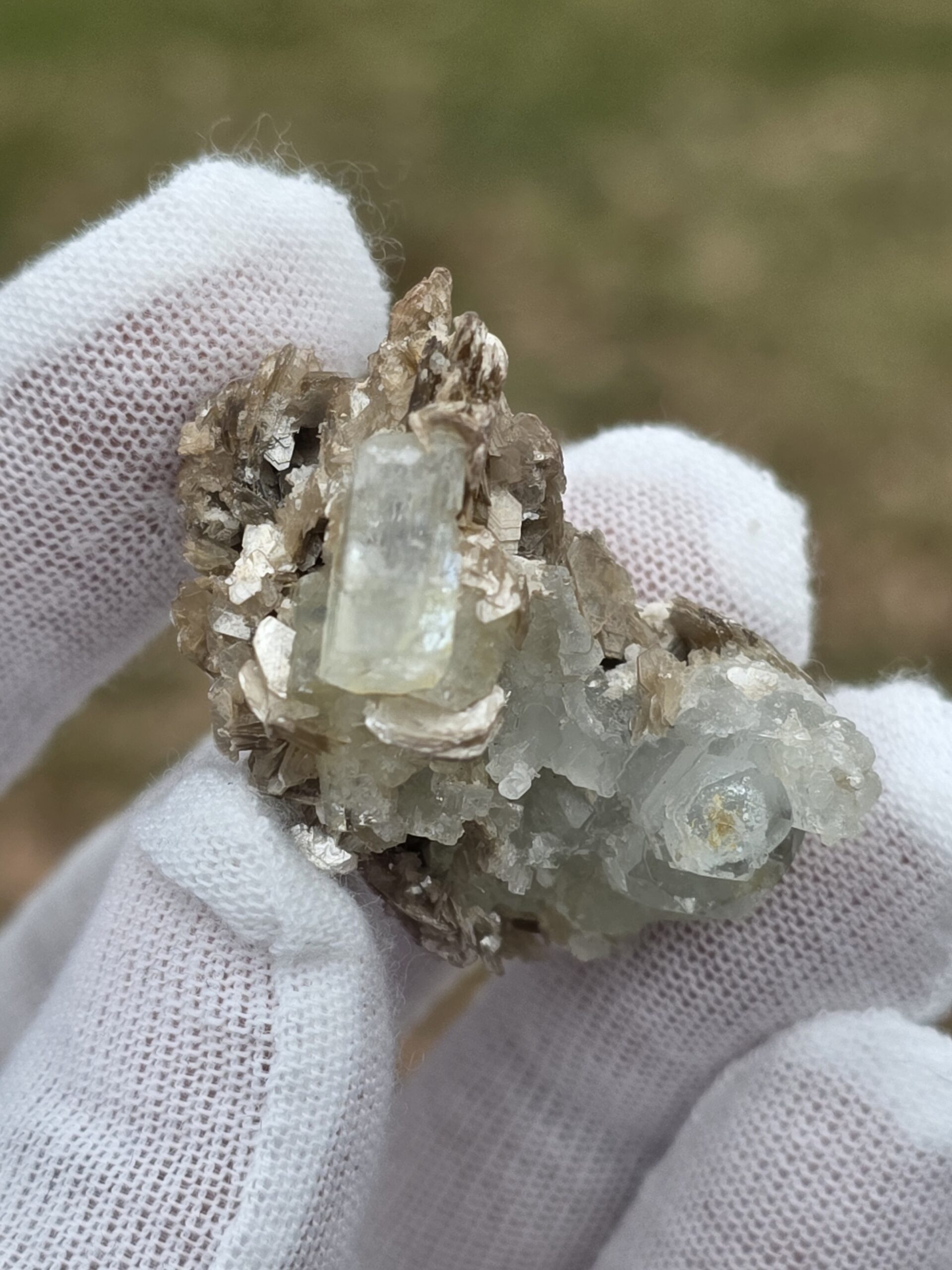
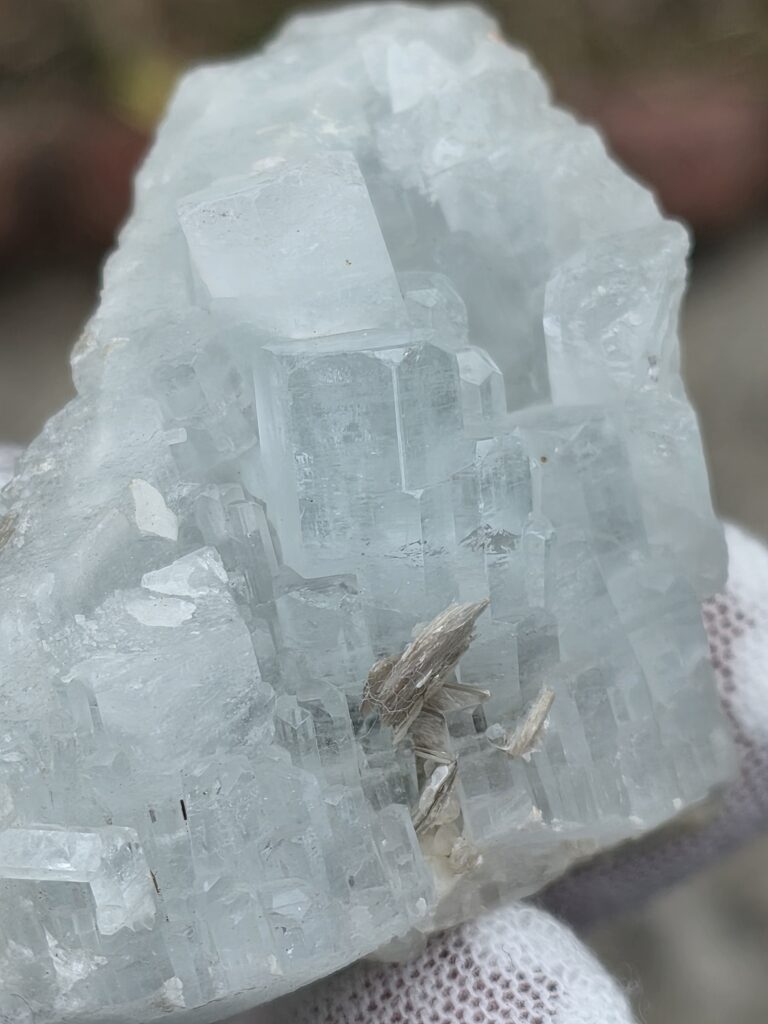
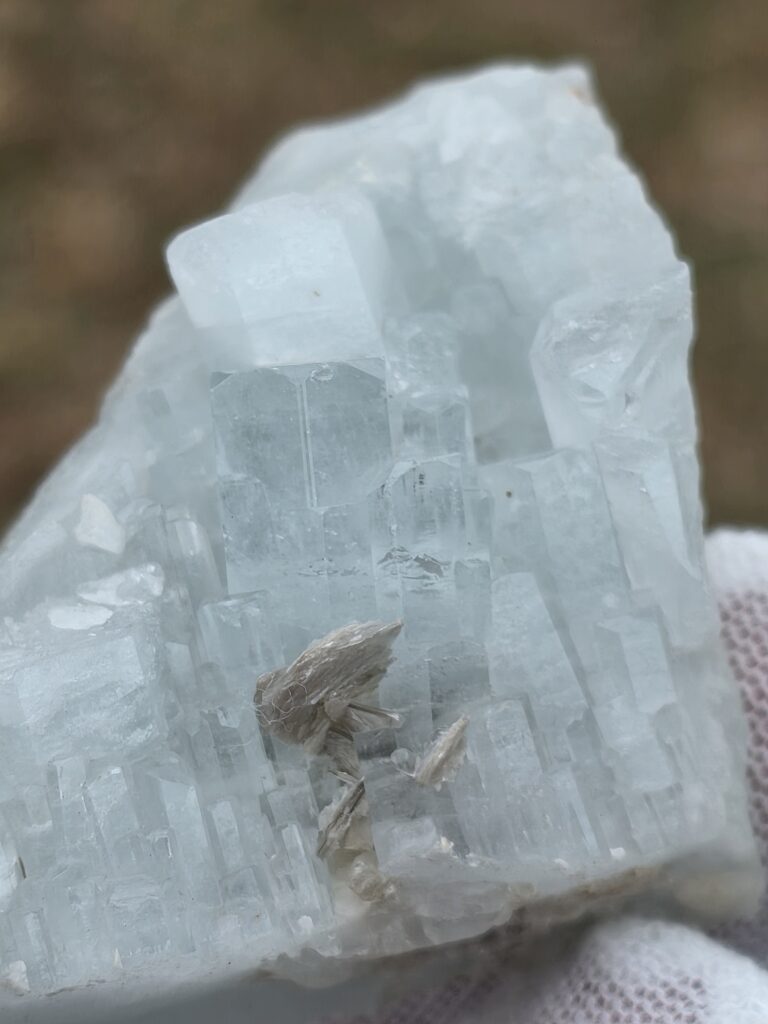
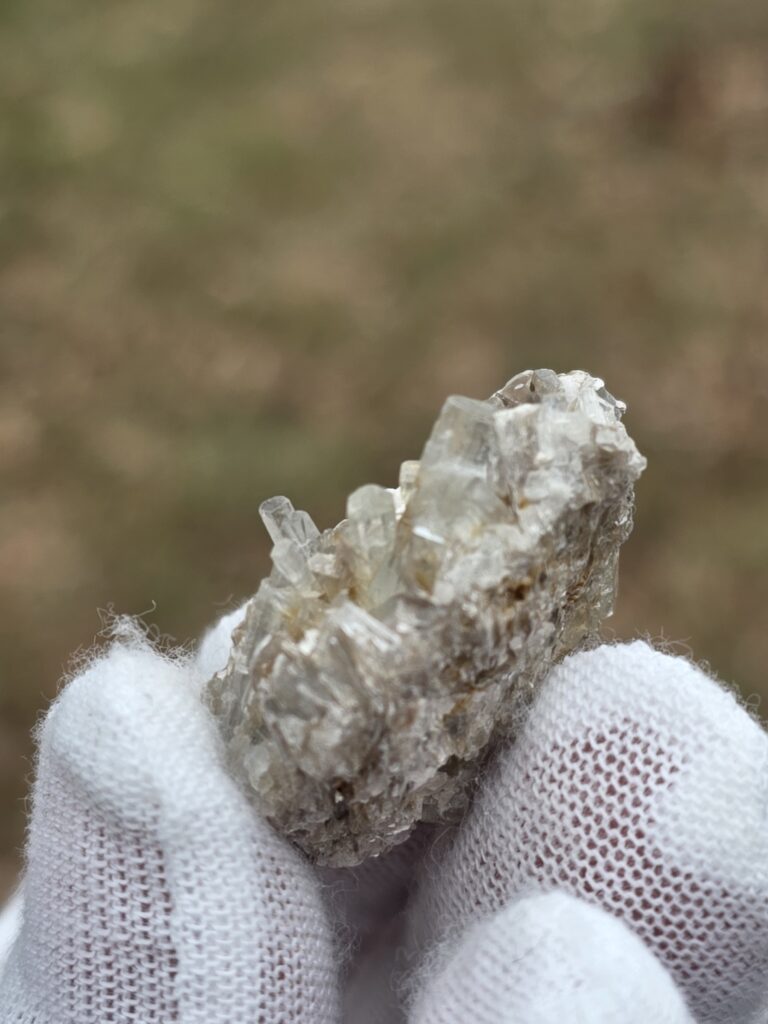
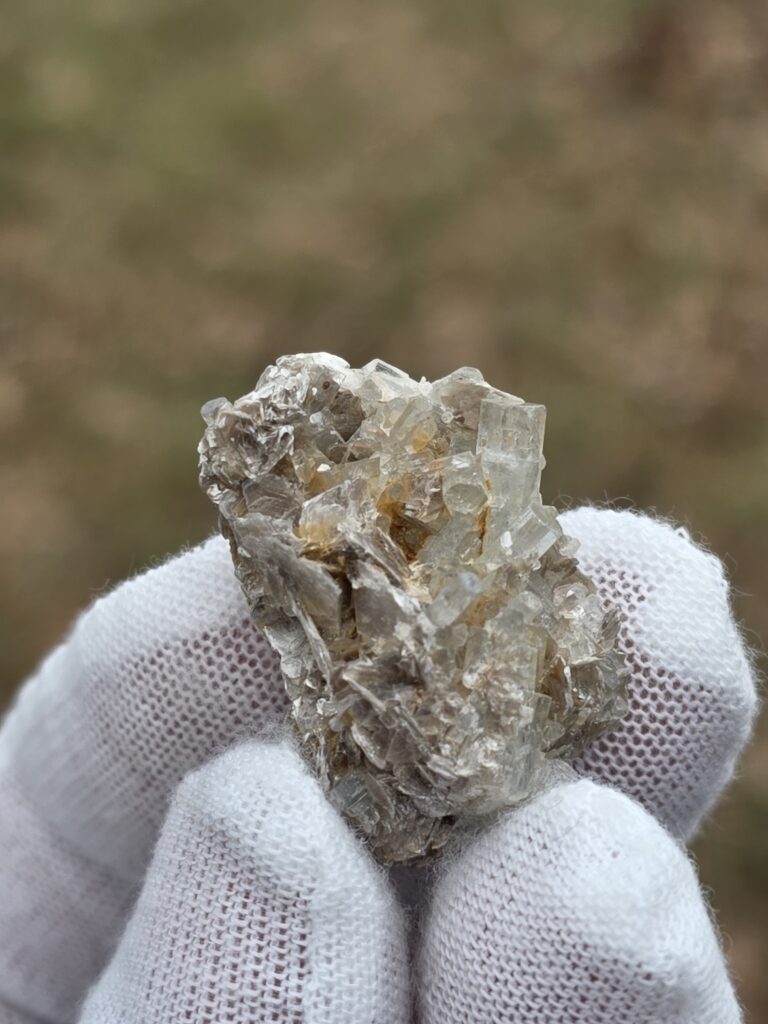
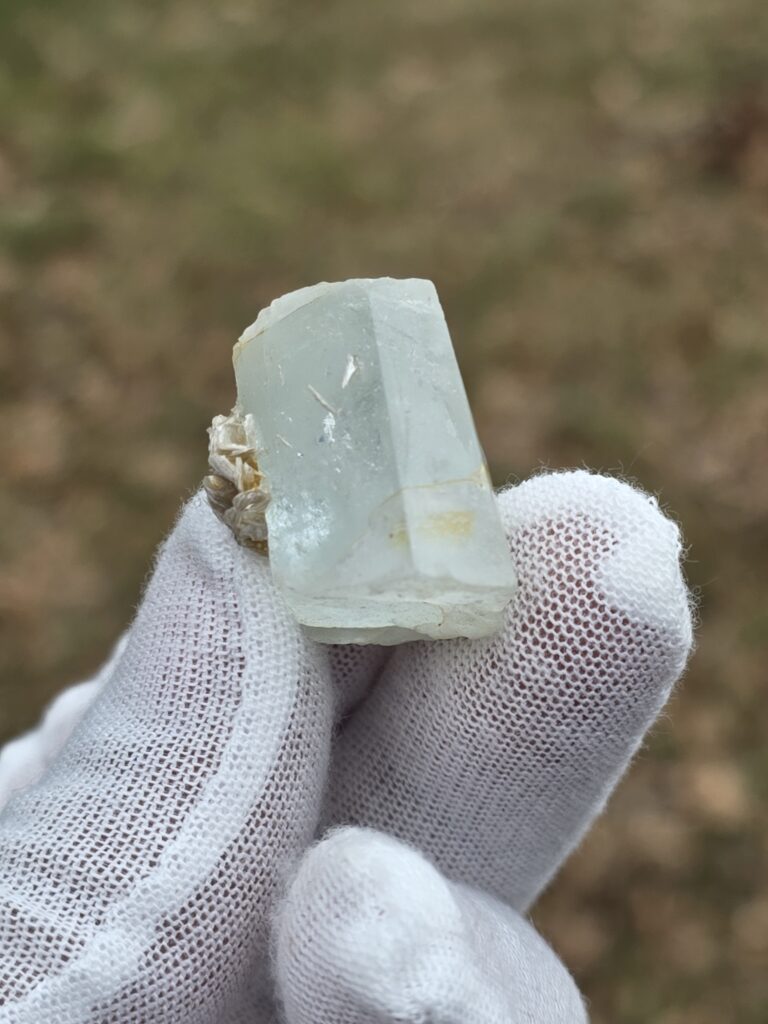
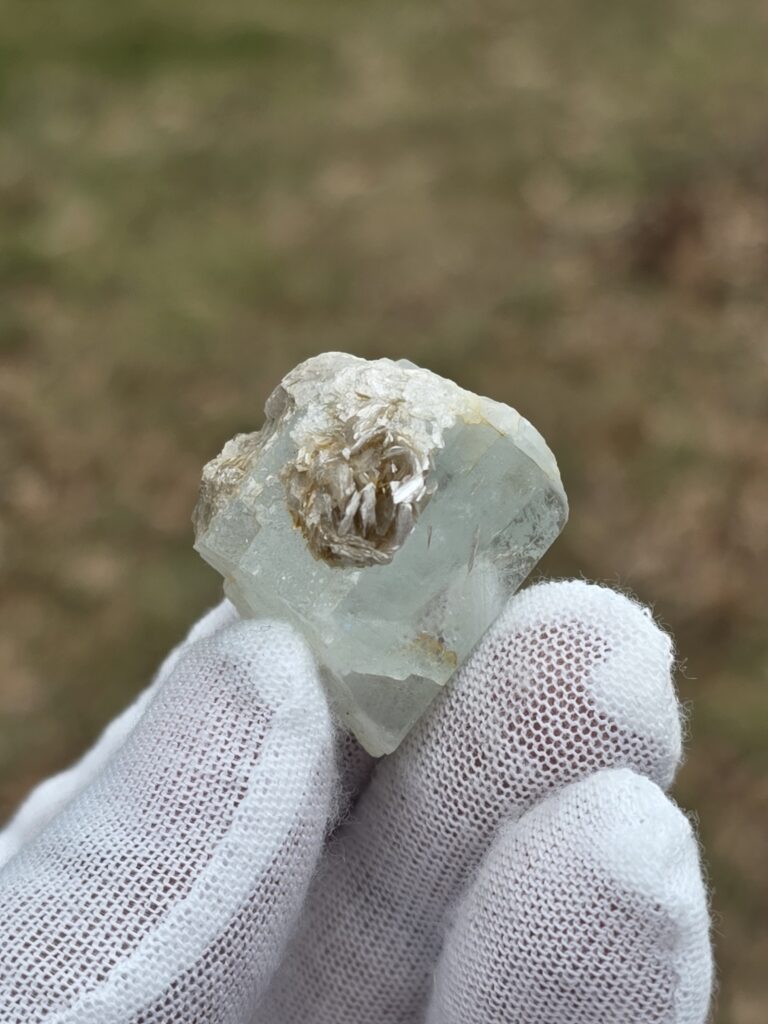
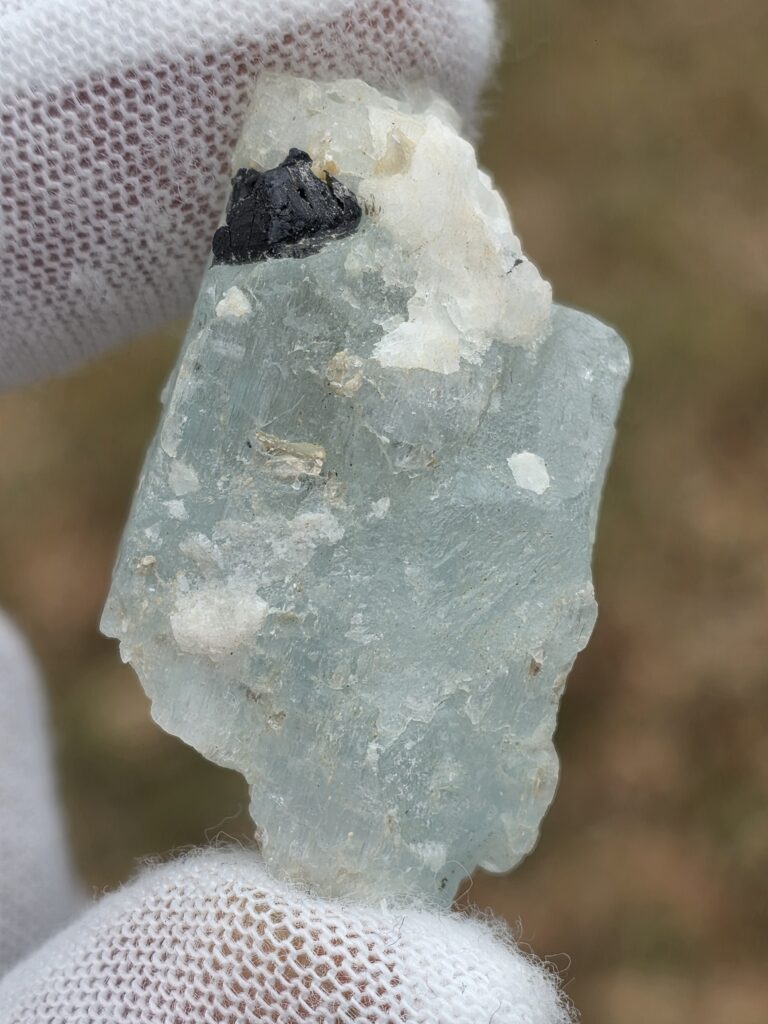
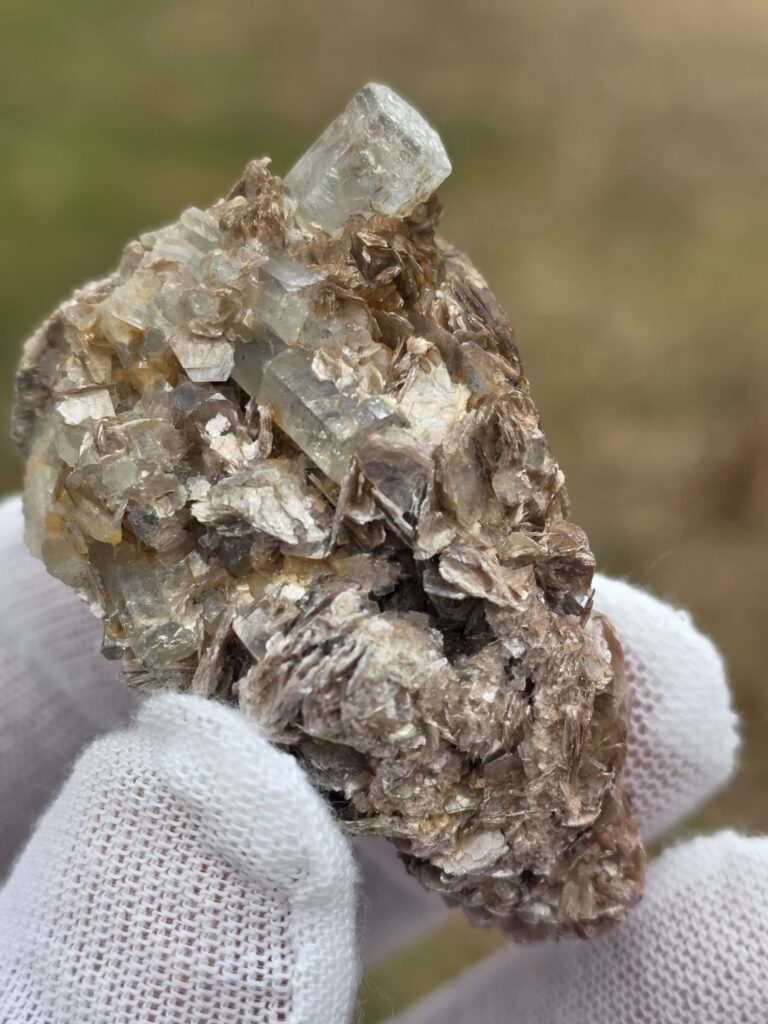
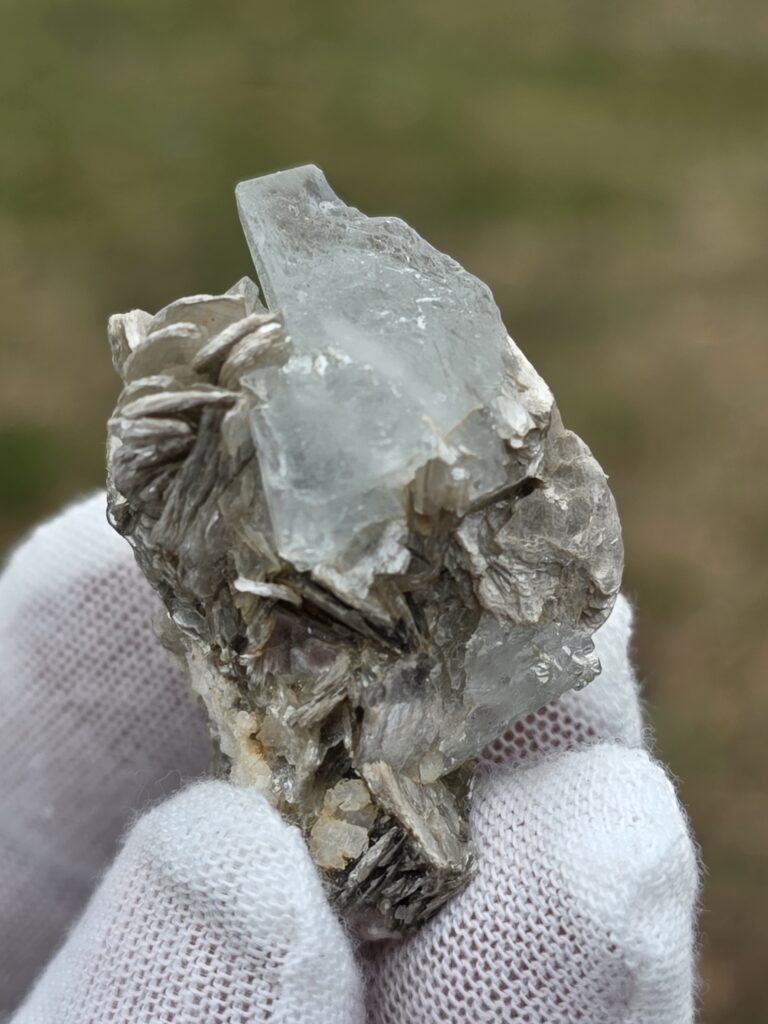
This Specimen is a natural aquamarine (beryl) crystal specimen mined in Pakistan, weighing 93.10 carats. It consists of pale to icy blue aquamarine crystals naturally intergrown with a well-developed mica-rich matrix, creating a visually complex and highly collectible pegmatitic association. The aquamarine crystals exhibit natural prismatic habits, partial terminations, and intact growth surfaces, while the surrounding mica plates add strong aesthetic contrast and geological context. Internal growth zoning, natural veils, and unaltered crystal interfaces visible in These Pictures confirm that the specimen is unheated, untreated, and naturally formed.
1. Mineral Identification
Primary Mineral: Aquamarine (Beryl Group)
Color: Pale icy blue to very light aqua
Habit: Short prismatic to blocky hexagonal crystals, some rounded by natural dissolution
Transparency: Translucent to partially transparent
Luster: Vitreous
Notable Features:
Several crystals display classic hexagonal terminations
Slight yellowish internal zoning in some areas, typical of inclusions or natural iron staining
Crystal edges show natural etching—common in pegmatite beryl
Secondary Mineral: Muscovite Mica
Color: Silvery-tan, pearly to metallic luster
Habit: Layered “books” of mica, flake formations
Distribution: Extensively intergrown with aquamarine, forming the main matrix
Notes: Typical of Pakistan’s granitic pegmatites; often associated with beryl, tourmaline, and topaz
Accessory Mineral: Albite (Likely)
Color: Whitish, chalky, sugary-looking crystals near the aquamarine base
Habit: Compact granular formation
Function: Acts as a groundmass binding the aquamarine and mica
2. Structural & Geological Description
Pegmatitic Origin
This Specimen originates from high-elevation granitic pegmatites of northern Pakistan—one of the world’s premier aquamarine-bearing regions.
Geological Features Noted in the Specimen
Aquamarine Crystallization:
Developed in open fractures within coarse-grained pegmatite, allowing hexagonal prisms to form freely.
Muscovite Matrix:
The abundant mica books indicate the specimen formed in a mica-rich pocket zone, where volatiles produced large mica crystals alongside beryl.
Etching & Dissolution Patterns:
The slightly sculpted surfaces on the aquamarine indicate late-stage hydrothermal fluids altered the crystal faces—very common in Pakistan gem pegmatites.
3. Overall Aesthetic & Scientific Interest
This Specimen is desirable because:
It shows multiple aquamarine crystals, not a single isolated prism.
Muscovite provides a classic visual contrast and confirms authentic pegmatite origins.
Attractive size (93.10 ct) makes it suitable for display, educational use, or collection curation.
Pakistan aquamarine is highly collectible due to clarity and mineral association.
Condition & Authenticity Assessment
100% natural aquamarine
Unheated and untreated
No dyeing, coating, or stabilization
Retains original growth surfaces and internal crystal features
Suitable for:
Mineral specimen collections
Display pieces
Educational or certification purposes
Reviews
There are no reviews yet.